Article Information
- Digital Object Identifier (DOI): 10.47982/cgc.10.764
- Published by Challenging Glass, on behalf of the author(s), at Stichting OpenAccess.
- Published as part of the peer-reviewed Challenging Glass Conference Proceedings, Volume 10, June 2026, 10.47982/cgc.10
- Editors: Christian Louter, Freek Bos & Jan Belis
- This work is licensed under a Creative Commons Attribution 4.0 International (CC BY 4.0) license.
- Copyright © 2026 with the author(s)
Authors:
Joan Tarrús , Julian Hänig - sedak GmbH & Co. KG, Germany

Abstract
A new large-format glass bending furnace has been developed to advance the current boundaries of hot glass forming for architectural applications. The new system can process glass panels up to 11.5 × 3.6 m with a maximum bending pitch of 1.2 m and radii below 500 mm. Central to this development is an innovative bending system in which each glass ply is optimally shaped at the very beginning. The system continuously supports the newly generated geometry throughout the oven to the quenching phase, enabling complex multicurved, conical, J-shaped (a glass panel comprising a central curved segment with straight tangential extensions at one or both ends), and anticlastic configurations with tight dimensional tolerances. Unique worldwide, this innovation enables fast production of challenging 3D shapes with altering curvature in different axis in high-performance heat-strengthened and fully tempered quality. Without the bespoke moulds required in traditional gravity bending (annealed) manufacturing time, cost, and material waste are significantly reduced. The glass is processed in just a few minutes, lowering energy consumption compared to conventional methods. Developed by sedak, this game-changing technology accommodates all available energy-efficient coatings for tempering, such as low-E, solar-control, and high-selectivity coatings, double and triple-silver, without limiting which face the coating or ceramic frit is located on. This extensively expands architectural flexibility without compromising performance.
1. Introduction
Designers have long envisioned objects with challenging, and sometimes seemingly impossible, geometries, whose realisation depends on the manufacturing capabilities of industry, itself driven by visionary thinking and targeted R&D investment. Architecture, together with the building industry, has followed this trajectory. For decades, architects and designers have witnessed increasingly complex cladding geometries and structural forms, enabled and enhanced by powerful computational design tools.
While certain construction materials can be moulded into highly complex shapes without compromising their load‑bearing performance, achieving free‑flowing geometries in high‑strength glass presents a significant challenge. This difficulty affects both architects, in their pursuit of expressive formal freedom, and façade engineers, responsible for guaranteeing performance, safety, and manufacturability.
There are several methods to transform a flat glass pane into a multi‑curved geometry. The most appropriate process in each case depends on multiple parameters, including radius tightness, glass thickness, required dimensions, coatings, and load‑bearing performance, among others. Historically, the architectural glass industry has often been unable to fully meet ideal design specifications, remaining constrained by costly manufacturing techniques and by the limitations of standardized equipment.
2. State of the Art: Glass Bending
2.1. Gravity bending
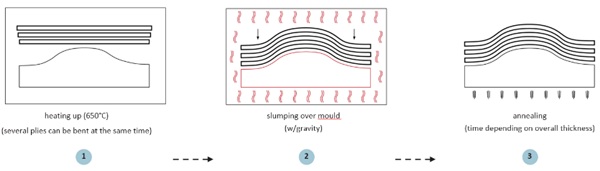
Traditional slumping techniques remain highly appealing to designers because they allow for almost any desired glass geometry, including single radii, double curvature, tight radii, and fully customised shapes (Fildhuth et al. 2011, Fildhuth et al. 2018). In the case of fully developable geometries characterized by zero Gaussian curvatures where one principal curvature is zero (k1=0) and the other is non‑zero (k 2≠0), this bending technique enables designs with very small radii, in some cases down to approximately 100 mm. Final feasibility, however, depends on several parameters, including glass thickness, glass dimensions and aspect ratio, as well as the presence of coatings or ceramic frits, among other factors.
This artisanal technique is particularly attractive to designers, as it enables a wide range of surface geometries that depart from zero Gaussian curvature. Defining a minimum allowable secondary radius in such cases is highly complex, since it depends on numerous interrelated parameters. Moreover, under typical project conditions, there is often limited time for in‑depth theoretical analysis, with fabrication schedules driven by the urgency of on‑site installation requirements.
Certain geometries, specifically those corresponding to developable surfaces characterized by zero Gaussian curvature, are, from the manufacturing standpoint, more straightforward to produce. In these cases, the transformation from flat to a curved configuration is achieved predominantly through bending, without requiring in‑plane deformation of the glass. This geometric condition explains the absence of significant membrane stresses during forming and underpins the feasibility of the process.
Gaussian curvature is defined as:
K = k₁ ⋅ k₂
where:
k₁ ⋅ k₂ are the two principal curvatures.
Key cases:
Flat surface: k₁ = 0, k₂ = 0 ⇒ K = 0
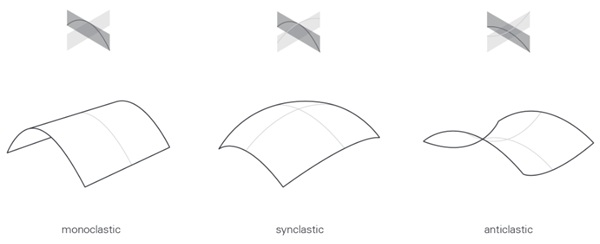
Cylindrical bending: one curvature ≠ 0, the other = 0 → K = 0
Double curvature (saddle or dome): both curvatures ≠ 0 → K≠0
The use of bespoke moulds in traditional glass slumping processes permits the realization of non‑developable surface geometries. In contrast to bending‑based forming, which is restricted to surfaces of zero Gaussian curvature, slumping enables the generation of double‑curved shapes that would otherwise be theoretically infeasible within the framework of developable geometry, at the cost of tooling and process complexity.
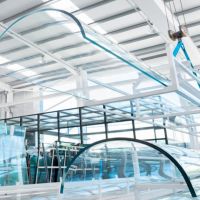
Slumped, typically annealed, often unable to meet project‑specific thermal and mechanical requirements regarding strength (Fig.1).
2.2. Lamination bending
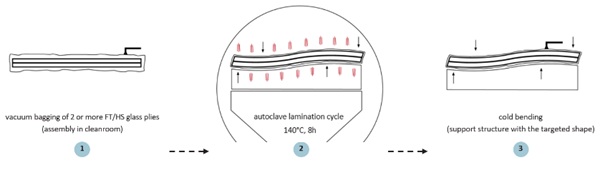
Engineers have increasingly relied on cold bending (also referred to as lamination bending) as a response to demanding curved glass designs (Rahimzadeh et al. 2023, Feirabend et al. 2021). This is primarily due to two advantages. First, it leverages the high characteristic strength of flat fully tempered glass as the base material. Second, the technique supports not only conventional single‑radius geometries (e.g., Apple Park, Cupertino; Messeturm, Frankfurt), but also far more complex forms, such as S‑shaped laminated double glazing (e.g., Timber Cove, USA), conical surfaces (e.g., Apple MBS, Singapore), twisting cross‑sections (e.g., 11 m‑high DGUs at Lusail Towers, Doha), and shallow synclastic circular skylights (e.g., Städel Museum, Frankfurt). In all these applications, performance is enhanced using high‑shear, stiff interlayers such as SentryGlas®.
In lamination bending (Figure 2), curvature develops inside the autoclave during the vacuum‑bag lamination cycle (≈140 °C for ≈8 h). Unlike hot slumping, this technique does not require reaching the glass softening point, although it still demands a mould or supporting frame to define the target geometry during processing.
2.3. Chemical strengthening
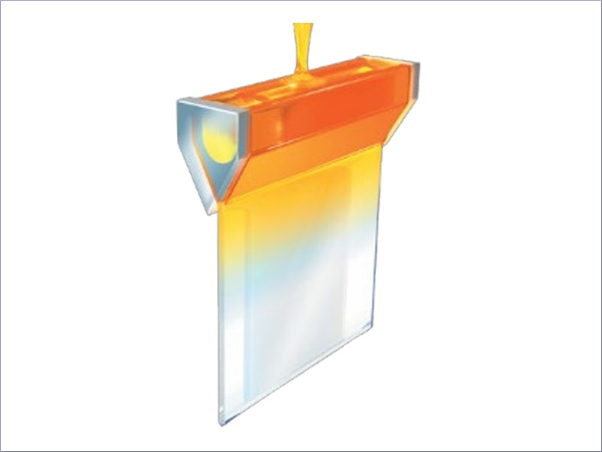
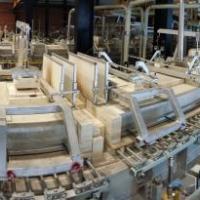
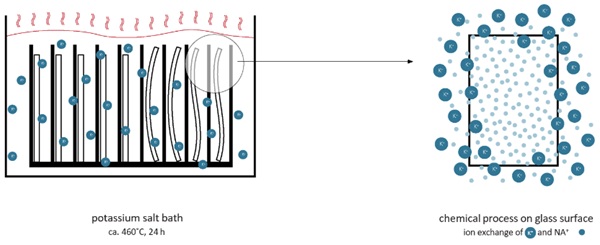
When confronted with geometrically complex glass structures requiring substantial load‑bearing capacity, engineers may instead turn to chemical strengthening (Zaccaria et al. 2021). Through ion‑exchange using potassium salts (K⁺) in a hot bath (Figure 3), the glass surface can develop compressive stresses of more than 400 MPa in standard soda‑lime glass compositions. This approach is suitable when glass surfaces are free of coatings, including solar control layers, low‑E coatings, and ceramic frits. The process begins by shaping the glass using traditional gravity bending: the stacked plies are placed on a bespoke mould and slumped at glass softening temperature over roughly 8 hours until the required geometry is achieved. Afterwards, each curved monolithic ply undergoes a 24‑hour ion‑exchange cycle at approximately 450 °C.
Although chemical strengthening provides notable advantages, including high strength and excellent optical quality, the inability to use coatings or ceramic frits significantly limits its applicability in many architectural façade systems.
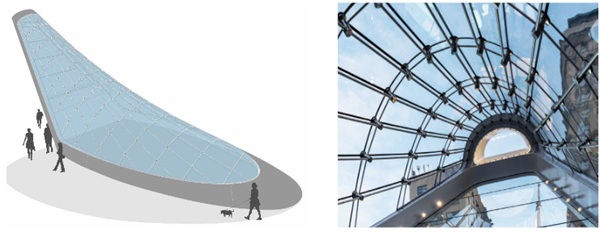
To date, this approach has represented the only viable and proven technical solution for projects involving highly demanding glass geometries and load‑transfer conditions. A representative example is the LIRR East End Gateway (Figure 4), located at the 33rd Street entrance of Penn Station in New York (AECOM / SOM). In this project, the canopy design incorporates anticlastic, doubly‑curved laminated glass panels, which present significant challenges in terms of manufacturability, structural performance, and installation tolerances.
The glass panels are supported exclusively at their corners by precision‑engineered metallic fittings, which transfer loads to a double‑curved cable‑net structural system. Due to the inherently flexible nature of the cable‑net substructure, the reaction forces induced by the fittings onto the glass can be substantial. To ensure the panels could safely accommodate these stresses, particularly local tension peaks, the project team incorporated chemical strengthening, making the system structurally feasible.
2.4. Machine bending – first generation
Most of the currently used machine-bending equipment for architectural glass allows for heat strengthened or fully tempered in cylindrical geometries. Depending on nature of the oven used, it can come across differences in possible radii, bending angle, glass thickness and coatings.
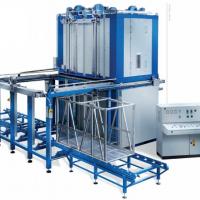
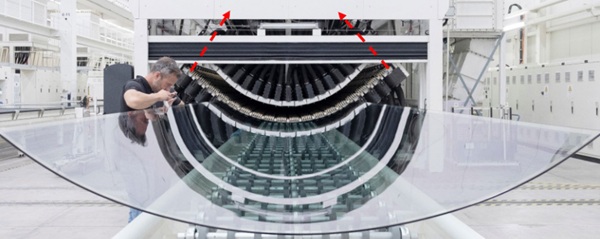
While most of the ovens do not exceed European jumbo size (6000 mm x 3210 mm), there are ovens available that can deliver 18 000 mm in length and 3600 mm in arch length to very high optical quality (reduced rollerwave distortions). While the fabrication cycle is fast (20-30 min counting heating up, bending and quenching), meaning the costs can stay down, most of these machines are prepared to produce just monoclastic geometries, generally cylindrical. A mechanical system pulls up the sides of the rolling bed (Figure 4) onto which the monolithic glass ply oscillates while quickly slumping, allowing for single-radius geometries in different radii and bending angles that fully depend on the height of the quenching chamber.
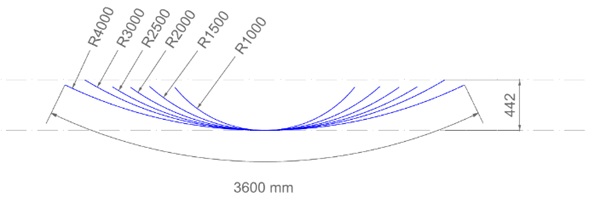
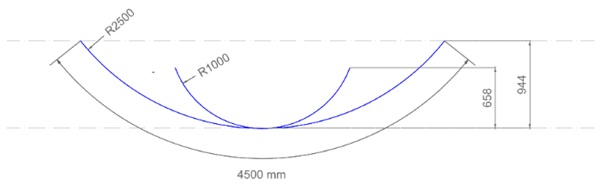
Ovens engineered for large dimensions, normally do not exceed the, approximately, 450 mm in height (Figure 5; e.g. max bending pitch = 442 mm for sedak’s oven for machine bending in 18 m x 3.6 m; slightly different bending depths depending on the mechanical possibilities of the different articulated parts generating the radius), while smaller ovens generally prepared for more straight forward applications to lengths not larger than 3 to 5 m are normally prepared for larger bending angles (Figure 6; 658 mm deep quenching section), in some cases with possible radius down to 500-700 mm. Some are designed to deliver large girths (e.g. 4500 mm) showing bigger quenching cavities up to, for instance, 950 mm (Fig. 6. R2500 mm). Physically, one could think of ovens able to fabricate tighter radii, however it all is also directly related to ROI:
2.5. Machine bending – second generation
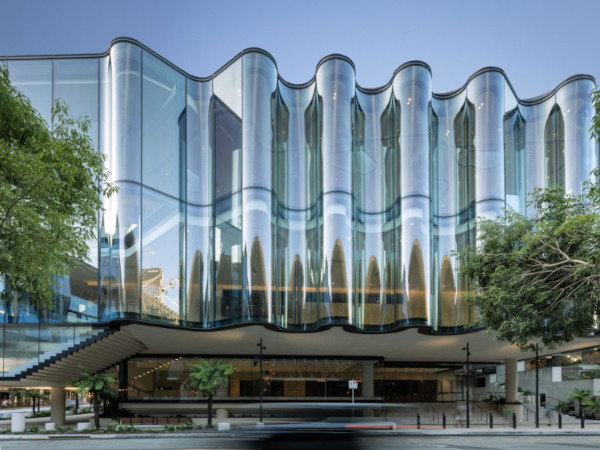
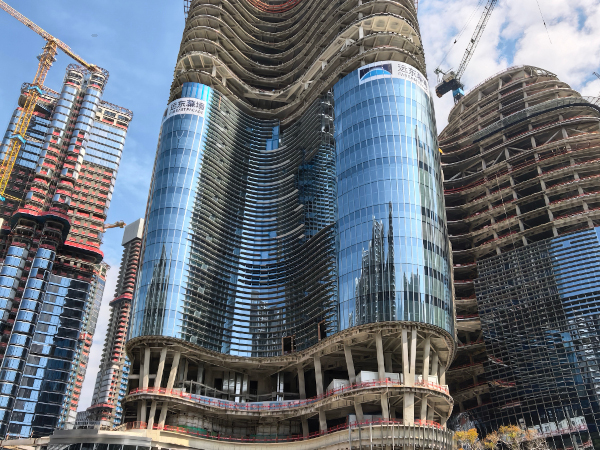
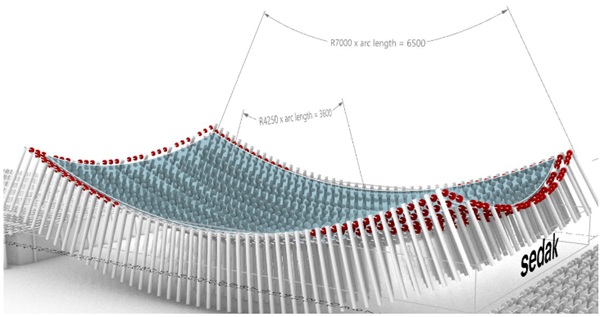
Conventional bending‑tempering equipment is limited to producing single‑curved glass. The second generation of bending‑tempering furnaces enables synclastic double curvature, typically achieving radii of approximately 7.0 m along the long axis and 4.25 m along the short axis (Figure 7), with maximum glass dimensions of 6.5 m × 3.6 m. With such an oven, sedak managed to deliver all the doubly curved panels for The Henderson (Murray Rd, Hong Kong).
This specific furnace configuration, with a quenching cavity height of approximately 1000 mm, constrained glass geometries to sag values of approximately 741 mm in one axis and 376 mm in the other. These limits directly define the maximum attainable double curvature in projects.
The coating position of conventional soft coatings is limited to be on the concave surface. Only special coatings are engineered to be in contact to the rollers. This results in glass build-up design limitations.
3. New Bending Tempering Equipment: Double Curvature and Spherical Glasses
An optimal curved‑glass specification should synthesize the superior characteristics of all relevant forming processes (thermal bending, gravity bending, lamination bending and chemical strengthening):
- Geometrical fidelity and high optical quality of the gravity bending (annealed).
- Production speed and lower costs provided by tempering processes (machine bending + thermal
tempering). - Forming viability of high-performing coatings (mostly found in machine bending).
- Mechanical performance and shape accuracy from lamination bending (tempered laminated).
- Freedom to place the ceramic frit on any surface of the glass as required – no constraints regarding which side of the glass the coating must be applied to (which can be found in the traditional slumping and bending machines).
While completing some outstanding double-curved glass jobs like L’Oréal Le Visionnaire in Paris (Moatti-Rivière Agency) and The Henderson tower in Hong Kong (Zaha Hadid Architects) sedak realised existing equipment, despite being the most advanced in their field, had to be reinvented from scratch to give answer to new upcoming challenges. To reach new standards of geometric freedom and quality, it is developed in-house.
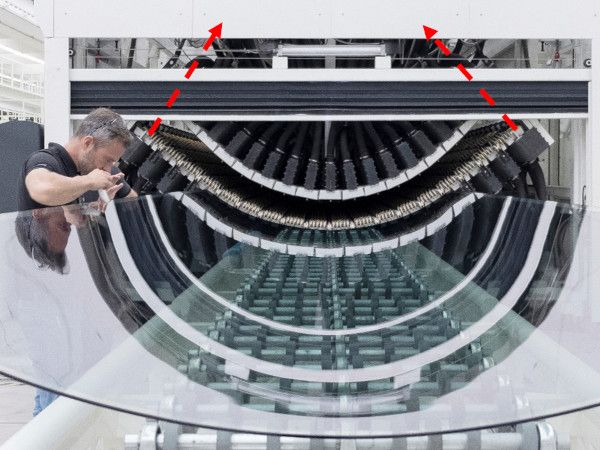
Today, this new manufacturing concept has become a tangible reality, enabling sedak to deliver previously unattainable manufacturing capabilities to all relevant project stakeholders. It represents a genuine game‑changer in the field of architectural multicurved tempered glass. While the overall furnace dimensions are designed to meet the requirements of our upcoming large‑scale projects (8.5 m × 3.6 m), a key innovation lies in the exceptional depth of the quenching cavity, which reaches 1200 mm, significantly larger than any bending‑tempering oven currently available on the market. This expanded quenching volume plays a decisive role in enabling the fabrication of high‑amplitude, deeply undulating geometries, providing the vertical clearance necessary to maintain curvature accuracy, optical quality, and uniform tempering even under extreme deformation profiles.
Moreover, the new concept introduces a capability virtually absent from existing equipment: the possibility of achieving very tight bending radii, in some cases as low as R = 500 mm (Figure 8), either in a concave or convex format, and combining both if desired. Such small radii are rarely viable even with conventional cylindrical bending technology and represent a major leap forward in design freedom.
The increasing use of computational design and optimization tools in architectural and façade engineering workflows is mirrored in the innovative fabrication process. In‑house digital analyses incorporate three‑dimensional simulations of the production sequence, allowing curved glass panel geometries to be evaluated against manufacturing constraints at an early stage.
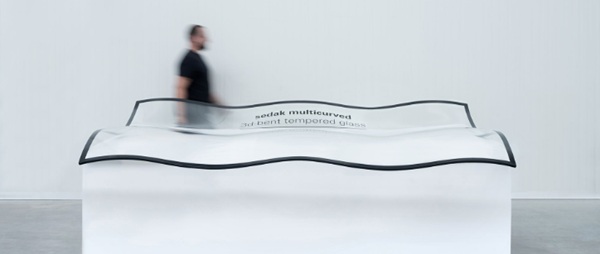
The integration of these capabilities within a single furnace dramatically broadens the array of technical solutions the new concept unfolds. The singular nature of the newly engineered rolling and quenching system over which the glass plies enter the oven, is one of the fundamental pillars of this successful concept. The glass ply is constantly supported since the moment the new geometry is formed till the glass is fully quenched, with a direct impact on the quality of the either heat strengthening or fully tempering.
The fact the new equipment can sculpture almost any geometry totally automatically, with no need to worry any longer about the fabrication of moulds, costly, with constant uncertainty on what would happen in case of potential panel replacement along with the high cost of having individual unique geometries for each panel in the design obliging architects and engineers to rationalise. This is already past. The new technology allows all this with the benefit of using any sort of high performing coatings (temperable version) that, as well as ceramic frits, can be place on any desired surface, either concave or convex (Fig. 9).
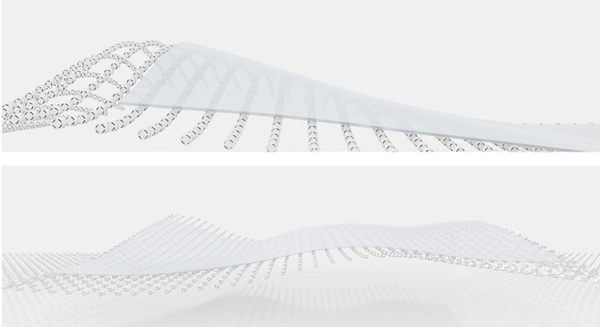
While the sedak multicurved breakthrough provides designers with unprecedented freedom in their creative process, the invention is not just intended to shape super complex surfaces (Fig. 10), but it further contributes to solving recurring manufacturing challenges, particularly those involving the tempering of conical profiles and complex multi‑axis geometries such as J‑ and S‑shapes. This innovation extends complex‑geometry forming to monolithic, laminated, and insulated glass.
3.1. From Design to Manufacturing
Equally important, if not more so, than unveiling compelling new manufacturing capabilities is the industry is the need for digital tools that can rapidly and accurately analyse any geometry within a proposed design. In parallel with the engineering of the new equipment, sedak has therefore developed a customised, high‑performance software platform that provides immediate visual and analytical feedback on the production process (Fig. 11). This tool establishes a comprehensive digital environment, effectively functioning as a digital twin of the behaviour within the furnace, and delivers graphical outputs directly linked to both analysis models and production files.
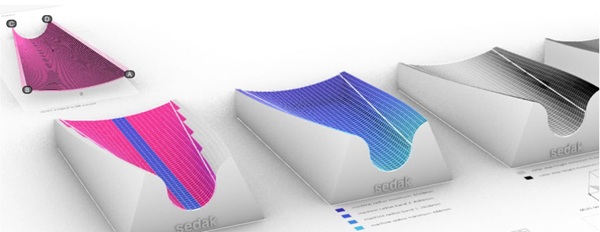
This bespoke in‑house simulation environment evaluates each individual surface and generates all required geometric information (curvature, shape orientation within the oven, etc.). It also produces precise 2D validation files for 3D surfaces that have no theoretical flattening solution in double curvature, an essential step in determining whether a glass component still in the design stage can be manufactured within the constraints of our equipment.
The system allows the introduction of adjustable parameters, which can be updated to reflect project‑specific requirements or design‑team optimisation strategies for the envisioned geometry.
The internal engineering team can then characterise the resulting data through various 3D visualisation modes, including production‑sequence simulations, enabling early detection of potential issues and identification of any refinements required before fabrication (Tarrus & Hänig, 2024).
4. Summary and Conclusions
The bending overview in Table 2 compares five distinct glass bending techniques: traditional slumping, cold bending, chemical strengthening, traditional bending tempering, and the new sedak multicurved tempering process. The evaluation focuses on thermal parameters, geometric versatility, mechanical performance, and industrial feasibility.
Table 2: Pros & cons of different glass bending techniques.
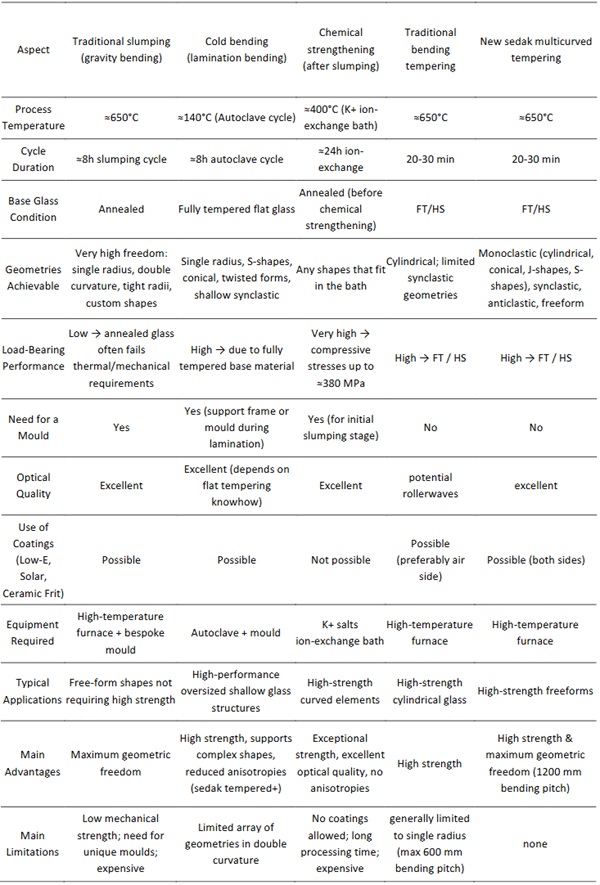
There is a clear divide between slow-cycle, high-temperature processes and rapid-cycle tempering. Traditional slumping and sedak new multicurved tempering both operate at approximately 650°C, yet their cycle durations differ by several hours. While traditional slumping and chemical strengthening require extensive durations (8 to 24 hours), both tempering methods achieve results in just 20-30 minutes, representing a significant advantage in manufacturing throughput.
Historically, a trade-off existed between geometric complexity and load-bearing capacity:
- Traditional slumping offers the highest geometric freedom (including tight radii and custom double curvatures) but results in annealed glass with low mechanical strength.
- Cold bending and traditional bending tempering provide high structural strength but are limited in curvature types, often restricted to single radii or shallow synclastic shapes.
- Chemical strengthening provides exceptional compressive stresses and optical quality but is constrained by the physical dimensions of the ion-exchange bath and the inability to use coatings.
The "new sedak multicurved tempering" emerges as a disruptive technology by bridging the gap between high-strength tempering and complex bending geometries. Unlike traditional tempering, which is often limited to a 600 mm bending pitch, the sedak process supports a much wider array of geometries—including monoclastics, J-shapes, and freeforms—without the need for a physical mould.
The evolution of glass bending techniques has moved toward reconciling mechanical performance with architectural aesthetic demands. While traditional slumping remains the standard for complex shapes, and chemical strengthening serves niche high-strength applications, they are hampered by long processing times and lack of coating compatibility.
This paper concludes that the multicurved tempering concept represents a significant advancement in the field. By maintaining rapid cycle times and high-strength characteristics of tempered glass while achieving the geometric versatility of gravity slumping (without the associated mould costs), it eliminates the main limitations typically found in other methods. This technology enables the production of high-strength, freeform glass structures with superior optical quality and double-sided coating capabilities, making it the most versatile solution for modern high-performance glass envelopes. This notable advance unlocks a fundamentally new design space, enabling architectural expressions that were previously considered unmanufacturable. It widens technical design solutions to engineers when analysing complex-geometry glass structures gathering in a single new equipment the most advantageous characteristics of each glass bending process.
References
Bover, A., Martinez, A. Guitart, N.: Case of study: Glass façade of l’Oréal headquarters. In: Glass Structures & Engineering (2023) 8 (2023). pp. 513–525 https://doi.org/10.1007/s40940-023-00242-z
Bundesverband Flachglas: Guideline on thermally curved glass for building applications. BF-Bulletin 09/2011 (2017).
Feirabend, S., Starz, F., Bechmann, R., Kloker, S., Eckardt, P.: Repositioning Messeturm–Maximum Transparency. In: Glass Structures & Engineering (2021) 6 (2021). pp. 331–337 https://doi.org/10.1007/s40940-020-00140-8
Fildhuth, T., Knippers, J.: Double Curved Glass Shells from Cold Bent Glass Laminates. In: Glass Performance Days 2011 (2011). pp. 316–322.
Fildhuth, T., Schieber, R., Oppe, M.: Design and Construction with Curved Glass. In: Engineered Transparency 2018, Berlin: Ernst & Sohn (2018). pp. 369–381. https://doi.org/10.1002/cepa.937
Rahimzadeh, K., Levelle, E.: (Not) pushing the envelope: achieving the world’s largest cold bent façade with computation and 3-dimensional framing. In: Glass Structures & Engineering (2023) 8. pp. 495–512 https://doi.org/10.1007/s40940-023-00235-y
Tarrus, J., Hänig, J.: New generation of Bending Tempering Equipment: Sustainable Configurations for Double Curved and Spherical Glass. In: CGC 9 – TU Delft 2024. https://doi.org/10.47982/cgc.9.560
Zaccaria, M., Dubru, M., Lucca, N., Šikyňová, A.: Chemically strengthened glass for architectural applications. In: Ce/papers 4(6), 135–144 (2021). https://doi.org/10.1002/cepa.1626