Article Information
- Digital Object Identifier (DOI): 10.47982/cgc.10.801
- Published by Challenging Glass, on behalf of the author(s), at Stichting OpenAccess.
- Published as part of the peer-reviewed Challenging Glass Conference Proceedings, Volume 10, June 2026, 10.47982/cgc.10
- Editors: Christian Louter, Freek Bos & Jan Belis
- This work is licensed under a Creative Commons Attribution 4.0 International (CC BY 4.0) license.
- Copyright © 2026 with the author(s)
Authors:
Nancy Wang, Bill Gao and Joe Xu | Tianjin North Glass Industrial Technical Co., Ltd., China

Abstract
Curved architectural glass is becoming central to contemporary façades, enabling designers to move beyond planar surfaces toward more fluid, expressive forms. This paper examines its aesthetic and geometric potential and shows how high-precision forming using controlled curvature adjustment during strengthening supports large-radius cylinders, tight-radius panels requiring high accuracy, and customized double-curved units. This enables smooth 3D transitions, continuous reflections, and dynamic light effects that significantly enhance architectural identity. The study evaluates how curvature accuracy affects optical quality and structural reliability, focusing on deformation control, thermal uniformity, and post-strengthening stress behaviour. Multi-curvature geometries receive special attention as precise tuning is essential for dimensional stability and consistent visual appearance. Selected outstanding projects by NorthGlass illustrate how advanced forming technologies, large-format production capacity, comprehensive measurement, and multi-stage inspection enable complex façade elements. As architecture advances toward more organic and performance-driven envelopes, curved glass offers the aesthetic flexibility, engineering reliability, and scalable industrialization needed for next-generation façades.
1. Introduction
The evolution of contemporary architecture has been strongly influenced by advances in digital design tools, which enable increasingly complex and fluid geometries that were previously difficult to realize. As a result, architectural envelopes are no longer constrained to planar surfaces but instead adopt continuous, free-form configurations characterized by curvature, transparency, and spatial continuity. Glass, as one of the most important façade materials, has therefore undergone a parallel transformation, shifting from flat glazing toward curved and multi-curved applications that support architectural expression while maintaining performance requirements.
However, this transition introduces significant technical challenges. Compared with flat glass, curved glass must accommodate additional mechanical and geometric constraints arising from the bending process and subsequent thermal treatment. These include increased stress levels during forming, non-uniform residual stress distribution after tempering, and heightened sensitivity to geometric deviations, particularly in multi-panel façade systems. At the same time, modern architectural applications impose strict requirements on optical quality, requiring minimal distortion and consistent reflection across large surfaces. These factors make the production of curved and especially multi-curved glass a complex engineering problem that requires precise control over multiple stages of manufacturing.
In this context, Tianjin NorthGlass has developed a comprehensive set of technologies that address these challenges and enable the industrial production of high-performance curved glass. By combining advanced forming processes, optimized tempering systems, and digital inspection techniques, it has become possible to produce glass panels with tight radii, complex three-dimensional geometries, and ultra-large dimensions, thereby supporting the realization of next-generation architectural designs.
2. Curved and Multi-Curved Glass: Range, Scale, and Challenge
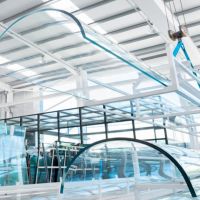
Recent developments in curved glass manufacturing have significantly expanded the achievable range of geometries and dimensions. It is now possible to produce glass with bending radii as small as 75 mm, while maintaining panel sizes of up to 12 meters in length and 3.3 meters in width. This capability enables both tight-radius applications and large-scale façade elements, which are often required simultaneously in contemporary architectural projects.
From a mechanical perspective, curvature introduces fundamental changes in stress behavior. During bending, the outer surface of the glass is subjected to tensile stress, while the inner surface experiences compression. As the bending radius decreases, the magnitude of these stresses increases, leading to a higher risk of fracture during forming and increased sensitivity to process parameters. For radii below approximately 200 mm, the stress levels approach critical values, requiring highly controlled heating, forming, and cooling conditions to ensure structural integrity.
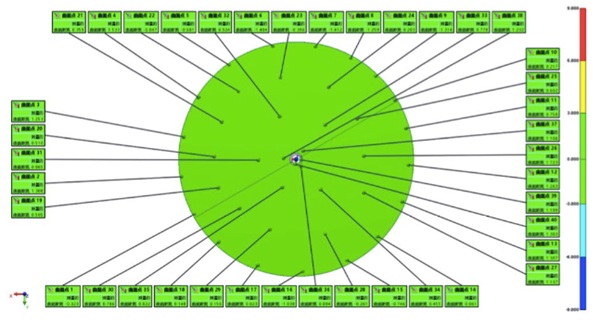
In addition to stress considerations, curved and multi-curved geometries require additional measures related to geometric control and reproducibility. While single radius bending allows relatively predictable deformation, multi-curved glass involves simultaneous curvature along two principal axes, resulting in more complex deformation patterns, including torsion and thickness redistribution. These effects must be carefully controlled and measured to achieve the desired shape while maintaining consistent optical and mechanical performance.
3. Engineering Principles and Manufacturing Strategies
The successful production of curved architectural glass relies on a combination of precise forming techniques and advanced thermal processing. During the forming stage, glass is heated to a temperature at which it becomes sufficiently pliable to deform under gravity or controlled mechanical forces. The final shape is determined by the interaction between mold geometry, heating profile, and the rate of deformation. For multi-curved glass, the process requires simultaneous control of curvature along multiple axes, which significantly increases the complexity of forming and demands high-precision molds and carefully optimized process parameters.
Following forming, thermal strengthening is applied to improve the mechanical performance of the glass. This process involves rapid cooling, or quenching, which generates compressive stress at the surface and tensile stress in the core. In curved geometries, however, the quenching process becomes more complex due to non-uniform cooling conditions. Convex and concave regions may cool at different rates, while variations in thickness and edge geometry further influence heat transfer. As a result, achieving a uniform residual stress distribution requires specifically developed tempering systems with multi-zone control and adjustable cooling intensity.
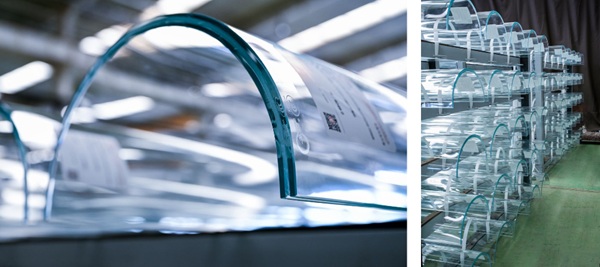
For tight-radius applications, additional measures are necessary to ensure performance and durability. Heat-strengthened or fully tempered glass is typically used, often in laminated configurations with high-performance interlayers such as SGP. These systems provide improved resistance to thermal stress and environmental variations, while also enhancing structural safety by maintaining integrity after breakage.
4. Optical Quality and Geometric Precision
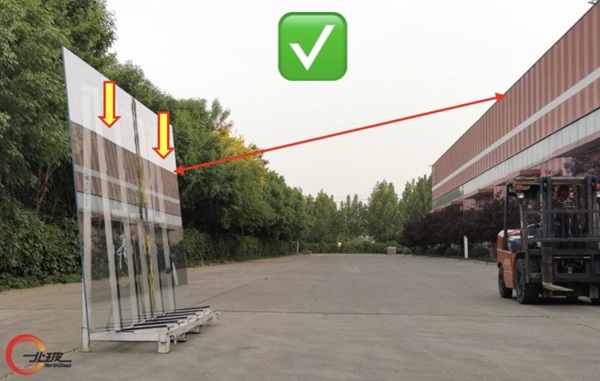
In architectural applications, the visual performance of glass is as important as its structural behavior. Optical quality is primarily influenced by surface deformation, including bow distortion, roller wave, and local waviness. These factors can disrupt reflection patterns and create visual inconsistencies, particularly in large façades where continuity is critical. Advances in tempering technology have enabled significant improvements in flatness, with bow distortion reduced to below 0.1% and roller wave controlled to within 0.06 mm over 300 mm, thereby ensuring high-quality visual performance.
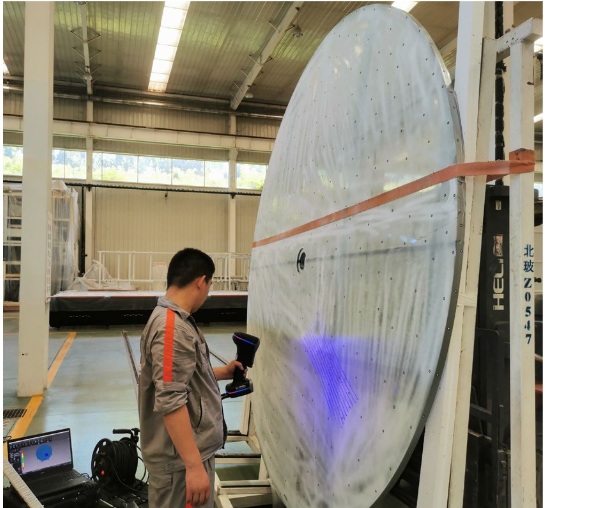
For multi-curved façades, geometric precision plays an equally important role. Each glass panel must match the intended design geometry within tight tolerances, as even small deviations can lead to cumulative errors during installation. To address this, digital verification methods such as three-dimensional laser scanning are employed to compare the manufactured geometry with the original design model. This approach allows deviations to be identified and corrected before installation, ensuring accurate alignment and seamless façade integration.
5. Additional Case Studies: Industrial Validation
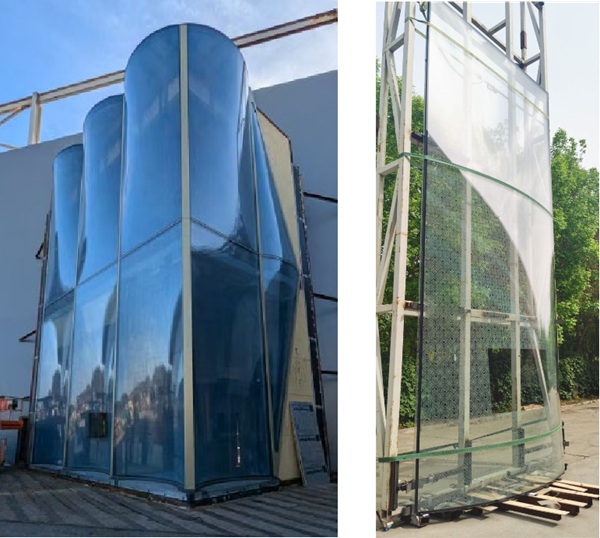
The Huawei “Red Bean” project represents a significant achievement in multi-curved glass, featuring a façade composed of saddle-shaped panels that combine convex and concave geometries. The primary challenge in this project was not only the forming of individual panels but also the consistency between adjacent units, as even minor geometric variations could lead to visible discontinuities in reflection. As a result, the façade achieved smooth visual continuity and was successfully installed without significant on-site adjustment.
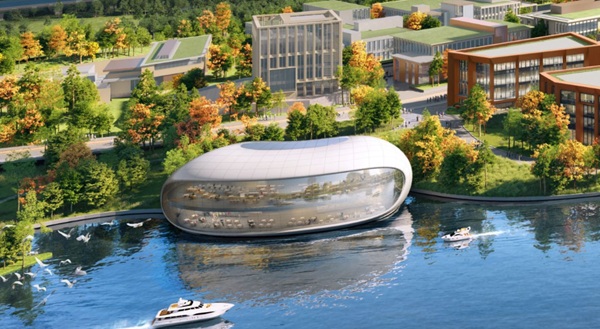
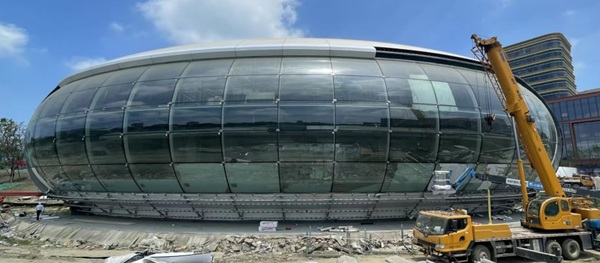
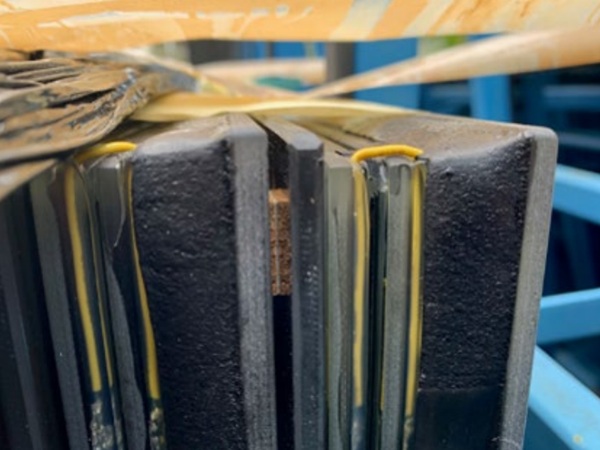
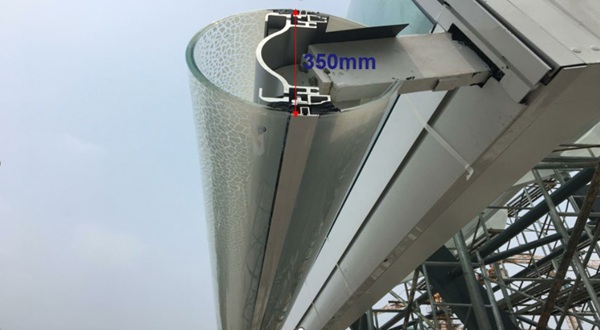
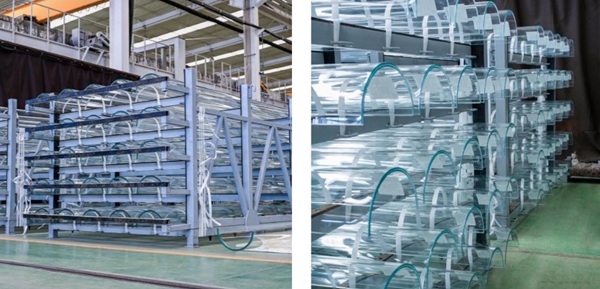
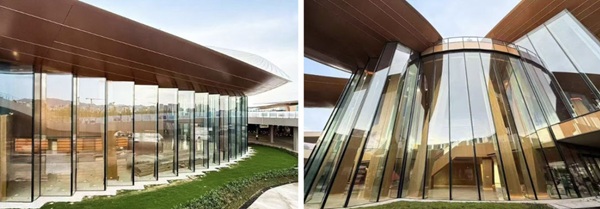
Changfeng Development is another project in Shanghai, China. The glass radius is 125 mm and 175 mm. For such small-radius glass, we usually recommend heat-strengthened or fully tempered glass. To ensure safety and durability, we always apply heat-strengthening or tempering.
- Heat Strengthened Laminated Glass
- Half Circle & R = 125mm/175mm
- 6mm +1.52SGP+ 6mm, low iron HS
- Height 4000mm
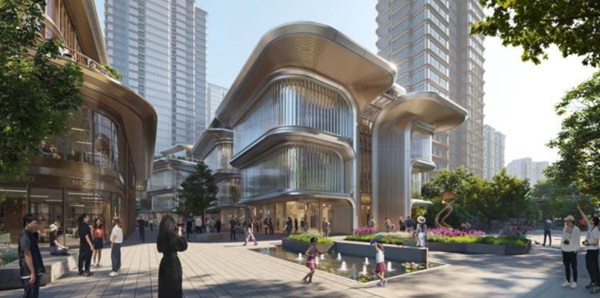
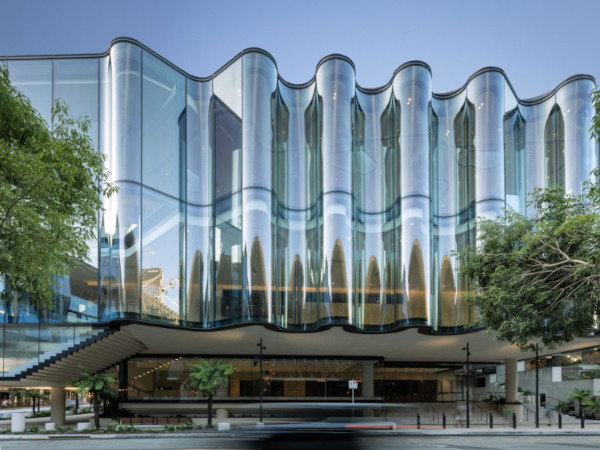
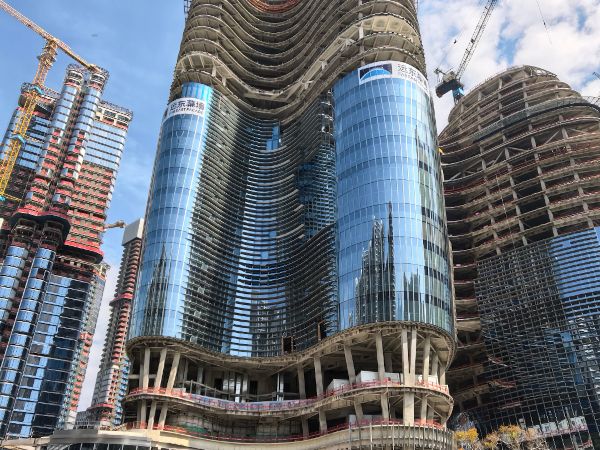
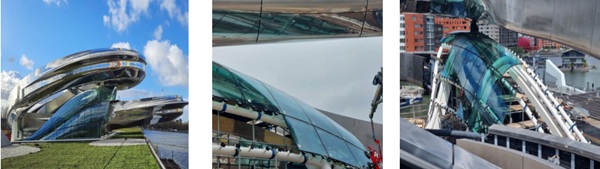
A different set of challenges was encountered in the FENIX Museum project, where all façade panels were fully three-dimensional, each with unique geometry. In this case, the complexity of forming was increased by the non-uniform deformation behavior of the glass during heating. To ensure accuracy, the surface geometry was digitally segmented, and customized molds were produced for each panel. The forming process was optimized to maintain shape stability, and final geometries were verified using three-dimensional scanning. The successful installation of the façade demonstrated the feasibility of fully three-dimensional curved glass systems.
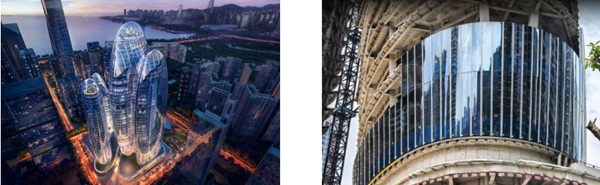
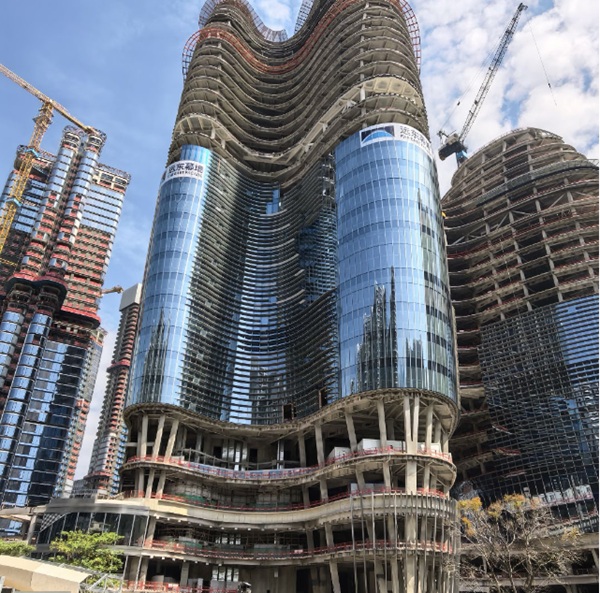
Large-scale production capabilities are exemplified by the OPPO Headquarters project, which involved approximately 70,000 square meters of façade glass, including thousands of curved and multi-curved panels. The main challenge in this case was maintaining consistent quality across a large number of units. This was achieved through standardized production processes, multi-stage inspection, and digital quality control systems, enabling reliable large-scale manufacturing of complex geometries.
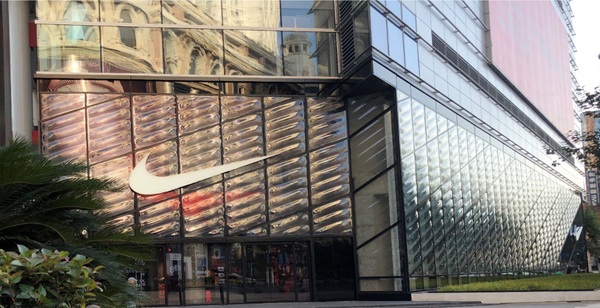
Another unique reference of curved glass by North Glass is “Nike Shanghai 001 flagship store”. Nike Shanghai 001 which is in ShiMao Plaza, No. 829 Nanjing East Road has been full of people from the opening to the present and has become a new landmark of Shanghai. North glass developed the “dynamic air cushion glass” as custom-designed solution to match the NIKE ZOOM AIR idea. The original design of the Air Max air cushion was inspired by the facade pipe which exposed in the interior of Pompidou Centre. Now Nike has also referred to "airbag aesthetics" to building materials. It can be said that it "starts in architecture and returns to architecture."
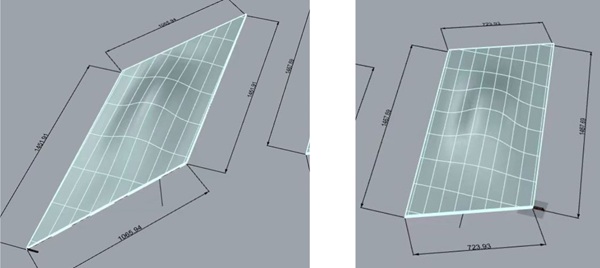
When it comes to the process of making the entire special glass product, the process is rigorous and extreme, too. The size is calculated by the mold software—edge treatment—make prismatic—slump bending— chemical tempering—laminating—insulating. Every detail shows the excellence and ingenuity of Tianjin Northglass’s glass products.
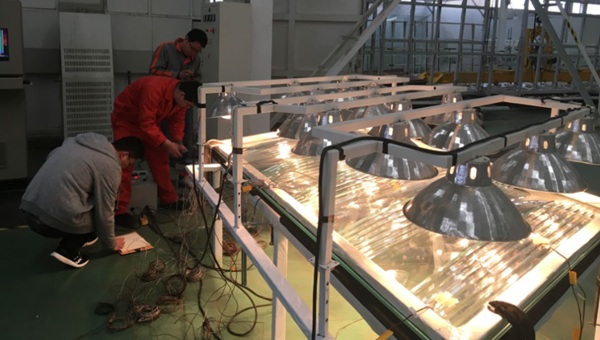
The quality is fully tracked in order to ensure the quality of these glass production. To make sure all glass meet the request of customer, Tianjin Northglass conducted thermal temperature difference test and static pressure test at China Building Materials Research Institute and China Academy of Building Research respectively. In the following the two experimental purposes and methods are introduced:
Thermal temperature difference experiment: This experiment is mainly to verify the influence of the temperature difference between the shaded area and the area of directsun irradiation on the glass. The simulation method: the middle part of the glass is heated by infrared light, and the glass edges installed in the 60mm area frame where the cooling water circulates inside, the position of the thermocouple is A=20 mm from the edge of the glass and B=120mm. When the temperature difference between adjacent AB points reaches 20°C, the temperature is kept for 90 minutes. If the glass is not damaged, increase the temperature at point B to 30 ° C and keep it for 90 minutes.
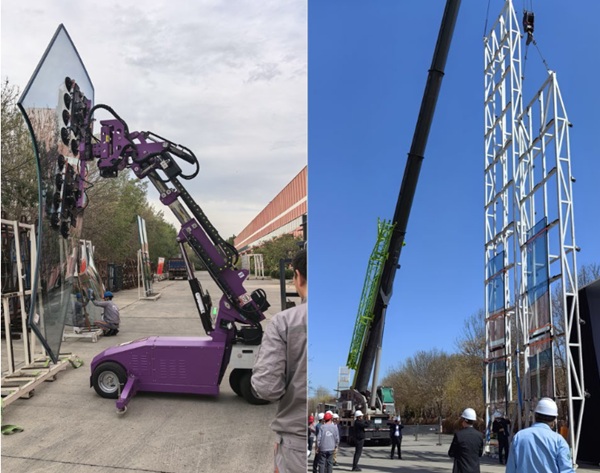
The façade of Guangdong Business Center uses glass panels up to 23 meters high in a single piece, designed without glass fins. The project is still under construction but is expected to open later this year.
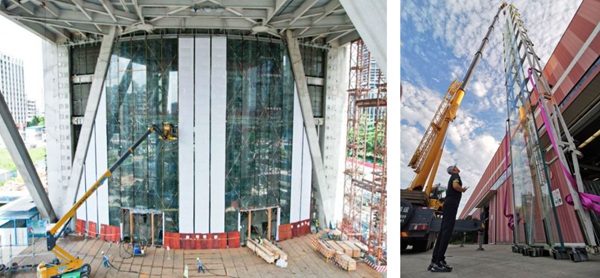
This project of “Anji Two Mountains Future Science and Technology City Culture and Art Center” draws its design inspiration from tea culture. The concept resembles a tea leaf, with glass panels reaching 19 meters in height. In some photos, the glass appears less transparent because a protective film is still applied. This façade is also fully structural and does not rely on glass fins.
6. Cast Glass Applications
In addition to curved glass, recent developments have expanded the possibilities for ultra-large and cast glass applications. Ultra-large panels, with heights exceeding 20 meters and surface areas greater than 50 square meters, enable highly transparent façades with minimal structural interruption. These applications require careful coordination of manufacturing, transportation, and installation processes, as well as detailed structural analysis to ensure performance under wind and other loads like described before.
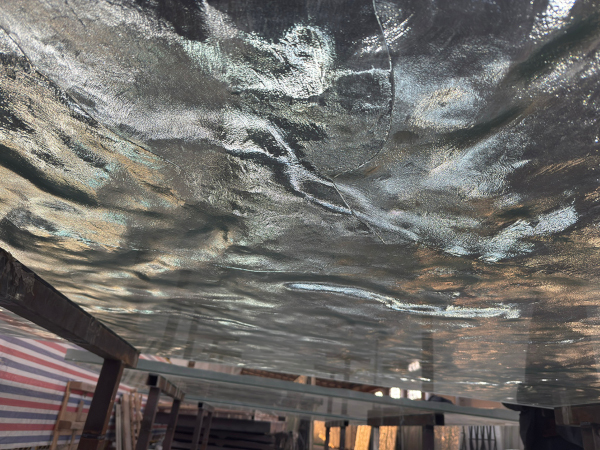
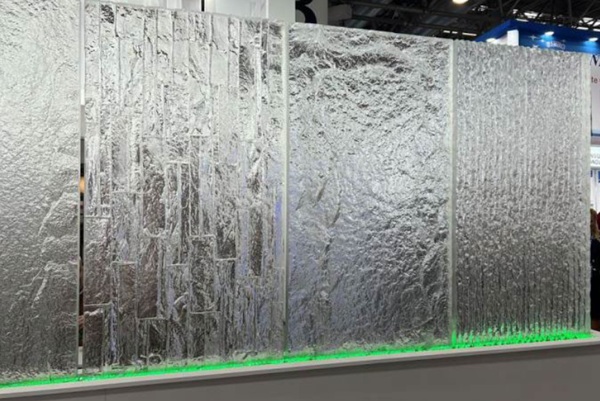
Cast glass, particularly borosilicate glass, offers additional design flexibility through variations in thickness, texture, and color. With thicknesses ranging from 20 to 200 mm and customizable surface patterns, cast glass can be used to create distinctive architectural features. To ensure suitability for façade applications, extensive testing according to EN and GB codes is conducted, including thermal shock tests and mechanical performance evaluations, confirming the material’s durability and safety.
7. Conclusions
The integration of in the last 3 years developed and particularly described advanced engineering principles with large-scale industrial practice has enabled significant progress producing curved architectural glass. Technologies for tight radius bending, multi-curved forming, and ultra-large panel production have reached a level of maturity that supports a wide range of new architectural applications. Through precise control of forming processes, optimized thermal strengthening, and rigorous geometric verification, it is possible to achieve high levels of structural reliability and optical quality.
As architectural design continues to evolve toward more complex and expressive forms, curved glass will play an increasingly important role in enabling innovative building envelopes. The continued development of manufacturing technologies and engineering methods will further expand the possibilities for glass in architecture, supporting the realization of future designs that combine aesthetics, performance, and sustainability.
References
Bedon, C., Amadio, C. (2015). Buckling analysis and design of glass panels under in-plane compression. Thin-Walled Structures, 86, 131–143. https://doi.org/10.1016/j.tws.2014.10.010
Haldimann, M., Luible, A., Overend, M. (2008). Structural Use of Glass. IABSE, Zurich.
Kuntsche, J., Schneider, J. (2011). Investigation of shear coupling in laminated glass panels. Engineering Structures, 33(11), 3220–3232. https://doi.org/10.1016/j.engstruct.2011.07.018
Overend, M., Jin, Q. (2010). The strength of laminated glass. Construction and Building Materials, 24(12), 2327–2338. https://doi.org/10.1016/j.conbuildmat.2010.04.025
EN 12150-1 (2015). Glass in building – Thermally toughened soda lime silicate safety glass.
EN 14449 (2005). Glass in building – Laminated glass and laminated safety glass.