
Latest articles

| The paper presents the results of FEM analysis as well as tests performed on double glazed units including Sikasil® IG-25 secondary sealing joints and SikaGlaze® IG-5 PIB as primary seal.

| This paper gives an overview of the requirements of a ship structure, and more specifically yacht structures, and describes the challenges associated with using glass as a fully integrated structural component.

| Ground rules emerging from built case studies on adhesive selection and experimental validation.

Investigations on Linear Silicone Joints for Glass-Metal Elements with Composite Structural Behavior
| In this article, experimental and numerical results obtained for linear structural silicone joints between glass and stainless steel substrates, investigated separately under tensile and under shear loading, are discussed.

| This work focuses on the Transparent Structural Silicone Adhesive (TSSA), produced by Dow Corning.

| Eurocode-compliant, mesh-independent approach using the FEM


| Connecting glass with heat bonds is a way to create all-transparent glass structures. Two methods have been researched in theory and practice, glass welding, through local heating, and glass fusion through global heating.

| The present work uses non-linear material laws for FEA and exhibits the behavior of the sealant joint in various load scenarios on several projects.

| In this paper the mechanical and application properties of Sikaflex®-268, a high performance polyurethane adhesive are presented and compared to Sikasil® SG-500, a typical silicone adhesive used for structural glazing applications in facades.
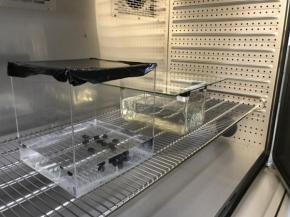
| Silicone sealants have been applied for more than 40 years to structurally bond glass onto steel or aluminium frames. One of the reasons is the unique resistance to weathering in normal assembly situations.
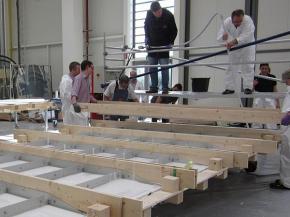
| Following a short overview outlining key design objectives, the fabrication process of an opaque composite glass panel is described in detail.

| Use of cold-bent and warped glass units in unitized curtain walling has been getting a state-of-the-art application for the last years.


| The paper discusses some essential findings of two recent research studies on the durability and service life of structural silicone glazing sealants and structures.

| Glass panes adhesively-bonded to structural profiles allow for the design of stiff, robust and transparent sandwich structures.

| During a recent project to understand the ability to use Transparent Structural Silicone Adhesive (TSSA) via linear bonding for cable wall fittings, a unique aspect of the material indicates a potential novel method for cold bending glass.

| Adhesive bonding is an efficient joining process with great potential for materialefficient constructions. Today, the technology is already applied in almost all branches of industry.

| Use of cold-bent and warped glass units in unitized curtain walling is a state-of-the art application.

| This article has been first published at Glass Performance Days 26-29 June 2019 in Finland. The use of load-bearing adhesive joints in the glass structures have been in the focus of research throughout the last years.