

Date: 3 March 2026
After participating in a webinar on the revised Energy Performance of Buildings Directive (EPBD), Sparklike was encouraged to reflect on what the updated regulation means in practice for window and insulating glass unit (IGU) performance.
This blog post examines how high-quality insulating glass units support the façade industry in meeting evolving regulatory requirements, enhancing overall building envelope performance, and strengthening market competitiveness in an increasingly performance-driven market.
Why the EPBD Recast matters now
The Energy Performance of Buildings Directive (EPBD) is the European Union’s main policy instrument for improving building energy efficiency and reducing carbon emissions.
According to the European Commission, “the energy performance of a building reflects its typical energy use and takes into account the building envelope, notably insulation and windows.” (European Commission, EPBD)
The latest EPBD Recast (EU 2024/1275) entered into force in May 2024. Member States must transpose it into national law by May 2026. The recast strengthens requirements for zero-emission buildings, life-cycle carbon assessment, and deep renovation, all of which place renewed emphasis on the performance and durability of the building envelope.
For the window and glass industry, this represents a decisive shift: insulation performance is no longer only a design value but a verifiable element of building quality.
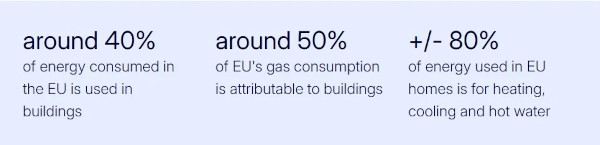
Windows in the Directive – part of the climate solution
The building envelope and windows
The EPBD defines the building envelope explicitly as
“the integrated elements of a building which separate its interior from the exterior, including the windows.” (Article 2 § 3, EPBD 2024/1275)
Annex I further specifies that energy performance calculations must consider
“the thermal characteristics of the building (including the envelope, the internal partitions, the floors, ceilings and roofs), including … thermal bridges, insulation, and the performance of windows and glazing.” (Annex I § 1, EPBD 2024/1275)
These passages confirm that windows and therefore insulating glass units (IGUs) are integral to how a building’s energy performance is evaluated and reported. Improving glazing performance directly contributes to compliance with EU energy and climate targets.
Industry position
Industry associations such as Glass for Europe have welcomed this direction. Their joint statement notes:
“As the potential energy savings related to window replacement is huge, the proposed recast of the EPBD should ask Member States to create strong incentives…” (Glass for Europe, Joint Position, 2022)
The message is clear: upgrading window systems and IGUs is one of the most effective pathways to achieving the Directive’s goals.
From design targets to measurable performance
The EPBD does not prescribe how each building component must be tested, but it sets a clear expectation that buildings perform as designed and that their energy characteristics are demonstrable and traceable.
At Sparklike, we interpret this as a call for verifiable quality in the building envelope. Insulating glass units are central to this objective. Properly filled and well-sealed cavities are key to maintaining low thermal transmittance and ensuring that windows perform consistently over their lifetime.
Non-invasive gas fill verification plays a critical role in achieving this. In several projects, Sparklike’s measurement technology has been used to provide evidence of the gas fill rate as an indicator of window insulation performance, supporting manufacturers, auditors, and building owners in confirming that installed glazing meets expected energy performance.
Read: Sustainable glass façades depend on gas fill quality – long-term thermal performance of insulating glass units
This expectation extends beyond new construction. As the industry moves toward greater transparency and whole-life performance, reliable data becomes a prerequisite. Understanding why proper gas filling is essential for energy-efficient windows helps document the link between IGU quality and the building’s verified thermal performance.
By integrating non-invasive gas measurement into quality control – during production, installation, and in-service evaluation – stakeholders can demonstrate that glass panes performs as intended. This directly supports the Directive’s intention to ensure that buildings achieve and maintain high energy performance throughout their life cycle.

Deep renovation – upgrading the building envelope
The Recast places strong emphasis on deep renovation. Article 7 requires that such projects “ensure that the building achieves a very high energy performance and that the building envelope meets minimum energy performance requirements.”
For many existing buildings, windows are among the weakest points of the envelope. Replacing outdated glazing with high-performance, gas-filled IGUs can therefore make a measurable difference in meeting the Directive’s upgraded thresholds. However, renovation does not always mean complete replacement. In line with the EU’s circularity goals, the ability to assess the reuse potential of existing IGUs is becoming increasingly relevant.
Recent studies show that measuring argon concentration and estimating product age using non-invasive technology can determine whether an IGU remains suitable for reuse in renovated façades. This supports renovation decisions by identifying which units can be retained, which require refurbishment, and which must be replaced to meet EPBD performance criteria. See: Study: Reusing insulating glass units – the role of argon testing
As renovation programmes expand across Europe, reliable verification of IGU quality¸including gas fill levels, leakage over time, and the retained insulation value¸helps demonstrate that refurbished envelopes deliver the expected efficiency gains. This ensures that the upgraded building envelope performs as designed and supports the Directive’s broader objectives for long-term efficiency, waste reduction, and lifecycle carbon improvement.
At the same time, proper gas filling remains a prerequisite for achieving the low U-values demanded in deep renovation. Verifying gas concentrations during envelope upgrades provides evidence that the renovated façade meets the minimum energy performance requirements and contributes to the building’s overall compliance.
Supporting data and compliance transparency
Article 19 of the Directive calls for databases containing information on the energy performance of buildings and building elements to support monitoring and analysis. This signals an increasing need for accurate, verifiable product-level data.
Gas fill verification contributes to this data-driven approach by offering measurable evidence of window insulation performance, reinforcing manufacturers’ and building owners’ ability to document quality and compliance.
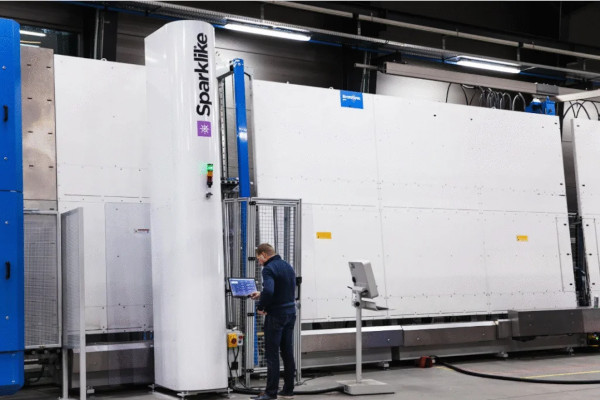
How window and IGU manufacturers can align with EPBD goals
- Document performance
Provide reliable data supporting declared U-values and long-term durability. Gas fill verification offers transparent evidence of consistent quality. - Integrate testing into production
Non-invasive gas measurement enables process control without damaging the units – supporting traceable, repeatable quality assurance. - Support renovation initiatives
Verified high-performance IGUs strengthen the case for envelope upgrades in deep-renovation projects. - Contribute to lifecycle transparency
Verified data helps populate Environmental Product Declarations (EPDs) and life-cycle assessments, aligning with the EPBD’s shift toward whole-life-carbon reporting.
A commitment to measurable building quality
The EPBD Recast 2024 redefines building performance in Europe by combining operational efficiency, durability, and verifiable quality. For the insulating glass sector, this is an opportunity to demonstrate how measured, data-backed performance supports both compliance and sustainability.
By verifying gas fill and ensuring IGU integrity, we help ensure that glazing truly performs as intended, contributing to Europe’s zero-emission building objectives and reinforcing confidence in high-performance building envelopes.
More information on Sparklike’s solutions and their applications in IGU quality control.
Further reading:
European Commission – Energy Performance of Buildings Directive
Official Directive (EU 2024/1275) – Energy Performance of Buildings Directive (recast) (OJ L 2024/1275)
Glass for Europe – Joint Position on EPBD Recast 2022
 600450

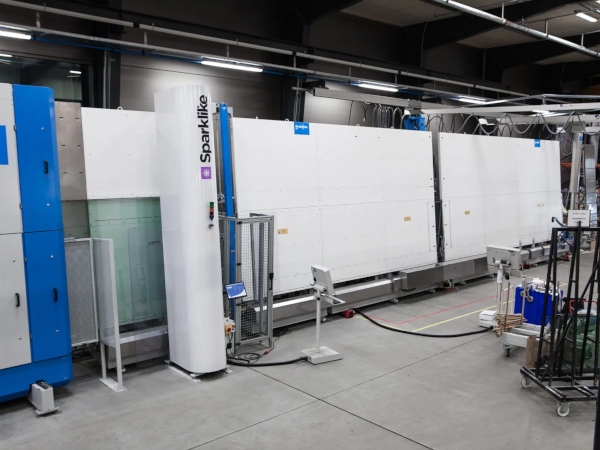















What stands out here is the shift from promises to proof. Energy performance is no longer just a design claim on paper. It has to be measurable, verifiable, and maintained over time. That subtle change could quietly transform how façades, windows, and IGUs are valued across the entire building lifecycle.