Date: 3 June 2026
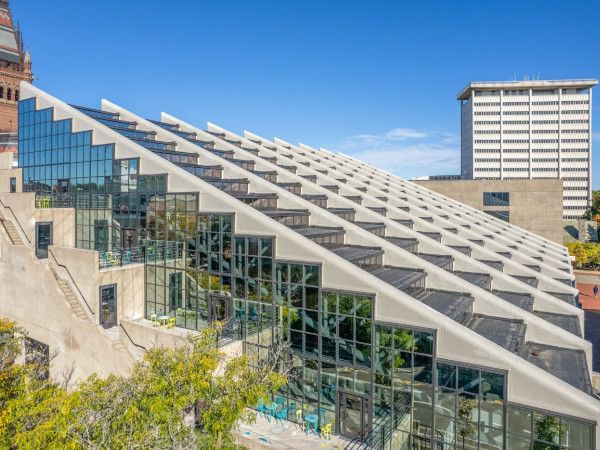
A new generation of high-performance glazing from Vitro Architectural Glass is playing a central role in the transformation of Gund Hall, the iconic concrete modernist building that has housed Harvard University’s Graduate School of Design since 1972.
By combining advanced vacuum insulating glass (VIG), solar control low-e coatings and close design-assist collaboration, Vitro helped project partners dramatically improve comfort, energy performance and daylighting while preserving the hall’s distinctive architectural character.
Known for its stepped terraces, expansive curtain walls and clerestory glazing, Gund Hall historically struggled with air and water infiltration, excessive glare and poor thermal performance. As part of a comprehensive enclosure renewal, Bruner / Cott Architects, working with lighting designer Lam Partners and structural engineer Simpson Gumpertz & Heger, partnered with Vitro Architectural Glass, Oldcastle BuildingEnvelope, A&A Window Products and Shawmut to develop façade-specific glazing strategies that addressed these long-standing challenges without compromising the building’s visual identity.
A defining element of the renovation was the use of Vitro VacuMax™ (VIG) by Vitro on the north and south elevations. To meet stretch code requirements for the state of Massachusetts, which call for a 0.25 U-value façade, the project team determined that the thickness of conventional triple glazing would alter the building’s original aesthetic. Instead, a hybrid VIG assembly was used that delivered exceptional thermal performance within a slim profile.
Rather than applying a single glazing solution across the building, the team established performance targets for each orientation. Studies focused on balancing visible light transmittance (VLT), glare control and solar heat gain, allowing Vitro glass substrates and coatings to precisely tune into the functional and aesthetic demands of the north, south and east elevations.
“Achieving these nuanced specifications required dozens of glazing samples, which Vitro nimbly provided in support of our selections,” states George Gard, associate architect at Bruner / Cott Architects.
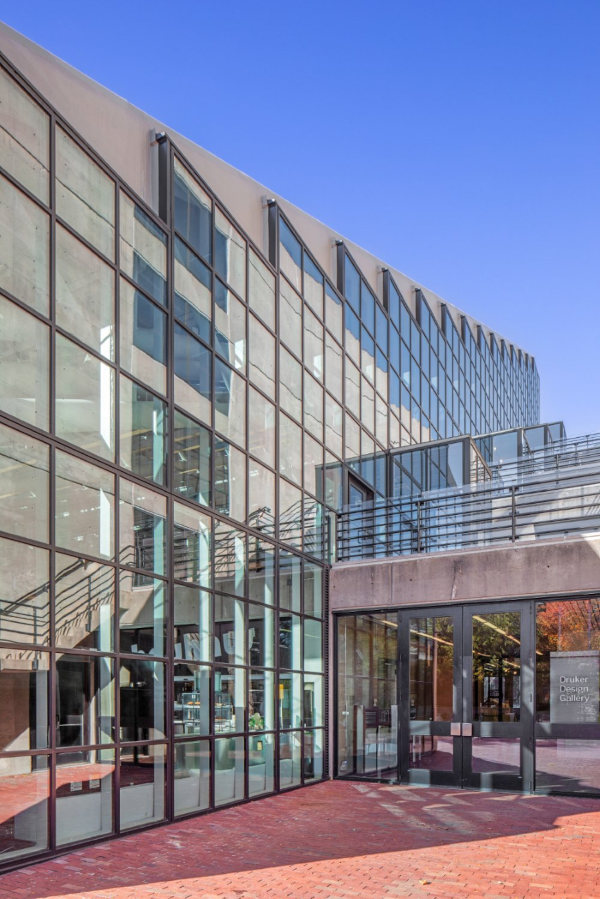
On the south elevation, Vitro glass was used to reinterpret the building’s original reflective appearance while delivering modern performance. A combination of Solarban® R100 glass and Solargray® glass lites, paired with Acuity® low-iron glass by Vitro and warm-edge spacers with argon fill, improves glare control and color rendering while achieving an interior solar heat gain coefficient (SHGC) of 0.21.
For the north and east curtain walls and clerestory trays, the team opted for Solarban® 90 Acuity® glass to maintain visual clarity without introducing unwanted color bias.
“This was intended to capture the clarity of the 1972 plate glass, without introducing cool blue-tones as use of low-iron glass in isolation often can.,” Gard explains. “Solarban® 90 glass provides a neutral nonreflective low-e coating which reduces solar heat gain while promoting clarity and color rendering.”
Between 79% and 80% of heat from the sun is prevented from entering the north and east curtain walls while 48% of visible light is ushered inside. For the clerestory, heat blockage levels are even higher at 84% while light transmittance is 31%.
Developed through close collaboration with the architect, glass contractor, Oldcastle BuildingEnvelope and Vitro, the custom system reduced sightlines from 2½ inches to 2 inches while substantially improving enclosure performance.

“This assembly married the vastly superior center of glass performance created by the VIG’s narrow vacuum cavity, with superior edge-of-glass performance of a narrow warm-edge spacer—well exceeding the performance of triple glazing within approximately the thickness of a typical double glazed IGU,” Gard reports.
Where a standard insulating glass unit typically achieves a U-value of 0.24, the hybrid VIG solution drove that value all the way down to 0.06 at the center of glass and delivered an overall system U-value of 0.19, providing roughly four times the thermal performance of conventional double glazing. VacuMax™ VIG was selected for its tempered substrates and the use of Vitro-manufactured North American glass and coatings, ensuring long-term material consistency.
In total, 1,617 original glazing units were replaced with a newly glazed area that totals 15,475 square feet. Together, the Vitro glass solutions are projected to reduce Gund Hall’s energy use intensity by 22.2%and utility costs by 19.1%, while substantially improving comfort and daylight quality throughout the studios.
“For the first time in at least 40 years, we introduced daylight autonomy throughout the outer rooftop trays. This vastly improved daylighting is the most immediately noticeable improvement upon entering the studio,” Gard concludes.
Project Credits:
- Architect: Bruner / Cott Architects
- Glass Fabricator: Oldcastle BuildingEvelope (Montreal)
- Glazing Contractor: A&A Window Products Inc
- General Contractor: Shawmut Design & Construction
- Photography: Tom Kessler
Visit vitroglazings.com or call 1-855-VTRO-GLS (887-6457) to learn more about Vitro’s high-performance, low embodied carbon architectural glass.
 600450










Add new comment