

Date: 27 March 2025
Products covered include its range of float glass (clear and tinted), laminated glass, and wet coated (mirror) glass.
Third party verified by an independent external verifier (UL), the four EPDs cover the following products:
- Guardian™ Clear, Guardian™ Light Green, and Guardian™ Solar Management Glass float glass
- Guardian LamiGlass™ laminated glass product range
- Guardian UltraMirror™, Guardian UltraMirror™ Plus and Guardian UltraMirror™ Life mirror glass
- Guardian™ Clear, Guardian™ Light Green, and Guardian™ Solar Management Glass for automotive applications, according to the Automotive Product Category Rules (PCRs)
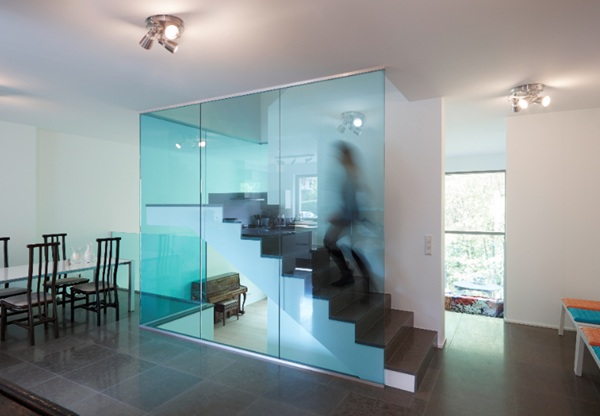
The EPD for float glass used in architectural and interior design applications follows a cradle-to-gate (A1-A3) study, conducted in accordance with ISO 21930 and the North American PCRs. It reports an embodied carbon value of 9.97 kgCO₂e/m² for 4 mm glass*.
The EPD for automotive glass follows a cradle-to-gate with Options study (A1-A4, C1-C4), incorporating both transportation from Thailand to Australia and New Zealand (A4) and end-of-life considerations (C1-C4). Developed in accordance with the Automotive & Transport UN PCRs, the total embodied carbon for 4 mm automotive glass is 12.3 kgCO₂e/m². This includes an A1-A3 embodied carbon value of 10.02 kgCO₂e/m² and an A4 transportation impact of 2.16 kgCO₂e/m² for shipments to Australia and New Zealand.

In parallel, Guardian Glass has introduced a new feature to its current Performance Calculator tool, which allows users to calculate the embodied carbon** for the glazing configurations they select. This online tool (part of Glass Analytics) enables the modeling of the thermal and optical properties of glass substrates, coatings and interlayers. The new Performance Calculator feature provides an estimate of the embodied carbon equivalent for a wide number of glazing combinations, as it is available for most float glass, sputter-coated glass, and laminated glass products produced by Guardian Glass in Asia Pacific, North America, South America, Europe and Africa Middle East & India.
Sascha Klengel, Guardian Glass Sales Leader in Asia Pacific comments: “We are excited to increase visibility for the embodied carbon value of our glass products for the construction and automotive sectors. By increasing the understanding and accessibility to the environmental attributes of our glass, we can help our partners make informed glass specification decisions for a positive impact on the performance of their vehicles, facades and interior design projects. Our new EPDs demonstrate our commitment to the Environmental priorities of our Stewardship Framework.”
Download the new EPDs on guardianglass.com/product-declarations.
Access to Glass Analytics and the Performance Calculator - with embodied carbon calculator feature - is via the Resource Hub on the Guardian Glass website guardianglass.com/resource-hub.

_____
* Global Warming Potential of the A1-A3 stages includes the impacts from the raw materials extraction and processing stage, raw materials transportation to the manufacturing site, and the manufacturing of the product. This term is sometimes referred to as the “product carbon footprint” or “embodied carbon.”
**The embodied carbon data is the carbon equivalent in kg per ton or square meter of glass (CO 2 eq.), emitted during the glass production (cradle-to-gate, A1-A3). The calculation is an estimation based on the material’s Embodied Carbon Factor (ECF) which were derived from the scaling factors and results in the Regional Environmental Product Declarations (EPDs), third-party, independently verified documents that communicate transparent information about the lifecycle environmental impacts of a product.
 600450























Add new comment