
Date: 4 November 2026
UYUT STIL was founded in 2005 in Sofia, Bulgaria, starting with the production of PVC windows. Until 2017, glass units were purchased from Bulgarian manufacturers, but due to many problems such as delivery, quality and costs, the management decided to start the production of their own glass units.
In 2017, UYUT STIL launched its own insulating glass production, supported by a LiSEC assembly line. At that time, production was operated by 17 employees. As part of its continuous development, the company invested in a new production facility with an area of 5,000 m². At the beginning of 2025, the new hall went into operation, including the installation of new LiSEC machines. For the first time in Bulgaria, a fully automated insulating glass production was realized – a novelty for the Bulgarian market. With this step, UYUT STIL was able to further optimize its processes and reduce the number of operators in production to 13 employees.
UYUT STIL: Growth through automation
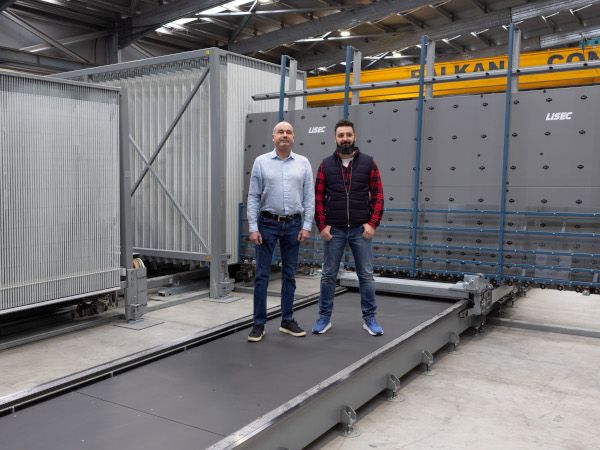
With the decision for a new automated sorting system from LiSEC, the Bulgarian insulating glass manufacturer UYUT STIL has reached an important milestone in the further development of its production. The investment aims to stabilize the material flow, reduce personnel deployment and create the basis for further growth. In addition to the new plant technology, the project was supported by LiSEC Performance Check expert Wolfgang Klauser in order to integrate the new structures sustainably into daily production.
Investment in the first automated sorting system in Bulgaria
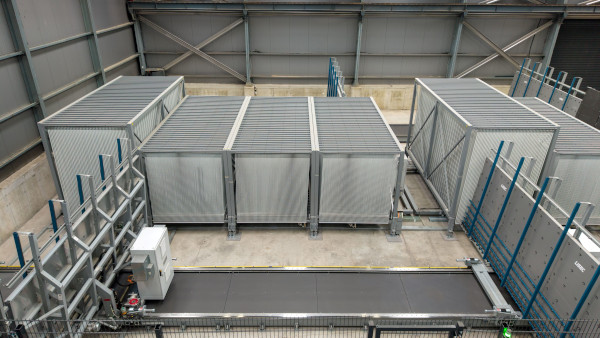
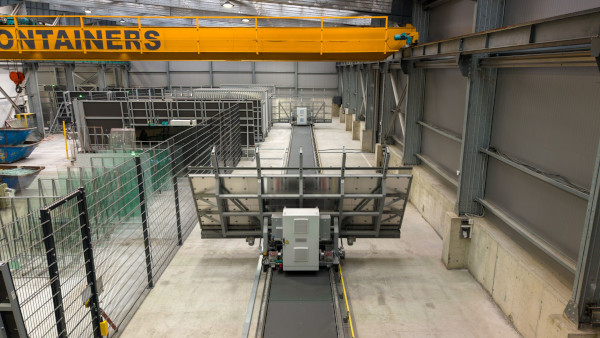
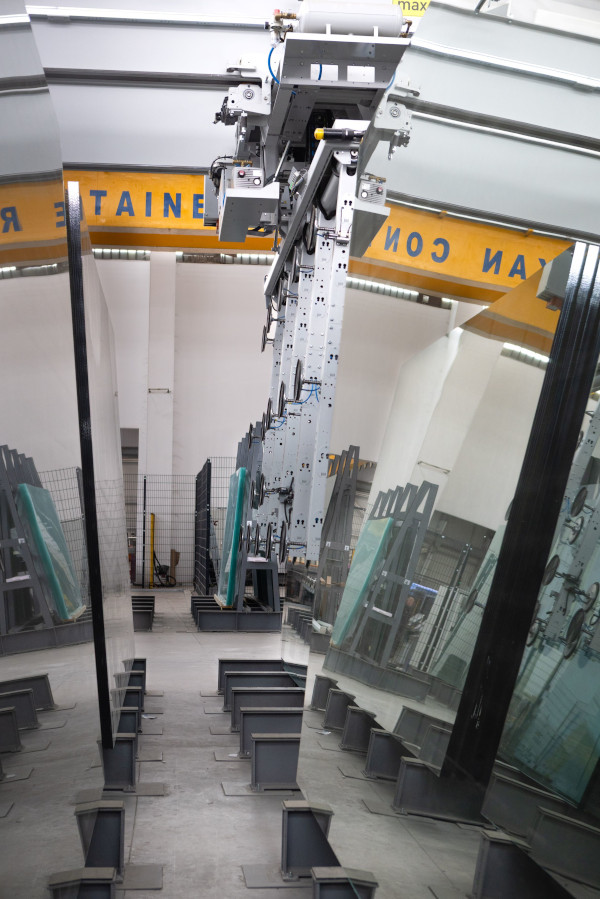
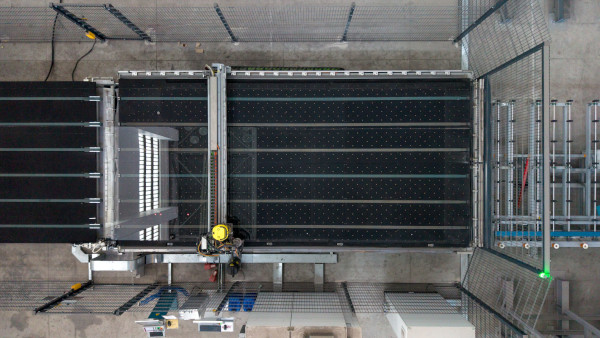
The core of the production is an automated LiSEC sorting system with an integrated buffer, which completely reorganizes and decouples the material flow between cutting and further processing. The higher-level software GPS.autofab automatically plans the glass sheets in the required sequence for the insulating glass lines, ensuring a uniform, plannable production process.
The new LiSEC sorting system, consisting of the control system ASM-50/4 and the glass transport shuttle SHL-50/27E, offers:
- automatic sorting and buffering of the glass sheets
- a buffer capacity of around 1,700 glass sheets
- a significantly reduced personnel requirement in the cutting and sorting area
- a stable daily output of around 1,600 m² of flat glass
Through automation, cutting and sorting can now partly be operated by a single operator. At the same time, bottlenecks and downtimes are reduced, as the glass is continuously supplied to subsequent process steps as needed.
Initial situation: High manual effort
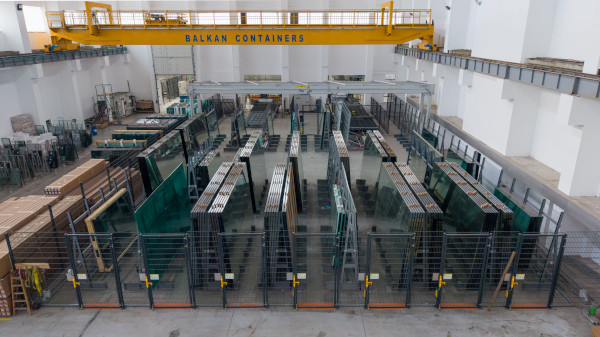
Before the integration of a fully automated LiSEC sorting system, glass sorting at UYUT STIL was largely manual. Glass sheets were transported on racks, manually loaded onto the lines or moved depending on the format, also moved using a crane. This way of working was labor-intensive, time-consuming and prone to disruptions.
"The human factor was one of the main reasons for this investment", explains Boris Borisov, Production Manager at UYUT STIL. "It is becoming increasingly difficult to find qualified employees, while the requirements for quality and throughput are increasing."
LiSEC sorting as the basis for stable processes
With the new sorting system, dependence on manual handling has been significantly reduced. The automated glass logistics ensure a consistent supply to the lines and help to better handle production peaks. At the same time, greater flexibility was created to deploy employees in a targeted manner at critical points.
The introduction of the LiSEC sorting system marked not only a technical change, but also a fundamental change in production organization.
LiSEC Performance Check & Training: Structural optimization beyond technology
To quickly and sustainably bring the new plant into full production, LiSEC Performance Check was used as part of the project. The aim was to adapt existing production processes to the new level of automation and systematically reduce process-related losses.
As part of the consulting, LiSEC carried out:
- holistic analyses of production and material flows
- root cause analyses for technical and organizational delays
- workflow, cycle time and sorting analyses
- structured documentation with clear recommendations for action
- support in the implementation of selected measures
Shortly after the production start, recommended measures could already be implemented and significantly contributed to more stable processes. “The LiSEC Performance Check was very helpful. Overall, we learned a lot,” emphasizes Borisov. “LiSEC was able to support us specifically in the topics that are relevant for our production.”
Wolfgang Klauser, LiSEC Performance Check Expert, supported the project. He explains: “As part of the Performance Check, we work together with the customer to uncover potentials in production and make concrete opportunities visible. In this way, we support increasing efficiency, optimizing processes and realizing sustainable competitive advantages.”
The performance check quickly showed results, particularly in the interaction between technology, software and organization. “Through the analysis of our processes – especially around gps.autofab – we were able to reduce errors. Today, production runs significantly more stable,” Borisov continues.
During the introduction of the new systems and software solutions, targeted knowledge transfer was also emphasized. Employees of UYUT STIL took part in an ASM training at the LiSEC Training Center in Seitenstetten. For Production Manager Boris Borisov, it was already his sixth training of this kind, while his team was attending their first. “My colleagues were enthusiastic. The training was very instructive, and we hope to be able to take part in further training opportunities in the future,” reflects Borisov.
Results in daily production
Since the commissioning of the new sorting system and the implementation of the consulting measures, daily production has clearly improved. Error rates have been reduced, time losses minimized and the production has become more plannable. The combination of automated sorting and structured process optimization today ensures more stable processes and a more efficient use of available resources.
Outlook: Consistently rethinking automation
UYUT STIL plans to continue its automation path. Future steps will include automatic spacer placement and automatic unloading of insulating glass units. LiSEC continues to support the company as a technology and consulting partner.
“I would definitely recommend LiSEC Performance Check, because it helps to get the best out of your own production,” Borisov concludes.
Video Interview
Mr Borisov, Production Manager at UYUT STIL, is talking about the project process and giving exciting insights into the new production hall.
 600450











Add new comment