
Date: 17 December 2025
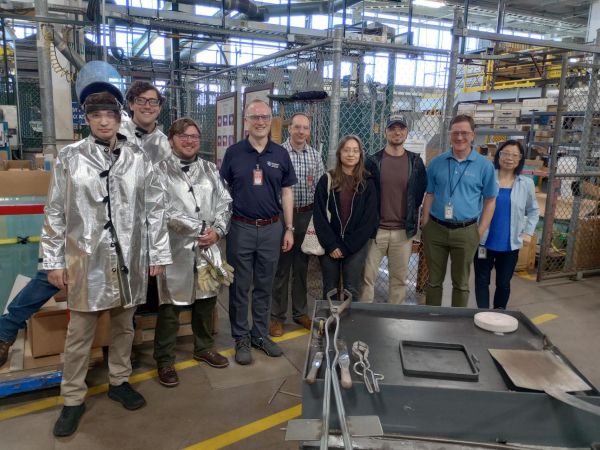
LionGlass, a stronger and more sustainable glass invented at Penn State, may soon be developed for windows and windshields, thanks to a new partnership with North America’s largest architectural glass manufacturer Vitro Architectural Glass. The company signed a multi-year research agreement to scale up the new, patent-pending glass technology for use in flat glass applications across architectural and automotive markets.
“Partnering with Penn State gives us access to world-class materials science expertise and a deep legacy of innovation in glass research,” said Adam Polcyn, vice president of research and development at Vitro Architectural Glass. “This team’s collaborative spirit and technical excellence make them an ideal partner for advancing the future of glass.”
The project, which runs through July 2028, will focus on adapting LionGlass for the float process, the standard method for producing flat glass which involves floating molten glass on a bath of molten tin. Used in windows, windshields and solar panels, flat glass is the largest segment of the global glass industry, making this collaboration a major step forward in commercializing LionGlass at scale, said John Mauro, co-inventor of LionGlass and head of the department of materials science and engineering at Penn State.
“This is more than just a research agreement,” he said. “It’s a partnership that could redefine how glass is made — and it’s happening right here in Pennsylvania.”
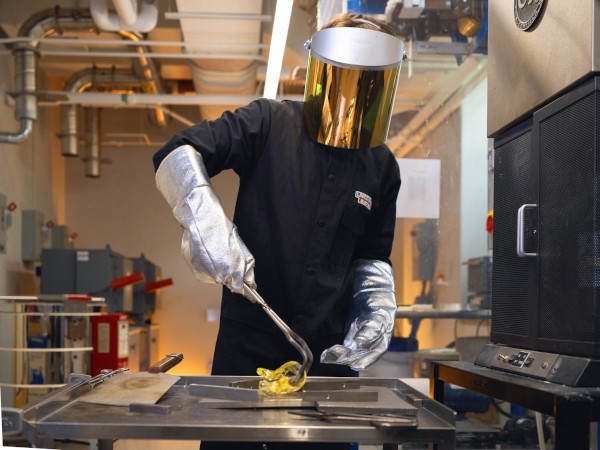
He added that LionGlass promises to cut the carbon footprint of glass manufacturing in half, as it lowers the melting temperature of glass by about 400 degrees Celsius (C) and eliminates the use of carbonate materials, which are major contributors to carbon dioxide (CO2) emissions in traditional glass production. It is also more damage resistant, in some cases reaching ten times the crack resistance of conventional glass.
The partnership reflects a long history of glassmaking in Pennsylvania, Mauro noted. The former architectural and automotive glass businesses of PPG, started near Pittsburgh in 1883, were acquired by Vitro in 2016 and 2017 respectively, and Vitro still maintains its U.S. headquarters and R&D laboratories in the area. Vitro operates four float glass lines in Pennsylvania, two in Carlisle and two in Meadville.
“This partnership is especially meaningful in terms of Penn State’s land-grant mission,” Mauro said. “Working with a company that has deep roots in the commonwealth aligns perfectly with our mission to serve the state through research and innovation.”
As part of the agreement, Vitro will be sending one of its own employees, Daniel Kramer, back to Penn State to pursue a doctorate and work directly on the project. Kramer earned both his bachelor’s and master’s degrees at Penn State under the late Carlo Pantano.
“It’s really exciting to be a part of this continuity and legacy in the university’s research community,” Kramer said. "This is a unique opportunity to work with an industry leader like Vitro while contributing to the university's strong tradition of research excellence, a collective effort aimed at more sustainable manufacturing processes to reduce carbon emissions."
Kramer will lead the research alongside Nicholas Clark, assistant research professor at Penn State and co-inventor of LionGlass, whom Kramer trained in Mauro’s lab as an undergrad. The team will evaluate LionGlass’s compatibility with industrial float processes and optimize its composition for flat glass applications. The team will also test its compatibility with various downstream, value-added processes used in architectural, automotive and solar glass markets.
 600450













Add new comment