
Date: 26 June 2026
Safety is the most important characteristic of tempered glass. When broken, tempered glass breaks into small pieces that do not cause severe injuries as larger glass pieces would. Additionally, increased tempered glass strength enhances safety. But how do you know that all your glasses leaving the factory are properly tempered?
While accidents caused by improperly tempered glass are rare, even a single accident is too much.
“Keep performing those break tests – what if it was your child that ran through an improperly tempered glass and got injured or worse?”
“This quote is from a glass processor who said he uses this to remind operators to do the break test. It’s an excellent way to emphasize the importance of safety procedures,” says Riku Färm, Vice President at Glaston Product Management.
The recently introduced Online Stress Calculation (OSC™) is a method that was developed to tackle the inherent issues of the standardized destructive break test and non-destructive surface stress and middle-pane tension measurements, namely:
- The break test is not applicable to all processed glass
- Surface stress and middle-pane tension measurements are too slow and expensive to be applied to all processed glass
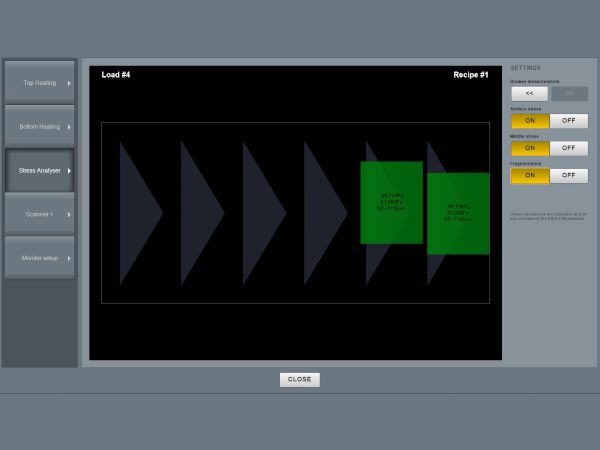
OSC™ provides measurements of glass surface stress and middle-pane tension, as well as an estimated amount of fragmentation for all processed glass. OSC™ is directly integrated into the tempering line operating system, and all results are based on actual measurements of critical process variables during tempering. The results include automatic alerts if any glass is outside the defined tolerances, providing a continuous readout of the same safety outcome as the fragmentation test without breaking the glass. Glass processors will be able to provide end customers with proof of the tempering level for each piece of processed glass.
“OSC™ lets you also define your own standard for stress levels. And when you once define your limits, OSC™ enforces them automatically on every glass produced. Targeting the right stress level consistently also helps avoid over-tempering, supporting better process performance and lower energy use,” Riku Färm concludes.
Learn about the OSC™ and get an estimate for the investment in safety.
 600450














Add new comment