
Building-integrated photovoltaics (BIPV) are considered a key technology for the energy transition in buildings – and their installation is now picking up speed. According to “Deutsche Energie-Agentur” (German Energy Agency – dena) more than 10 gigawatts of solar power generation capacity were added in Germany in 2023 and 2024. A success that needs to be built upon because according to surveys by the Fraunhofer Institute for Solar Energy Systems, up to 1,000 gigawatt peak (GWp) could be installed on Germany’s available roof and façade surfaces; the PV needs in a completely renewable energy system would already be achieved at around 500 GWp. Glasstec asked the experts Prof.-Dr.-Ing. Ulrich Knaack (Technical Universities of Darmstadt and Delft) and Dr. Thomas Kroyer (Fraunhofer Institute for Solar Energy Systems – ISE) about how to deploy BIPV more often in future and the new solutions available.
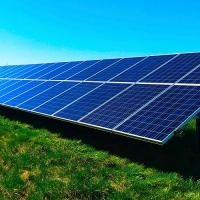
Renewable energy is the most important source for rising electricity needs also in the heating and mobility sectors in transition – especially via wind energy and photovoltaics, also due to their comparatively low generation costs. However, the by far biggest growth potential for photovoltaics is held by building skins, which with their large usable expanses – when equipped with PV – would make energy supply in cities more sustainable.
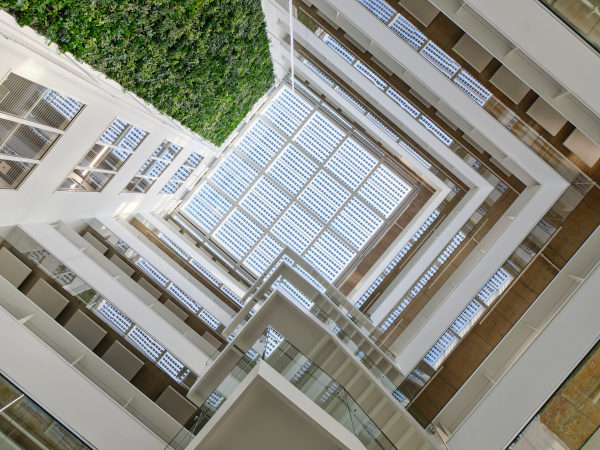
Photo: Constantin Meyer
Solar building skins reduce the CO2 emissions of the building sector considerably, offer shading, avoid grid extension costs and generate sustainable added value locally. One of the reasons why BIPV is still too rarely considered for vertical installation could be the lack of creative freedom associated with PV module design. Architectural glass with built-in PV cells (such as Sunplus BIPV, Pilkington) has made it possible to toy with patterns for some years already, but there has hardly been any colour design options for highly efficient BIPV modules so far: “In my understanding, more possibilities to adapt the colour and dimensions of modules to the desired geometry and aesthetics of the building are needed for a stronger uptake of building-integrated photovoltaics especially in façades,” explains Prof. Dr.-Ing. Ulrich Knaack, Head of the Façade Structures department at TU Darmstadt and Head at the “Design of Construction” chair at TU Delft.

Photo: Ulrich Knaack
“Module aesthetics follow façade aesthetics. And vice versa: through colour-customisable modules architects can design the aesthetics of façades. We have to understand BIPV façade components like bricks, clinker bricks or design panels: here we can select from a wide variety of surfaces and now also sizes and then also use these in custom patterns – with a view to achieving a desired individuality.” One obstacle on the way to colour customisation has so far been the low efficiency rates of designed module glass compared to conventional black modules.
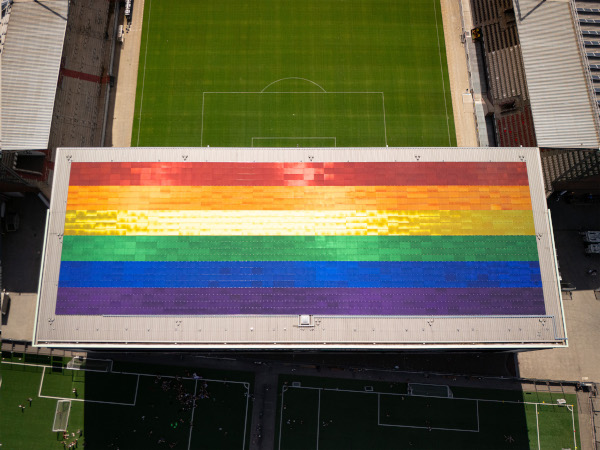
Photo: LichtBlick SE
Coloured BIPV for designing façades
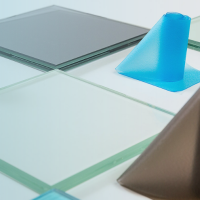
The Fraunhofer Institute for Solar Energy Systems ISE had already been working on a solution for several years, which has now also reached market readiness for large volumes and any module dimension. Dr. Thomas Kroyer, a researcher at Fraunhofer ISE, developed the patented “MorphoColor” technology with his team: unlike colour pigments or coloured films some of which strongly shade the module, the Institute produces the desired colour by an interference layer that makes it possible to precisely select and optically reflect individual wavelengths in order to generate an intense colour. For the remaining large spectrum of sunlight the glass remains transparent and the energy loss remains low. Kroyer explains: “There are many well suited surfaces on roofs and façades for photovoltaics to be integrated in a meaningful way. With our solution we give architects the freedom to use PV modules as design features. Alternatively, the PV functionality can also be concealed completely. In most cases, you can still see up close that these are PV modules but seen from a few metres away you no longer notice the difference between these and normal façade panels.”

Photo: Fraunhofer ISE
Depending on their tint, coloured PV modules with this MorphoColor coating boast an excellent 90-96% of the efficiency of comparable black modules: “With conventional solar modules the majority of the energy is converted into power from the incident photons of the long-wave red light. The short-wave blue light, by contrast, is only used to a lesser extent. This is why the power loss is lower when blue light is reflected rather than red light. A module with a blue cover glass therefore has a slightly better efficiency rate (96% of the performance of a black module) than a red one (94%).”
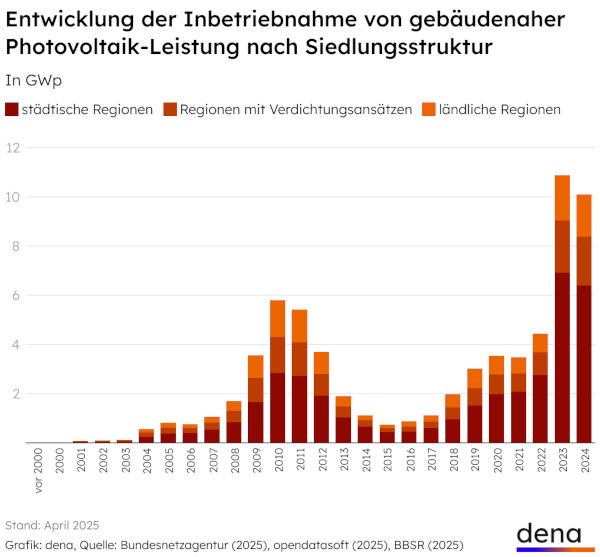
Dark red = Urban regions, Red = Regions with partial agglomerations, Orange = Rural regions
Chart: dena, Source: Bundesnetzagentur (Federal Grid Agency – 2025), opendatasoft
(2025), BBSR (2025)
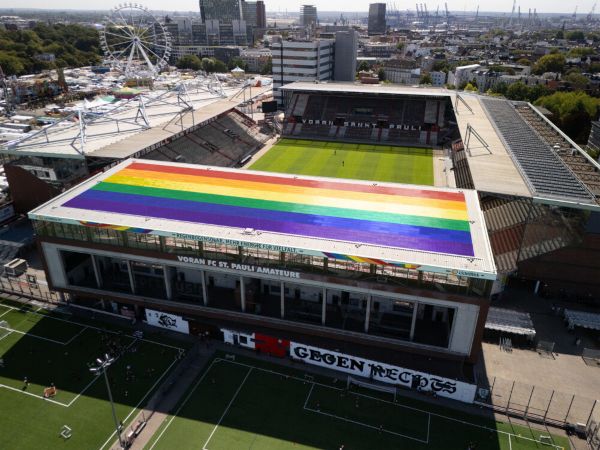
Coloured photovoltaics offer new possibilities not only in façades but also where you initially might not expect them – for instance when protecting listed buildings and ensembles. Kroyer adds: “PV installation on the roofs of such listed buildings had been difficult until now. However, red modules blend very well with the cityscape for typically red roofing.” With a view to also realising large-format cover glass and extensive projects, Fraunhofer ISE has now developed its technology to market readiness in cooperation with licensee AGC Plasma; this company applies the coatings in Lauenförde using magnetron sputtering to achieve homogeneous colours and a high stability of angle and was also a funding partner alongside the Institute and photovoltaic module producer Axsun (located near Ulm/Germany). The development was subsidised by the Federal Germany Ministry for Economic Affairs and Climate Action as part of the “PVHide” Project. The most recent, and so far biggest, project involving MorphoColor technology is the PV system on the roof of the North stand of Hamburg’s Millerntor stadium in rainbow colours; LichtBlick SE was the lead planner.
glasstec 2026 in Düsseldorf from 20 to 23 October 2026 will once again be the central and leading trade fair providing the impetus for exchanging on tomorrow’s topics in the glass industry – and these also include Building-Integrated Photovoltaics (BIPV). Read more at: http://www.glasstec.de/

Marc Everling studied media education (Technical University Brunswick) and has been a communications and marketing specialist in the glass industry for more than 20 years. In 2021 he founded his networking agency specialising in communications consulting and press liaison for companies and associations that work and produce sustainably in the interests of the ecological transformation of the construction sector.








Comments
This feels like the moment BIPV finally stops being a compromise. When performance and design meet, solar becomes part of architecture, not an add on. That’s how adoption really scales. Amazing! Western Sydney Windscreens