This paper was first presented at GPD 2025.
Link to the full GPD 2025 conference book: GPD_2025_ConferenceProceedingsBook.pdf

Author: Sebastian Dick, A+W Software GmbH, Germany
Abstract
Expanding production requires space, yet physical space is often limited or constrained by fixed boundaries. Growth in the glass industry may involve new site development, expanding or reorganizing existing facilities, or optimizing processes—all of which require substantial investment to achieve optimal results. This scale of change also demands a valid business case, often built through extensive, time-consuming analysis and simulations involving multiple parties. Synchronizing data across multiple layers can lead to inconsistencies and makes agile, accurate planning challenging. Additionally, the complexity of order sets and glass mix requirements can create further obstacles, especially when relying on a traditional ERP system. A virtual demonstration facility, like our A+W Glass Lab, allows to take a first step toward integrating a Digital Twin within the Production Planning System. With this Digital Twin approach, there’s no need for separate simulations with extensive maintenance requirements; instead, the Production Planning System directly models shopfloor layout changes, showing real-time effects on the live environment. Snapshots of the shopfloor layout enable users to explore new configurations by adjusting machine parameters, adding or removing equipment, and introducing partial or fully automated sorting. The innovation comes from extending our ServiceOriented Architecture with an instanced Flow and Layout Service, which accesses live order data directly. This “Glass Laboratory” environment allows manufacturers to test and refine shopfloor configurations digitally, facilitating the most efficient iteration for production planning and performance. When analysing the benefits of such a simulation, it allows us to empower glass manufacturers to visualize and implement strategic changes faster, aligning facility capabilities with evolving production demands.
Article Information
- Published by Glass Performance Days, on behalf of the author(s)
- Published as part of the Glass Performance Days Conference Proceedings, June 2025
- Editors: Jan Belis, Christian Louter & Marko Mökkönen
- This work is licensed under a Creative Commons Attribution 4.0 International (CC BY 4.0) license.
- Copyright © 2025 with the author(s)
1. Introduction
In the flat glass processing industry, we aim to ensure optimal production efficiency, which is crucial for avoiding high machinery costs, lengthy production times, and bottlenecks. Optimal capacity distribution can reduce costs and improve delivery schedules. A simulation environment enables such strategic planning by running scenarios that reveal how changes impact the overall process. Setting up and maintaining a simulation environment is complex, demanding, and expensive.
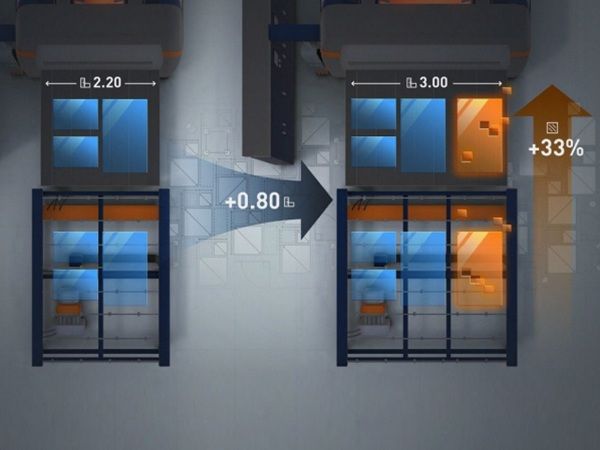
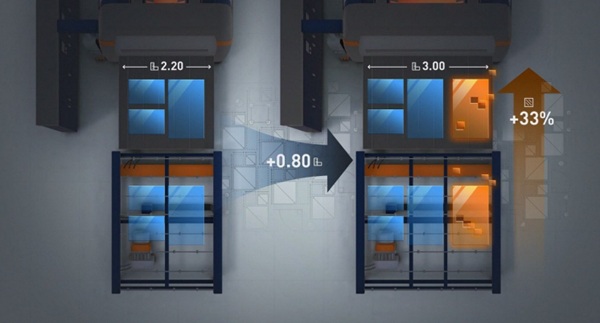
Therefore, it makes sense to use the existing Production Planning System (PPS) as a foundation, as it already contains the necessary data for simulation and provides operational data for comparison. An integrated simulation within the Enterprise Resource Planning System (ERP), which contrasts and compares the real system with a Simulated Production Layer [Figure 1], would address the need for a simple, low-maintenance, and up-to-date simulation. This allows for drawing reliable conclusions from the simulation and planning modifications to the production layout.
Often Confused: Simulation or Digital Twin
A simulation operates on a created image, a snapshot. In contrast, a Digital Twin works in real-time, using data such as machine information it receives. A snapshot for a simulation typically includes order data, machine states, material availability, layout information, and current production rules—essentially a comprehensive representation of the PPS at a specific time. This static state means it cannot account for real-time changes or disruptions, limiting its usefulness in dynamic processes. Conversely, a Digital Twin continuously processes current data, responds to system changes, and thus enables more precise control and analysis of ongoing production.
2. Working Definitions
2.1. Definition of Digital Twin
A Digital Twin is often used in machinery to render visible certain data or states that are not directly apparent. Considering edge processing, for example, a machine may be viewed as a black box. A sheet enters the machine, is processed, and emerges at the end. The simplest form of a Digital Twin records what both a machine operator sees and inputs: placing a sheet, registering it (size/removal/machine parameters), and initiating processing. The machine processes the glass, and once finished, the operator removes and stores it (Neumann, 2023).
The Digital Twin, through machine sensors, knows which sheet is registered, its location, and whether another sheet follows, as reported by the operator. It also detects if another sheet is in the output or has been removed.
The Digital Twin of a machine is privy to far more information than the operator at the facility. Due to sensors and other technologies, it has access to extensive machine data, including tools used, wear, feed rate, rotation speed, temperature, power consumption, water usage, etc. These data are displayed in the machine interface, making information available that is otherwise invisible externally. Furthermore, a Digital Twin can facilitate predictions regarding wear and increased consumption of materials.
The concept of the Digital Twin first emerged at NASA with John Vickers in 2010. Since then, the potential applications of Digital Twins have expanded significantly. Depending on the application, these are generally categorized into four groups:
Component Twin – e.g., a drill insert, a conveying part of a system, etc.
Asset Twin – e.g., the spindle in a CNC machine, the tool magazine, etc.
System Twin – e.g., the processing center itself, a production cluster, etc.
Process Twin at "Macro Level" – the process level, involving data such as energy consumption, production volumes, waste, etc.
Process Twins are frequently employed in the representation and dimensioning of large-scale projects like wind farms. They enable prior analysis concerning energy efficiency, incurred costs, and material degradation. This macro level is also applicable to our project in the flat glass industry. We view production as a large, interconnected physical structure, aiming to optimize the process or glass flow rather than individual machines. This can also be achieved by modifying or expanding the production layout.
The foundational element for a Digital Twin is the so-called digital shadow (Fuller, 2020), which forms the data foundation. The digital shadow does not interact with physical production, yet it can access real-time data.
2.2. Definition of Simulation
The approach of simulation is different. It aims to determine the effects of specific changes. For a machine, this might involve adding a second spindle on an axis. A defined set of orders can be simulated to assess how the otherwise unchanged setup behaves with the additional spindle, addressing questions about usage frequency, feed paths, and utilization. These data can be compared with historical records from actual operations or other simulations.
These are typical examples of simulations used to plan prototypes or evaluate changes, expansions, or adaptations of a system or production process. Unlike a Digital Twin, real-time data are not used in simulations. Comparisons are done manually or based on existing data. A new dataset must be available in the simulation for testing.
A simple form of simulation could be a basic benchmark calculation in Excel. Based on smoothed data, interpolation may be performed. Existing data gaps, however, can render the results inaccurate.
A "true" simulation is often more complex, requiring acquisition of proper tools and training. Next, a common platform must be established for comparing existing data with simulation results. Without this, results are often difficult to compare. It requires expertise and time investment, which incurs costs. The more precise the desired outcome, the more effort must be invested in the simulation.
In summary, a Digital Twin shows how things are currently operating, while a simulation predicts how they could operate.
3. How Can We Learn From This?
Based on the technical capabilities of Digital Twins and simulations, several questions arise: How can I achieve improved glass flow by avoiding bottlenecks? How can I optimize machine utilization? How can I enhance glass yield?
A Process Twin allows for the examination of processes at the macro level. Our research further enriches this macro level with specific machine parameters and constraints, bringing us partially to the level of System and Asset Twins.
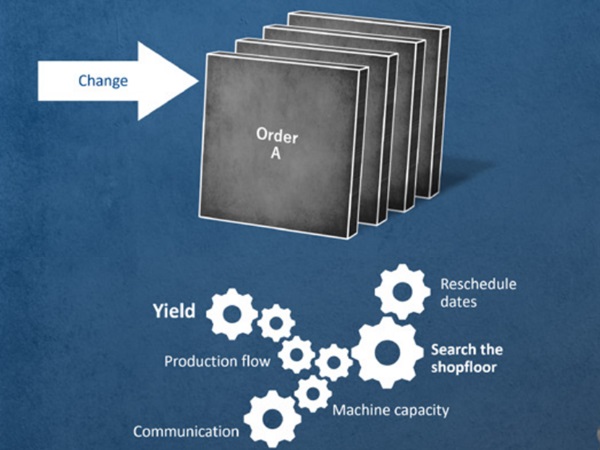
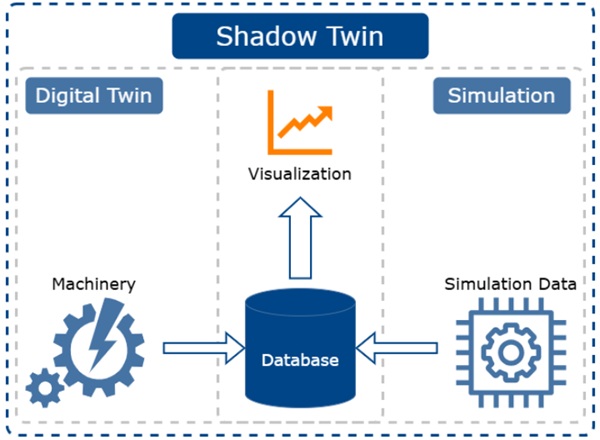
The key lies in combining simulations and Digital Twins—the Shadow Twin. This type of Digital Twin is already emerging in the configuration of our production planning systems. We utilize the digital shadow of the PPS, creating a digital replica of the shop floor, which later determines the route of a pane through production. This includes timing of the panes, as configuration includes preset and transition times of the production elements. Status terminals in production capture the current state, continuously aligning planning with reality—the Shadow Twin [Figure 2].
While the Shadow Twin exists solely in a virtual sense and does not influence actual production, it receives data from the live environment, as is the case with a Digital Twin. Therefore, simulations can be conducted in the Shadow Twin in parallel based on live data.
Simulation aims to virtually recreate or imitate a process based on a model that describes reality as accurately as possible.
Model data is usually static and not influenced by external sources. A Digital Twin is a bi-directional mapping between a real physical system, encompassing multiple processes, and its virtual representation. Real-time data from the physical system updates the model data, allowing for simulation of the physical system. The logic operating on the virtual representation informs changes made in the physical system.
In a Shadow Twin, these boundaries are blurred. A Shadow Twin acts as a passive or non-interactive digital twin designed to monitor, analyse, and compare data in the background without actively intervening in systems or processes, see Table 1 (Neumann, 2023).
Table 1. Digital twin versus Shadow twin.
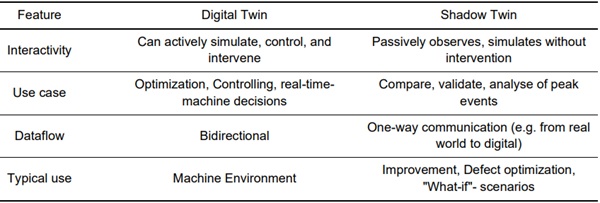
The implementation of a Shadow Twin significantly extends classical Digital Twin concepts, especially in enhancing productivity across the entire production system:
- System-wide Transparency: The Shadow Twin examines not just individual machines but the entire production chain, enabling early detection of bottlenecks, overloads, and inefficient processes.
- Real-time Comparison of Plan and Reality: By continuously comparing real production with a parallel simulation (the "shadow world"), discrepancies become immediately visible and their causes quickly identifiable.
- Data-driven Optimization: Without interfering with live operations, the Shadow Twin can explore alternative scenarios, such as due to changes in order status or machine failures, providing wellfounded action recommendations.
- Foundation for Autonomous Decisions: The data and insights gained form a basis for automated control decisions, such as dynamic order distribution or shift planning.
- Retrospective Analysis & Continuous Improvement: As the Shadow Twin continuously operates, it creates a digital memory that can be used for root cause analysis and continuous learning.
4. Solution: Integration of Simulations into ERP Systems
The combination of ERP systems with simulation models enables dynamic and flexible factory planning. A scalable, flexible, and adaptive simulation model can be developed based on existing ERP and PPS data to support factory planning, particularly during restructuring and implementing new production layouts.
Application in Industrial Manufacturing.
In industrial manufacturing, especially in processing fixed dimensions like glass, a Shadow Twin offers significant advantages. It enables the simulation and optimization of material flow and real-time monitoring of the utilization of logistical processes.
4.1. Benefits of Integration into an ERP System
Integrating simulation into your ERP system can realize the following benefits (Andrade, 2024):
- Real-time Data Access: Identifying bottlenecks in the production environment.
- Snapshot Analysis: Direct use of current production data for more accurate simulations and performance optimization.
- User-friendliness: Avoiding the need to learn additional software, as the simulation occurs within the familiar ERP system.
- Consistency: Using the same data structure through a snapshot of the real system reduces errors and inconsistencies between different systems during comparison.
4.2. Challenges and Solutions
Production data (e.g., cycle times, machine availability, actual throughputs) must be available to the Shadow Twin in high quality and preferably in real time. The simulation model within the Shadow Twin must precisely represent the real layout, constraints, capabilities, and rules of the machines, otherwise, the comparisons are worthless. Machines may process the same sheet with different costs or run times, so the choice isn't simply yes or no. For value, the Shadow Twin must be continuously compared to actual production—regarding utilization, throughput time, waste, etc.
The digitally configured layout in the PPS serves as the basis for a snapshot. This snapshot forms the foundation for the Simulated Production Layer. For the simulation part, it is important to rely on the same logic used in the PPS for sheet routing. Constraints must be defined in the same way to minimize deviations between layout models in terms of description. A rating system and a cost matrix within the Shadow Twin are crucial for quick and easy assessments. The goal is to visualize the deviations between live production and the Simulated Production Layer—your own Shopfloor Glass Laboratory.
5. Conclusions
The direct integration of simulations and Digital Twins into the ERP system results in a Shadow Twin, allowing for live comparison of productions. This offers significant potential for optimizing production processes in industrial manufacturing. By utilizing existing data and systems, companies can conduct more efficient and accurate planning without investing in additional, often expensive external tools and consulting.
Acknowledgements
Acknowledgements can be added at the end of the paper, before the references.
References
Andrade, A. (2024). The 4 Levels of the Digital Twin Technology. Retrieved from https://vidyatec.com/blog/the-4-levels-of-the-digital-twin-technology/ (25.03.2025)
Fuller, A.et al (2020). Digital Twin: Enabling Technologies, Challenges and Open Research. Staffordshire, England: IEEE
https://doi.org/10.1109
IBM. What is a digital twin? Retrieved from https://www.ibm.com/think/topics/what-is-a-digital-twin (25.03.2025)
Nat Compute Sci (2024). Issue 4, p. 145-146, https://doi.org/10.1038/s43588-024-00617-4
Neumann, M. (16.05.2023). Digitaler Zwilling vs. Digitaler Schatten. Germany. Retrieved from https://newroomconnect.com/blog/digitaler-zwilling-vs-digitaler-schatten/ (25.03.2025)