Photo source
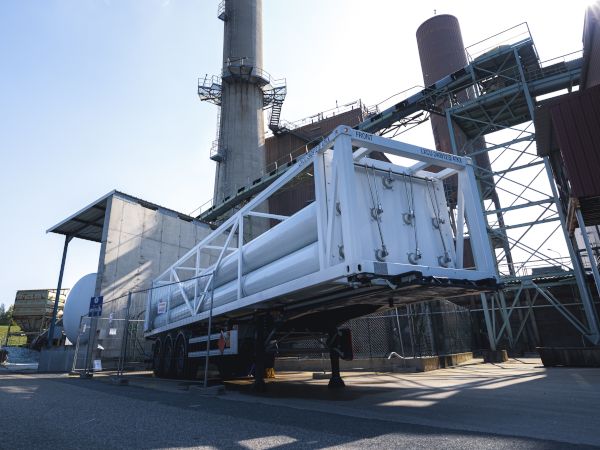
Delivery of Biomethane by Tanker Truck ©Grégory Bianchi
Date: 24 November 2025
Saint-Gobain Glass is taking a major step toward low-carbon manufacturing with successful trials of locally produced biomethane in flat glass production.
Saint-Gobain Glass has taken a new step forward in its industrial decarbonization strategy. The Eurofloat plant, located in Salaise-sur-Sanne, France, and co-owned with Riou Glass, has successfully tested the use of local biomethane in flat glass manufacturing.
Two operations carried out on site
- The first, in partnership with GRDF, involved injecting biomethane into the gas network via a nearby BioGNV station, helping to balance the grid during periods of low demand.
- The second, conducted with Methagora, consisted of several deliveries of biomethane by tanker truck. This renewable gas, produced from agricultural waste, was generated, purified and compressed locally in the Auvergne-Rhône-Alpes region before being transported to the plant.
These trials confirm the feasibility of directly supplying biomethane to the glass industry, even in areas not connected to the gas network. With a carbon footprint six times lower than that of natural gas, biomethane offers a tangible solution to reducing emissions in the sector.
With this initiative, Saint-Gobain Glass reaffirms its commitment to a more sustainable industry by making use of local resources and working closely with regional partners.
 600450
Saint-Gobain Glass
2025-11-24T08:01:26
Saint-Gobain Glass tests local biomethane for flat glass production
glassonweb.com 










Add new comment