
Date: 26 February 2026
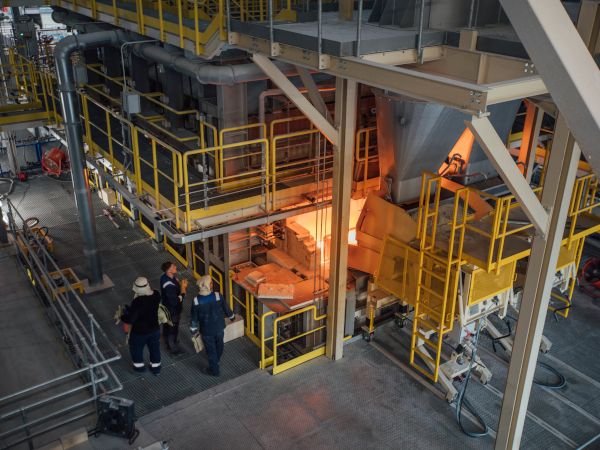
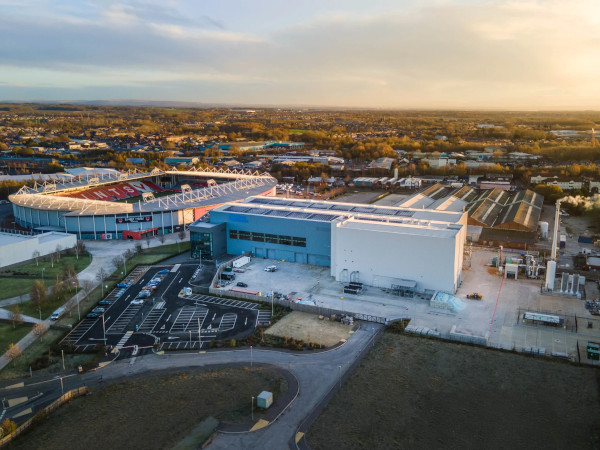
Glass Futures has reached a significant milestone in its mission to accelerate the decarbonisation of energy intensive industries, with the successful completion of alternative fuel trial programmes testing biofuels & electric melting, & commissioning hydrogen capabilities on its 30 tpd pilot line.
The achievement comes almost exactly seven years after the organisation secured funding for its first Industrial Fuel Switching projects from the Department for Energy Security & Net Zero, marking a new phase of innovation and momentum for the global glass sector.
These complex, multi-pathway trials that started in October 2025 have delivered groundbreaking results that demonstrate the technical potential of low-carbon fuel technologies at industrially relevant scales.
Key successes include the installation and commissioning of a bespoke biofuel delivery system, fully integrated into the site’s digital control environment which has been used to successfully fire four novel, low-cost, waste-derived biofuels for sustained periods over several days.
The Glass Futures team, supported by F.I.C UK Ltd, installed, commissioned, and trialled a custom electric-boost (e-boost) system. The work tested a wide range of power settings, including rapid switching, to demonstrate how a glass furnace could provide demand-side response capabilities to local electricity networks.
Glass Futures also commissioned a new hydrogen fuel delivery system on the pilot line, enabling successful firing of hydrogen supplied by Ryze Power and natural-gas blends, up to 100% hydrogen.
Commissioning the world’s first multi-fuel hybrid pilot-scale glass furnace involved several technical complexities, and this achievement has already attracted strong interest across Glass Futures’ membership, government, and the wider foundation industries.
Justin Kelly, CEO of Glass Futures, said: “The successful completion of these trial programmes marks a crucial milestone not just for Glass Futures, but for the industry’s journey to net zero. We have demonstrated, at industrial scale, the technical viability of a number of alternative low-carbon fuel pathways that have never before been trialled in this way. It is a testament to the resilience, ingenuity, and collaboration of the entire Glass Futures team.”
Barry King, Engineering Manager at Encirc said: "Encirc is delighted to be part of Glass Futures’ groundbreaking trials in biofuels, electric, and hydrogen technologies. Collaboration and innovation are at the heart of our decarbonisation journey, and working together on these pioneering projects brings us closer to finding viable alternatives to fossil fuels.
"By exploring new energy pathways side by side with industry partners, we’re helping to shape a more sustainable future for glass manufacturing and the communities we serve.”
With completion of our first trial campaign around alternative fuels, Glass Futures has already progressed into detailed discussions with its members around our next campaign, exploring the next generation of raw materials and process innovations, and looking to our third campaign, to explore product innovations in both flat and packaging glass.
Our technical teams are collating the results from this first campaign to ascertain the technical readiness of each alternative fuel pathway, and how this will influence the broader policy landscape for decarbonisation.
There remain additional technical and adoption barriers to each, and we work directly with our members to explore the right combination of solutions to help decarbonise. The outcomes from these trials will act as a catalyst for further research and investment to overcome remaining technical and commercial challenges to support the energy transition and accelerate the pathway to net zero.
Glass Futures’ Head of Innovation, Rob Ireson, added: “These results show that waste-derived biofuels, e-boosting technologies, and other emerging solutions can all play a critical role in decarbonising high-temperature sectors without compromising product quality or operational reliability. Now, we need coordinated action across supply chains, regulators, and energy providers to turn these technical successes into deployable solutions.”
Glass Futures has now commenced the next phase of pilot activity through its AI-GLASS project, funded by the Made Smarter Innovation Programme at Innovate UK, which will gather operating data to validate the advanced furnace model, allowing advanced sensing, digitalisation and intelligent control to further optimise industrial furnace performance and reduce emissions.
 600450



Add new comment