
Date: 27 May 2026
Glass is considered the ideal material for the circular economy: theoretically, it can be recycled indefinitely without losing its material properties. In practice, though, only part of the waste glass from buildings and processing is reused.
At the same time, the requirements made on the industry are rising. EU regulations, climate targets and an increasingly circularity-oriented construction industry add to the pressure to make recycling processes more efficient and industrially scalable.
Separation technology as a key to reuse
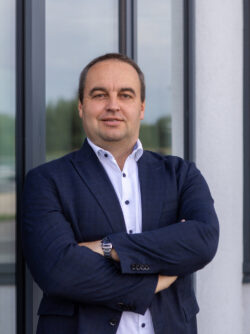
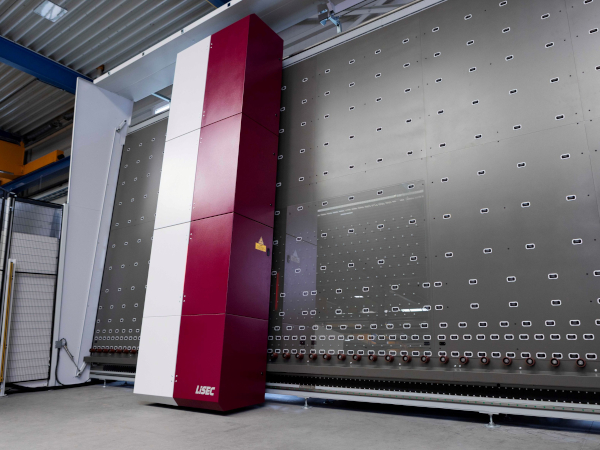
LiSEC shows at glasstec how IGUs can be selectively reclaimed across various automation stages:
“LiSEC will exhibit solutions for the manual and automated separation of insulation glass units, which make a key contribution to glass reuse. As an entry solution IGD-A Manual is used, the launch of IGD-B Manual is planned by the start of the trade fair.
Building on this we will introduce IGD-A/robot for automatic separation, which is still in the conceptual stage. These solutions address the reuse and recycling of glass along various automation stages and form the basis for more efficient and high-quality recycling processes.
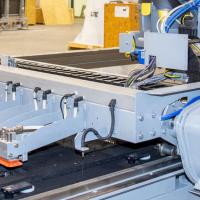
With the IGD-A Manual hand-held device LiSEC presents a hands-on solution for skilled crafts operations to efficiently separate small amounts of waste insulation glass. The tool is suited for repairing defective units allowing IGUs to be separated and newly mounted subsequently.
This way glass residues can be recovered rather than disposed of, rendering completely new production superfluous. This reduces material waste, saves resources and supports a more sustainable handling of glass in the day-to-day work of craftspeople.”
Markus Jandl, Director Product Management, LiSEC
700 kilogramm CO₂ per ton – what really drives glass recycling

The NSG Group banks on industry-wide system solutions with its global initiative renew:glass:
“Centrestage in this approach is the initiative renew:glass that is oriented towards boosting the recycling of architectural glass and strengthening the circular economy along the entire value chain. Rolled out globally, the programme promotes awareness, education and best practices to reclaim glass production waste and waste glazing and to reintroduce them into float glass production. The environmental impact is substantial: the recycling of waste flat glass brings down the energy demand of melting tanks, prevents the mining of primary raw materials and can save up to around 700 kg CO₂ per ton of recycled glass.”
Kristian Chalmers, Global Strategic Commercial Manager, Architectural Glass Europe, NSG Group
Circularity-readiness starts with product design

Saint-Gobain pursues a holistic approach – from dismantling glass façades to producing new ones with a high proportion of recyclates:
“To maintain the circularity of glass as long as possible, we pursue a holistic approach – from planning to dismantling to reuse. A crucial component in this is our dismantling concept for glass façades in Germany, which is designed to recover flat glass from the building stock in the most clean-grade and quality-saving way.
In addition, we closely cooperate with specialised recycling partners in Germany. These partnerships decisively contribute to improving reclamation quality and make it possible to tap into new cullet qualities for use in the float glass process. The result is a more efficient recycling process with a higher percentage of flat glass and a consistent, high product quality for the newly produced glass.
With ORAÉ® we offer a CO₂-reduced glass that makes a key contribution to circular and sustainable building. ORAÉ® is produced with an especially high percentage of recycled glass thereby substantially reducing the demand for primary raw materials as well as cutting CO₂ emissions in production. ORAÉ® succeeds in reducing CO₂ emissions by 42% compared to our European standard product.
Beyond this, ORAÉ® is also supplied with coatings for solar protection and thermal insulation. This combination not only brings an improved eco-balance of the construction material proper but simultaneously also reduces the operating costs of buildings through higher energy efficiency over their complete lifecycle. ORAÉ® offers certified performance – both in accordance with the EPD and the Cradle to Cradle product standard (C2C-Version 4.0).”
Moritz Feid, Head of Circular Economy, Saint Gobain
Mixed raw materials, glass sand, solar modules: Zippe taps into new cullet sources for circularity
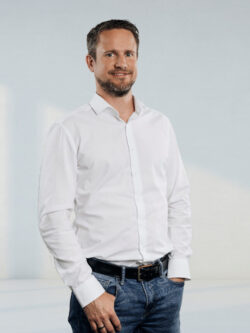
Zippe Industrieanlagen flags up alternatives for raw material supply – especially where classic cullet is scarce:
“‘Sustainable recycling relies on the availability of raw materials. However, as these are difficult to source, we offer alternatives. For example, recyclable materials can be separated from mixed raw materials, and recovered glass can be reused. Another option is processing glass sand, which is produced by recycling companies. Solar panels are also a key issue at present – this material is widely available and set to increase in volume.”
Markus Werner, Sales Engineer Zippe Industrieanlagen GmbH, Zippe Industrieanlagen GmbH
Circularity becomes a process issue
The exhibitors’ statements show that circularity in the glass industry is not achieved by isolated measures but by their interplay along the entire value chain – from recycling-ready product design to dismantling and separation technologies to recycling and returning into production.
It becomes clear that industrial circularity systems emerge primarily where processes are scalable, material flows controllable and partnerships are established along the supply chain. At the same time, the sector is tapping into new raw material sources – such as mixed recyclates or waste solar modules.
Hot Topic: Circular Economy
The circular economy is a key concern for the glass industry worldwide and is therefore once again one of the central hot topics at glasstec 2026 this year.
 600450








Add new comment