Glass for Europe published a Q&A on the fundamentals of flat glass recycling

Glass for Europe published a Q&A on the fundamentals of flat glass recycling
Photo source
Glass for Europe

Date: 30 September 2026

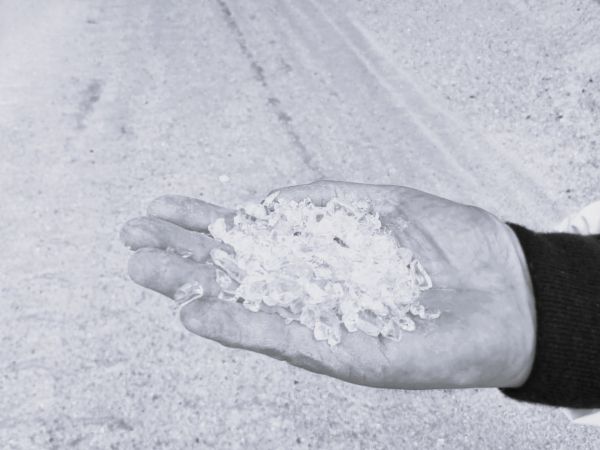
The flat glass industry’s priority is to increase the quality and quantity of crushed flat glass (cullet) that can be recycled.

In anticipation of the upcoming Circular Economy Act, Glass for Europe publishes a Q&A that delves into the fundamentals of flat glass recycling.

The flat glass industry is promoting the development of a closed-loop recycling system that would enable it to recover high-quality secondary raw materials. But recycling flat glass at scale is not simply a matter of collecting more glass. The quality of the cullet is critical: contamination, mixed waste streams and the way glass is collected and processed can all determine whether recovered glass can be returned to flat glass production.

Glass for Europe’s new Q&A “Understanding Flat Glass Recycling” explains how flat glass recycling works, what makes cullet suitable for new flat glass production, and where the main challenges and opportunities lie. It also looks at how better collection, sorting, processing and preparation of end-of-life building flat glass can help increase the availability of high-quality cullet.

As the European Commission prepares the Circular Economy Act, the Q&A highlights the measures that can help move flat glass recycling from potential to practice. A stronger focus on closed-loop recycling can reduce the loss of valuable material, lower the need for virgin raw materials and support the flat glass industry in its efforts to reduce CO2 emissions.

You can find the Q&A in the dedicated circular economy section of the website under “Highlights” or read it here.
600450 Glass for Europe published a Q&A on the fundamentals of flat glass recycling glassonweb.com

Others also read

The right combination of technologies makes the difference. With proven expertise in melting, conditioning and float process, Fives partners with glassmakers to accelerate decarbonization, reduce emissions, lower operating costs and enhance performance.
Five European associations have jointly urged the European Commission to establish a clear legal framework for the use of verified software tools to assess product performance under the revised Construction Products Regulation (EU) 2024/3110.
How can glass achieve higher performance while keeping construction simple? Researchers at TU Darmstadt explore this question through innovations in thin, thick, vacuum-insulating and curved glass, with a growing focus on reuse over recycling.
NGA sponsors PCR development initiative with Smart EPD
As part of the Affordable Housing Plan, the European Commission announced the Housing Simplification Package in 2027.
Exploring circularity and innovation across the automotive glass value chain.

Add new comment

From industry

İçmeler Mah. D-100 Karayolu Cad. No:44A,
34947 Tuzla,/İstanbul
Turkey

NEWS RELATED PRODUCTS