
Date: 10 November 2026
The various panel discussions and interventions also served as a reminder of the human-centric dimension of renovation.
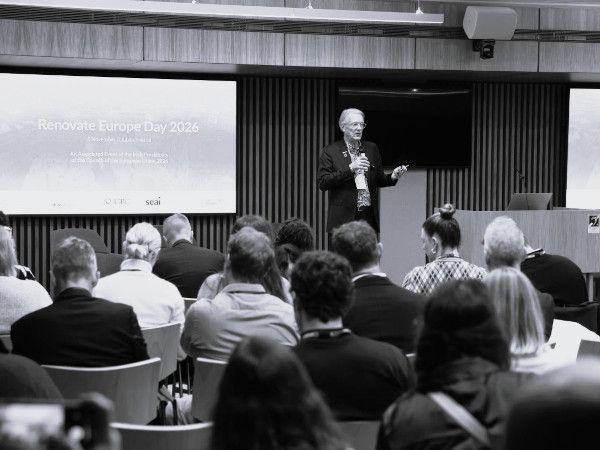
The event took place at Tom Johnson House, the renovated headquarters of the Irish Department of Climate, Energy and the Environment. During his address, Alan Dillon, Ireland’s Minister of State, highlighted the strong interconnection between climate and industrial policy. He stressed that improving the energy performance of buildings brings benefits well beyond energy savings: it creates local jobs, strengthens industrial capacity, reduces peak energy demand and helps direct energy where it is needed, while making buildings more comfortable and improving people’s quality of life.
This human-centric perspective was reflected throughout the day’s discussions, with particular attention given to educational buildings. A dedicated panel highlighted the importance of ensuring that schools are equipped to cope with rising temperatures and prevent overheating while maintaining access to daylight. Providing comfortable learning environments should be a priority, protecting the well-being of both pupils and staff.
The visit to Ellis Court was perhaps the most powerful illustration of the day’s central message. This social housing development, with its long history, has undergone renovation and regeneration to provide better living conditions for its residents. The visit brought the discussions back to the very purpose of renovation: not simply transforming buildings, but improving people’s homes and their everyday lives.
The event also provided Renovate Europe with an opportunity to officially launch its EPBD Tracker. With the transposition deadline having passed in May 2026, the tracker offers a timely overview of the progress made by Member States in implementing the revised Energy Performance of Buildings Directive (EPBD), helping to identify both progress and delays. The tracker is available here.
 600450





Add new comment