
Date: 30 May 2024
As part of the "Green for Generations" sustainability initiative, the Glas Trösch Group, which also includes the float glass manufacturer Euroglas, is constantly working to reduce the CO₂ footprint of the glass it produces. The focus here is on improving the values for the entire range and not just individual product lines. According to the recently compiled Environmental Product Declaration (EPD), the average CO₂ emissions for all float glass produced by Euroglas are almost 20 per cent lower than the value from the model industry EPD. The low value is achieved without compromising on quality, features and design.
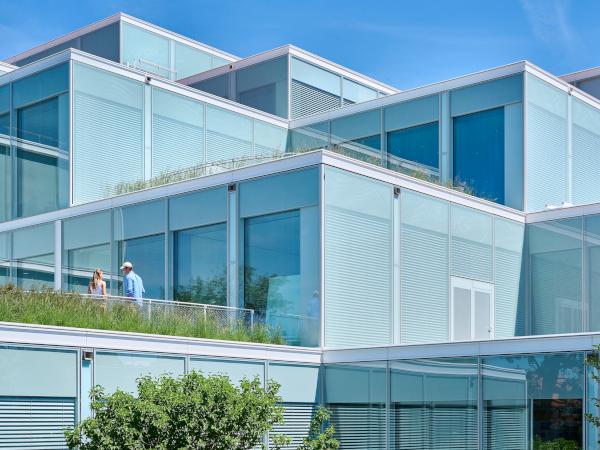
Glass is one of the materials in the construction industry that makes a significant contribution to climate protection. Effective thermal and solar control coatings ensure that energy consumption for heating or cooling buildings is reduced to a minimum, even in large-scale applications. Glass production costs are amortised correspondingly quickly as soon as it is used in the building. At the same time, however, production is also an important lever for further reducing the CO₂ footprint. According to the latest calculations, the flat glass produced by Euroglas performs significantly better than the industry average. A current EPD confirms that the CO₂ equivalent of the standard EUROFLOAT float glass with a thickness of four millimetres is just 9.83 kg CO₂eq/m². The value is therefore almost 20 per cent (19.7%) lower than the 12.24 kg CO₂eq/m² from the model industry EPD from the German Flat Glass Association( declaration number: M-EPD-FEG-001000).
"It is important to us to achieve low CO₂ values not just for individual product lines, but for the entire range," says Dr Fabian Zwick, CEO of the Glas Trösch Group, adding: "We are making climate-friendly float glass the standard." The advantages: climate-friendly float glass is also available in large quantities and is offered at no extra charge. Last but not least, it also benefits logistics, as separate storage areas are no longer required.
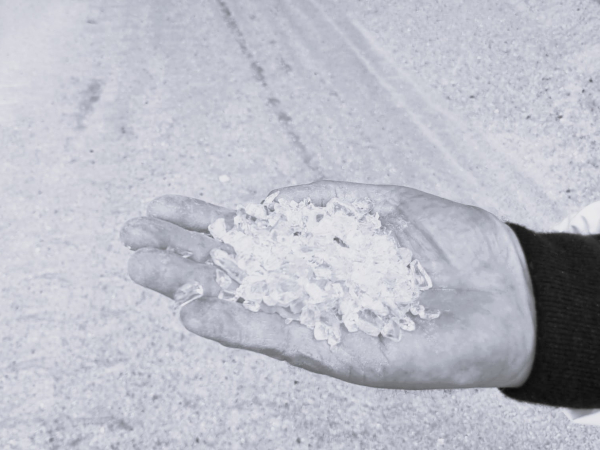
The low CO₂ equivalent was made possible by manufacturing processes that have been optimised over many years, in which all available cullet is used in full for the standard float glass. In addition, Euroglas is increasingly utilising renewable energy sources and modern energy recovery processes. Thanks to the expertise of the highly qualified production team, the efficiency of the specially developed melting furnaces has also been further improved. The climate-friendly float glass produced by Euroglas is used in all further processed glass products of the Glas Trösch Group.
 600450












Add new comment