
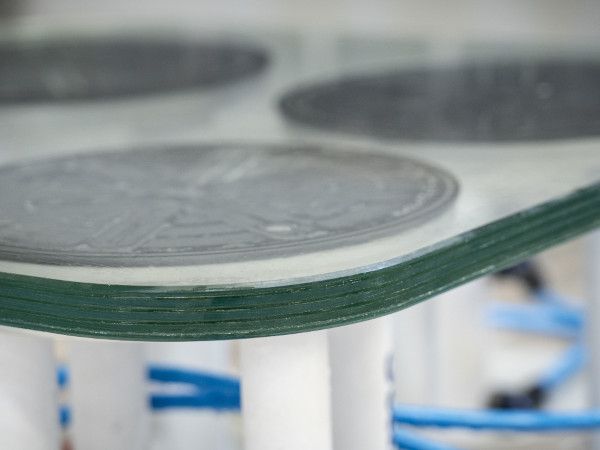
Date: 9 September 2026
These products are increasingly specified in architectural, security and industrial applications, where performance requirements leave no room for process variability or quality inconsistencies.
The presence of multilayer structures, thick glass sections and sensitive interlayers or coatings exposes the material to a high risk of defects during cutting and machining. Any deviation during processing can compromise the finished product, leading to scrap, reworking or, in the worst case, loss of certification.
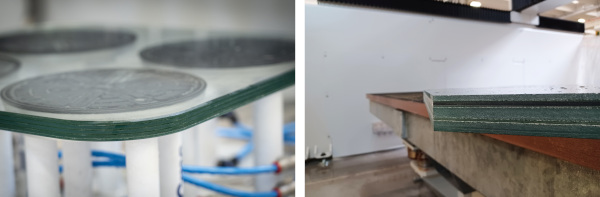
Fire‑resistant glass is even more critical. The intermediate layers, often based on flame‑retardant gels or intumescent materials, are particularly sensitive to environmental conditions, especially moisture. For this reason, a carefully controlled drying phase after fabrication is essential to prevent degradation of the interlayer and to ensure that the finished glass maintains its declared fire‑resistance performance over time.
Today, thick laminated glass is generally cut in straight lines using vertical panel saws. This solution introduces limitations when more complex shapes or controlled edge quality are required. Subsequent operations such as chamfering, seaming or edge finishing are then necessary, increasing handling, processing time and the overall complexity of the production flow.
For this reason, fabricating bulletproof and fire‑resistant glass requires advanced technological solutions capable of managing complexity while ensuring precision, process reliability and constant quality, such as those developed by CMS Glass Technology.
CMS sprint and electa: CMS solutions for bulletproof and fire-resistant glass
CMS sprint is designed to optimise cutting operations in laminated, fire‑resistant and safety glass fabrication lines, where productivity and repeatability are essential. The machine can fabricate square, rectangular and polygonal sheets, performing vertical cuts as well as 45° angle cuts, meeting the typical requirements of security and architectural glazing.
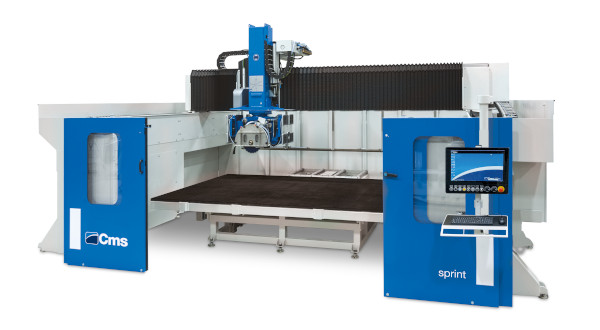
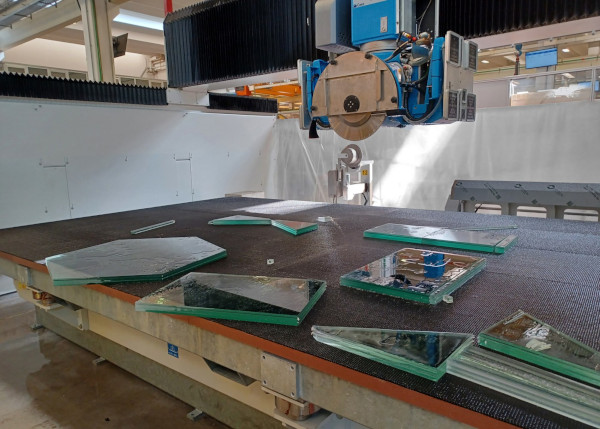
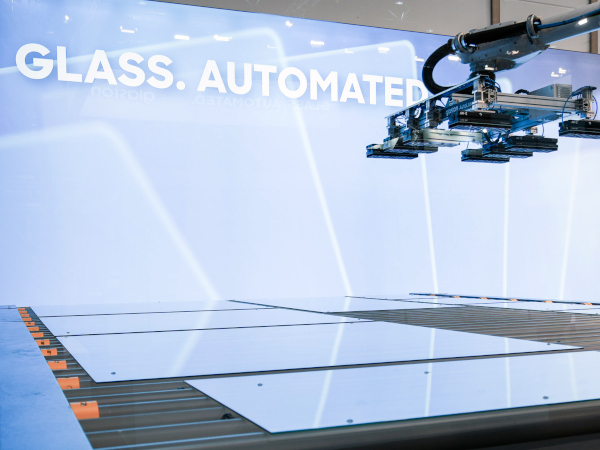
The integrated vacuum manipulator automatically separates and relocates the cut sections. This eliminates manual intervention, significantly improving operator safety when handling heavy and thick laminated glass, while also increasing overall process efficiency and workflow stability.
When higher edge quality and complex profiling are required, CMS electa machining centre overcomes the limitations of traditional machining systems. It enables the creation of regular, controlled edges and precise chamfers, a fundamental requirement for bulletproof and fire‑resistant glass, where edge defects can lead to delamination or stress concentration.
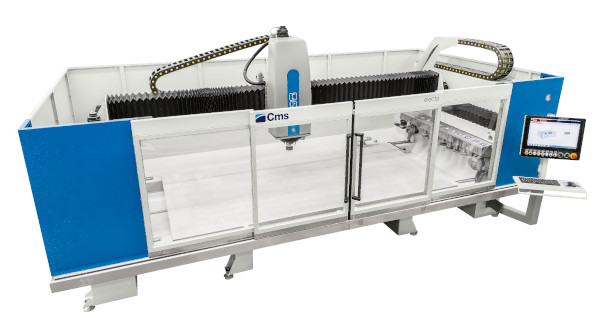
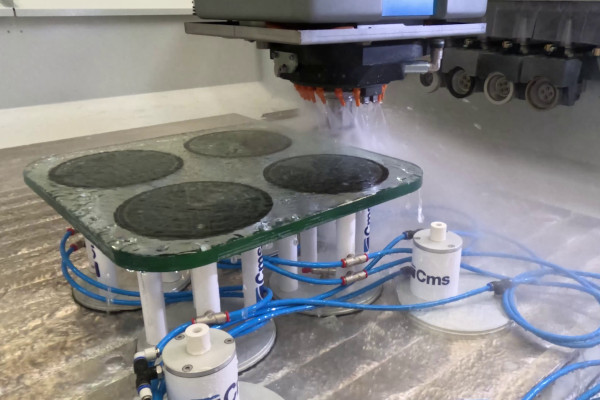
Thanks to the high dynamics of the axes, CMS electa performs shaping, grinding, polishing, drilling and milling in a single platform. This flexibility allows manufacturers to process complex shapes, reduce intermediate handling and adapt production to small batches or customised projects.
The result is a superior edge finish, reduced scrap and reworking, improved process reliability and higher overall productivity, even when dealing with the most demanding laminated glass configurations.
 600450










Add new comment