

Date: 6 September 2022
Tristar Glass, Inc. is a fully integrated architectural glass fabricator producing over 7 million square feet of commercial insulated glass products and 15.5 million square feet of tempered/heat-treated product on a yearly basis.
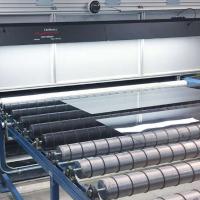
In 2009, Tristar Glass first invested in Litesentry’s real-time distortion inspection system as a means to gain an understanding of their tempered glass quality and to set themselves apart from the competition. Twelve years later, Tristar now has LiteSentry inspection systems on all 7 of their furnaces including 2 equipped with the Litesentry’s latest state-of-the-art Osprey 9 Complete Anisotropy + Distortion Inspection systems.
“At Tristar, we believe success starts by giving people the right tools to do the job correctly, and when it comes to monitoring and controlling furnace quality, the Osprey 9 Complete Anisotropy + Distortion Inspection system is as right as it gets.” Rob Carlson
Tristar is an early adopter of both measurements, investing in 2 new Osprey Complete Inspection systems since 2018.
 600450





Add new comment