Author: Mauri Saksala | Glaston
Source: glastory.net
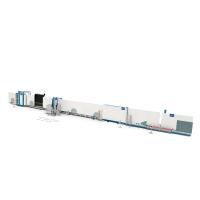
From traditional applications to cutting-edge capabilities, automation revolutionizes production, enhances quality and boosts efficiency. In this blog, we’ll discuss the changing nature of automation in glass processing and look at several examples of how automation is redefining efficiency.
Traditionally, automation excelled at tasks with limited variations. In glass processing, it has been ideal for large serial production, such as tempering identical glass products for furniture, appliances or standard-sized windows. Today, the advantages of automation extend to handling varying glass types and sizes in mixed production, as well.
Automation has the potential to handle up to 90% of the tasks on a mixed production line. The remaining special glasses can then be managed manually. By combining the strengths of both automated and manual approaches, optimal efficiency and versatility can be achieved. This allows the flexibility to switch from automation to manual operation that is essential to address unique or complex tasks.
Maximizing productivity and savings
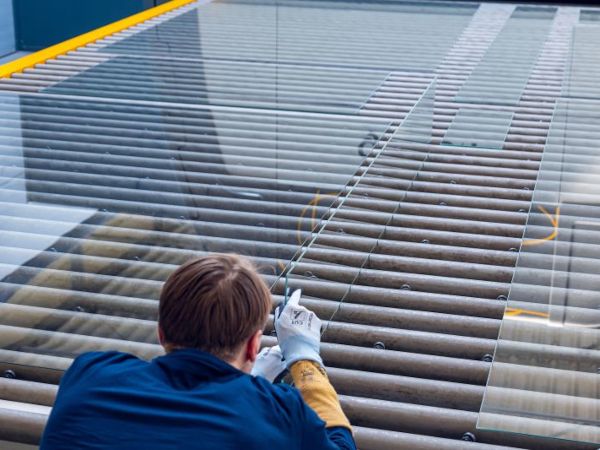
The benefits of automation are particularly pronounced with technologies like state-of-the-art robotized loading systems. These systems optimize batch loads and demonstrate remarkable efficiency in handling diverse glass thicknesses and sizes. For example, automated batch loads can reach up to an impressive 60% efficiency – a significant leap from the typical 30–35% efficiency of manually loaded batches.
Improving bed utilization not only boosts production and profits but is also crucial for energy savings. Specifically, automated batch loads can result in as much as a 50% reduction in the energy consumed during quenching and cooling processes.
Consider consulting your equipment supplier to find out the efficiency improvement numbers for your specific equipment.
Automating performance quality
Today’s automation is not only about mechanical systems, however. It also automates quality performance. In glass processing, this is especially important for achieving world-class quality.
Glaston Autopilot exemplifies this shift. This advanced system minimizes the need for operator intervention in glass processing. In essence, it provides process control without requiring manual parameter adjustments. Currently, this automation system surpasses every other available solution.
To take the next step in automation excellence, download the guide to explore the full potential of processing automation in glass processing.

Would processing automation benefit you? Take this quick quiz to figure it out!