Author: Simo Salminen | Glaston
Source: www.glastory.net
Year after year, energy prices steadily rise, making energy savings a critical priority for modern glass production. Luckily, cooling technologies and the materials used in critical system components have evolved over time, opening the door to smarter, safer and far more energy-efficient ways to cool glass.
Cooling, or quenching, in tempering lines consumes a significant portion of this energy, so manufacturers must consider all possibilities to reduce cooling energy requirements.
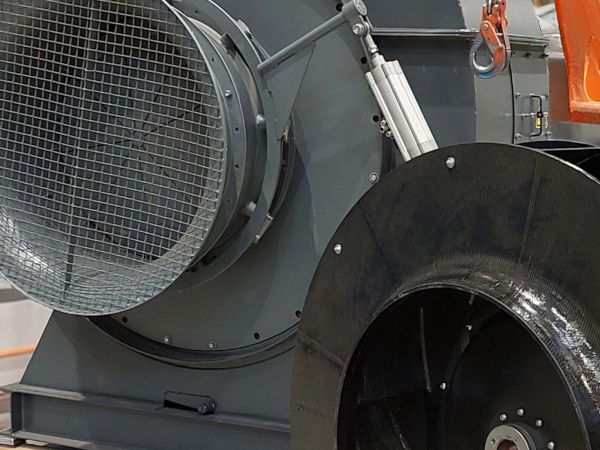
The new carbon fiber impeller in quenching line blowers reduces cooling energy consumption by up to 20%, thanks to the impeller’s advanced design, structural strength and lightness. And the benefits don’t stop there.
Traditional impellers in tempering line blowers are made of welded steel. They are not designed for the demands of modern quenching, which require high capacity combined with optimized energy consumption.
First, welded joints weaken under the strain of repeated rapid acceleration and deceleration cycles, eventually leading to fatigue failures where the metal cracks and breaks over time.
Second, because steel impellers are very heavy, they cannot change speed quickly and must continue running at high speeds even during idle periods. Idling steel impellers consume significant energy – electricity that is essentially wasted. This is a critical issue.
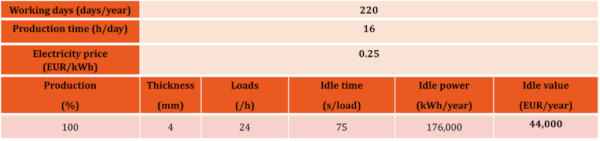
Traditional steel impellers use tens of thousands of euros of electricity per year when idling between loads, especially in thin glass production, where the required power is high and the cycles are fast.
Below is an example of a cost breakdown for 4-mm glass processing:
How carbon fiber makes a difference
A solution that reduces idle energy use and adapts more efficiently to production needs is actually available: the carbon fiber impeller.
The core benefit of this new technology lies in the carbon fiber material itself. Much lighter and yet still strong, the carbon fiber impeller can accelerate quickly, run only as long as needed and stop immediately when airflow is no longer required. This agility results in measurable energy savings.
By lowering idling speed during waiting periods, the carbon fiber impeller can reduce energy use by up to 20% per cycle in thin-glass production. Even in mixed production of different glass thicknesses, the energy savings are significant. Over the course of a year, these efficiency gains can translate into thousands of euros in reduced electricity costs, ensuring a fast return on investment.
Greater safety and durability
A carbon fiber impeller is also much safer than a steel impeller. Its lighter weight lowers stress on the system and reduces the risk of blower failure, making the entire line safer and more reliable.
In the unlikely event of impeller breakage, the carbon fiber breaks into small, lightweight pieces, which pose no risk to users or the blower.
What’s more, the life cycle of a carbon fiber impeller is many times longer than that of a steel impeller. Its lightweight structure allows it to withstand rapid and repeated speed changes without fatigue, significantly reducing maintenance needs and downtime.
For new and existing lines
Glaston’s existing machine blowers carbon fiber impeller can be integrated into new tempering line blowers or retrofitted to existing machine blowers to upgrade them.
It’s a simple way to boost energy efficiency and improve safety in existing lines without having to replace the entire blower. The investment quickly delivers returns as energy prices continue to climb.
Glaston has been successfully supplying blowers with this technology for several years already. Glaston’s delivery includes all necessary components, installation and commissioning, including careful impeller balancing and blower control parameter optimization on site.
The carbon fiber impeller offers the opportunity for smarter, safer and more energy-efficient glass tempering. By combining innovative materials with smart engineering, Glaston continues to help manufacturers optimize their production while reducing their environmental impact.
Learn more and watch the presentation at GPD 2025: Energy saving possibilities in glass quenching