Date: 30 March 2026
Investing in glass processing equipment means choosing the level of automation that best fits your production context. There is no universal solution: the right question is not "to automate or not," but "how much automation makes sense for my production?"
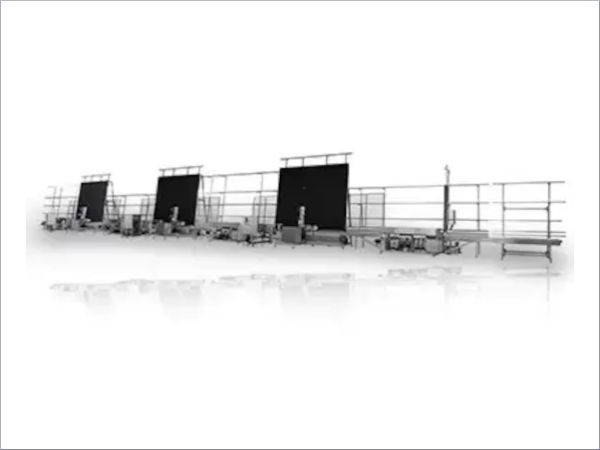
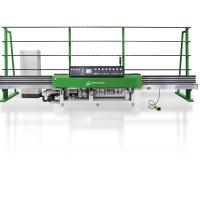
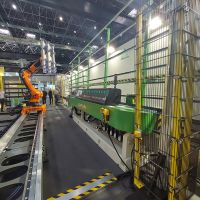
Schiatti Angelo straight-line edging machines address this need with a modular approach. Starting from a proven base model, the system can evolve into a complete turnover line, consisting of 4 straight-line edging machines and 3 rotation tables.
Automation is added where it generates real value.
Level 1: Standard glass machine configuration
Manual thickness setup, operator-controlled loading. A reliable configuration for those working with moderate volumes or variable production runs, where operational flexibility matters more than pure speed. The operator maintains complete control over the process, adjusting parameters as needed.
Level 2: Automatic glass thickness detection
A sensor detects the incoming glass thickness and automatically configures all machines in the line. When the thickness changes, the system pauses the conveyor, waits for all glass pieces in process to complete their cycle, then restarts with the new settings.
No manual adjustment. No risk of processing glass with incorrect parameters. Smooth transitions between batches. The operator can focus on quality control instead of constantly adjusting machines.
Level 3: Automatic loader
The loader handles glass pick-up and feeding autonomously, freeing the operator from continuous manual loading. Intervention is limited to replacing empty racks with full ones.
The result: consistent cycle times regardless of shift duration or operator fatigue. A significant factor especially in extended production runs.
One architecture, three configurations for glass processing
Each level builds on the previous one. You can start with the standard version and upgrade later, or invest in full automation from the outset. The key is matching the configuration to actual production needs, without paying for complexity that won't be used.
This is Schiatti Angelo's "Tailored Technology" approach: the right automation, in the right place, for measurable results.
 600450












Add new comment