

Date: 12 January 2026
Executive Summary
Flat glass plays a vital role in the EU’s transition towards a circular and decarbonised economy. With approximately 10 million tonnes of flat glass placed on the market annually - 80% of which is used in the building sector[1] - its end-of-life management presents both a challenge and an opportunity. While the environmental benefits of flat glass recycling are well established, the current recycling rate into new flat glass (closed-loop recycling) remains marginal[2]. Unlike container glass, for which long-established collection systems exist, flat glass from construction and demolition (C&D) sites is often not selectively collected and is instead mixed with other materials such as wood, metals, PVC, and hazardous substances. This contamination, combined with the lack of dedicated collection and sorting systems in most Member States, significantly limits the recyclability of flat glass waste (FGW). Moreover, there are currently no specific EU recycling targets for flat glass, despite its technical recyclability and potential contribution to circular economy goals. High quality requirements for flat glass cullet, high transport costs, and low landfill taxes further hinder progress.
In this context, we call for the implementation of effective and targeted measures to improve flat glass circularity in Europe, including:
- The mandatory use of pre-demolition audits and selective demolition, in line with the 2024 revised edition of the EU Construction and Demolition Waste Management Protocol.
- The development of national collection targets for flat glass as a key driver to improve recycling rates.
- The establishment of minimum recycled content target of 15% for flat glass to help create a more stable demand and offer for glass cullet.
- The promotion of best practices for uncontaminated collection and sorting at source, including the use of dedicated containers or other collection methods that keep the glass intact and ensure access for individuals to municipal container parks.
- A strong traceability system to ensure that recycled content genuinely originates from EU waste streams and to prevent fraudulent imports of falsely labelled materials.
- Opposition to the establishment of an EU-wide EPR system for flat glass, which risks undermining the proper management and control of recyclers over material flows, which is essential to ensuring quality and efficiency. The obligation of the final user or builder to deliver the waste to an authorised waste manager must be emphasised.
- Fostering collaboration across the entire value chain - from manufacturers, property owners, demolishers and recyclers - is essential to create conditions for proper collection, sorting and treatment.
[1] Glass for Europe, key data (available here)
[2] Deloitte, 2016, Economic study on recycling of building glass in Europe (available here)
 600450




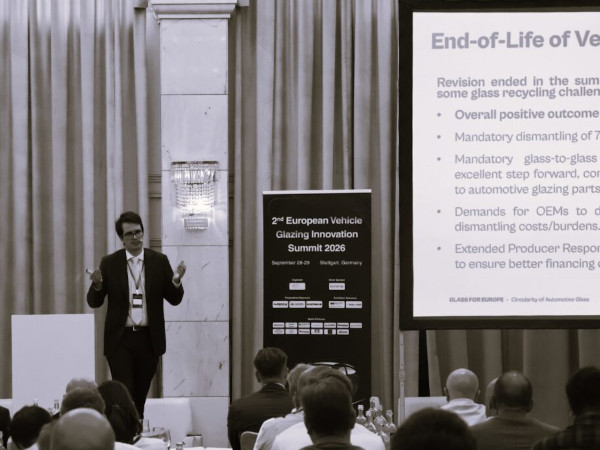








This "Flat Circular" initiative is a great step forward. The challenge of closing the loop for glass is actually quite similar to what we face in the automotive industry with End-of-Life Vehicles (ELV). On AutoMoto Meca, we see more and more technical solutions emerging to recycle complex car parts and materials. It is a global shift that we also document on AutoMoto Hebdo, as manufacturers are now forced to design for dismantlability. The construction and mobility sectors definitely have a lot to learn from each other regarding circularity.