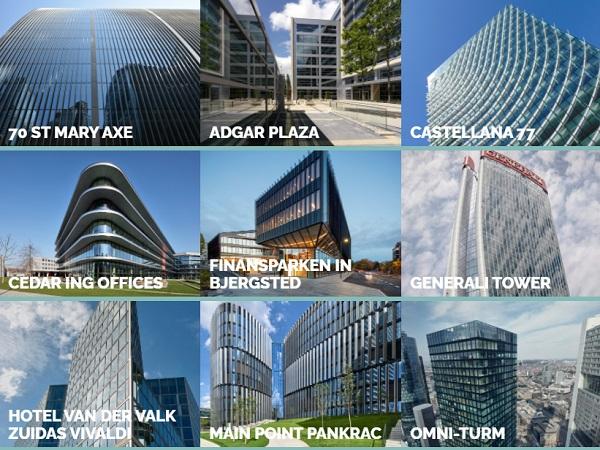
Glass in sustainable buildings

Glass in sustainable buildings
Photo source
glassforeurope.com

Date: 11 March 2022

Glass for Europe launches today a new section of its website and a video on the role of glass in sustainable buildings.

As new construction becomes increasingly energy efficient, energy consumption is no longer the only criteria that is being considered when evaluating the sustainable performance of buildings. Based on a complete life-cycle approach, the impact of manufacturing the building materials, as well as the construction, transportation, demolition and end-of-life phases, becomes critical to improving a building’s overall sustainable performance.

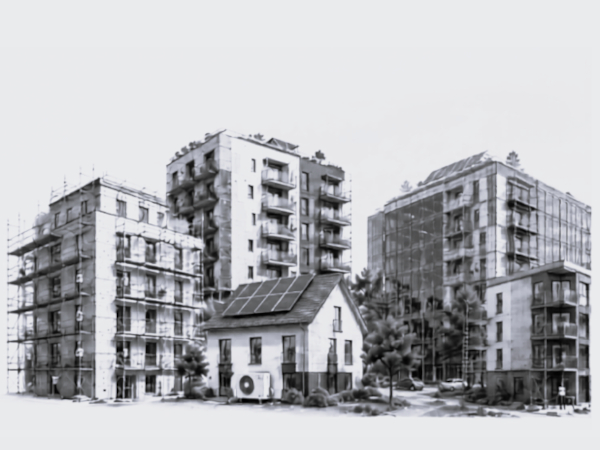
Flat glass is an inert and irreplaceable construction material that brings natural light in buildings. Its production from energy efficient furnaces makes it a product of choice for sustainable buildings

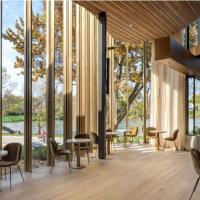
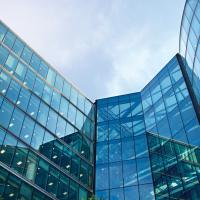
In its website, Glass for Europe showcases many European examples of highly glazed buildings which have been rewarded for their sustainability. These buildings achieve high energy efficiency standards and obtained ‘top grades’ of sustainability certification schemes also thanks to their glazed surfaces. Flat glass products are essential contributors to low-energy and sustainable buildings.
Visit the webpage.

600450 Glass in sustainable buildings glassonweb.com

Others also read

Christian Decker succeeds Bernhard Hötger as CEO. Bernhard Hötger is set to retire on 30 September 2026.
The Fenestration and Glazing Industry Alliance (FGIA) has released an updated trio of documents sharing recommend test methods for three different types of movement during seismic-related events.
The challenges facing the glass and glazing industry continue to evolve. From changing regulations and product safety reforms to energy efficiency targets and skills development, businesses are navigating an increasingly complex landscape.
Saint-Gobain and AGC are joining forces to deploy a world-first, large-scale hybrid electric furnace at Saint-Gobain's Avilés plant in Spain, set to cut CO₂ emissions from flat glass production by around 50%.
Glass can be recycled indefinitely, and using glass cullet in production reduces the need for virgin raw materials, energy consumption and greenhouse gas emissions.
The SANCO Group is continuing its expansion across Europe. With WOLF Fenster AG in South Tyrol, Italy, the alliance welcomes a long-established, highly innovative new partner.

Add new comment

From industry

İçmeler Mah. D-100 Karayolu Cad. No:44A,
34947 Tuzla,/İstanbul
Turkey