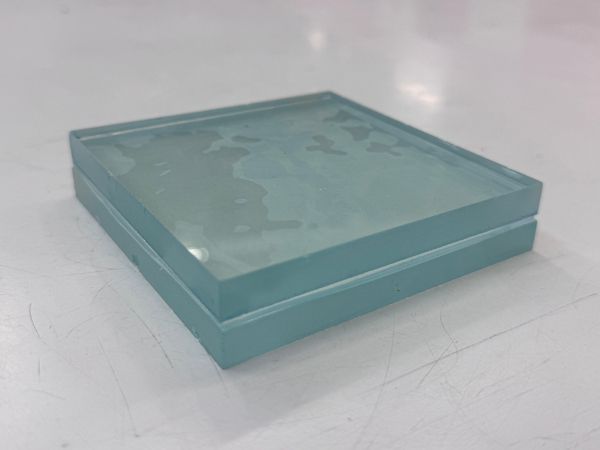
Article Information
- Digital Object Identifier (DOI): 10.47982/cgc.10.704
- Published by Challenging Glass, on behalf of the author(s), at Stichting OpenAccess.
- Published as part of the peer-reviewed Challenging Glass Conference Proceedings, Volume 10, June 2026, 10.47982/cgc.10
- Editors: Christian Louter, Freek Bos & Jan Belis
- This work is licensed under a Creative Commons Attribution 4.0 International (CC BY 4.0) license.
- Copyright © 2026 with the author(s)
Authors: Valérie Hayez a , Frédéric Gubbels a , Davide Dei Santi a , Telesilla Bristogianni b , Faidra Oikonomopoulou b
a Dow Silicones Europe srl, Belgium
b TU Delft, Netherlands

Abstract
Silicone bonded glazing (structural glazing) is a pivotal technology in curtain wall systems, offering a seamless and aesthetically pleasing facade for modern architectural designs. This technique uses wet applied silicone sealants to bond glass to a building's structural frame, eliminating mechanical fasteners and providing a sleek, uninterrupted glass surface. Some of the proven advantages include long term thermal insulation and excellent resistance to various loads. The durability of the silicone means less maintenance and replacement over time of a bonded façade. A significant innovation in silicone bonded glazing is the development of a new bonding silicone solution which improves productivity, sustainability, cost, design options and aesthetics. The silicone is pre-applied as a strip on a metal frame or insert. This post-cure strip develops adhesion to glass through a simple primer application even after months of storage. As the strip is already cured, bonded glazing units can be quickly assembled and shipped. The pre-dispensed controlled joint dimension minimizes the risk of errors and reduces material waste. The silicone strip allows reducing the overall silicone, spacer tape and aluminum content for structural glazing elements. This contributes to a more cost effective and lower environmental footprint bonding system. This paper reviews the key properties and possibilities offered by this new silicone bonded glazing technology.
1. Introduction
Silicone bonded glazing (structural glazing SG) is a pivotal technology in curtain wall systems, offering a seamless and aesthetically pleasing facade for modern architectural designs. This technique uses wet applied silicone sealants to bond glass to a building's structural frame, eliminating mechanical fasteners and providing a sleek, uninterrupted glass surface. Some of the proven advantages include durable thermal insulation and excellent resistance to various loads. The long-term performance of the silicone means less maintenance and replacement over time of a bonded façade.
A significant innovation in silicone bonded glazing is the development of a new bonding silicone solution called translucent structural silicone strip (TSSS). The TSSS silicone reaches the same mechanical performance and durability as a state-of-the-art structural silicone following ETAG002/EAD requirements (EOTA 2018). The uniqueness of the silicone resides in its ability to develop adhesion post cure. The conventional assembly process for SG, which consists in the application of a spacer tape on a frame, and the injection of a bonding silicone between substrate and panel, followed by a mandatory curing time which varies between 3 to 28 days depending on the cure chemistry (2 component or 1 component) is therefore significantly accelerated and simplified. The TSSS has been pre-dispensed and cured directly on an insert profile which is clicked into the frame. At the time of bonding, no further mixing or tooling of the silicone is required which increases speed, reduces waste and potential quality issues due to surface and silicone preparation. No pumping equipment is needed, which enables access to bonded glazing from the smallest to the most complex projects. The process of bonding is limited to priming of the glazed pane and ensuring contact during 1 hour between TSSS and panel. Sufficient adhesion to move the assembly is reached 1 hour after the bonding. The process hence enables fast, safe and cost-effective production. As the silicone is precured in a fixed shape, it not only ensures the joint dimensions are respected but it eliminates the need for a spacer tape. The strip uses less silicone than a wet applied system. These properties also allow reducing the material use in the frame which all contributes to better material efficiency.
This paper first details the exact steps required to build an assembly. Next, the principal mechanical properties are discussed. Finally, the application benefits offered by this innovation are highlighted.
2. Assembly
2.1. Frame preparation
The inserts with the pre-dispensed TSSS on an anodized aluminum come with a cover cap in PMMA/protection liner to protect the TSSS during transport, storage and handling from dust and other contamination. The TSSS inserts may be cut at the desired dimension with the protection cap or liner left in place. Cutting contamination (grease, aluminum flakes or PMMA debris) can be cleaned from edges with DOWSIL™ R40 cleaner, without affecting the adhesion development. Once cut at the desired dimension, the insert may be added to the carrier frame. The connections between TSSS must be weatherproofed using for example a 1p silicone sealant. The weatherproofing should avoid introducing any non-planarity at the place of connection.
2.2. Substrate preparation
Good adhesion can be developed on a variety of substrates provided the correct application procedure is followed. For bonding to smooth surfaces like glass, only 1 primer is required. Bonding on rough surfaces or other substrates may require the use of an additional primer. The following procedure is applicable for uncoated glass. First, the glass must be cleaned using DOWSIL™ R40 cleaner. After a waiting time of 1 minute, the glass must be primed with a clean tissue at the place of bonding the TSSS. The tissue must be well impregnated with primer. However, only one pass over the substrate is allowed to avoid over-priming. It is important to prime the glass and not the TSSS as adhesion will not develop when priming the TSSS. After 5minutes waiting time, the glass can be positioned on the TSSS or the rame can be positioned on the glass. This assembly should be done in one single movement. Repositioning of the substrates will destroy the capacity of the silicone to develop adhesion. To ensure good wetting of the silicone on the glass, clamps must be placed around the perimeter at regular intervals for at least one hour. The clamps must ensure contact between the glass and the tape without over pressurizing, as this can reduce the ability of the TSSS to bond. A pressure between 0 and 500Pa is adequate. Ensure especially that the clamping is done at the corners and when bonding large substrates, additional clamps may be considered to ensure planarity. The assembly process is illustrated in Fig 1.
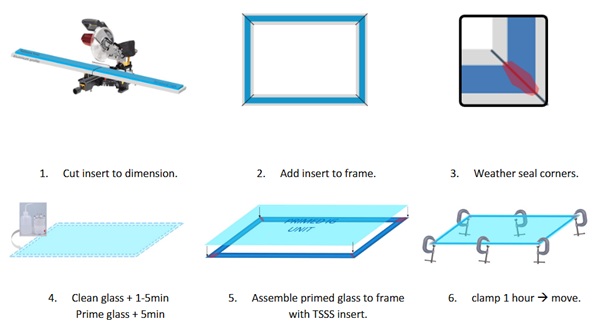
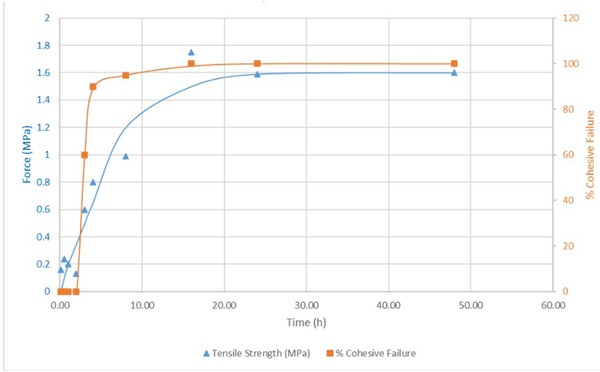
An adhesion strength of 0.1 MPa develops immediately after contact. Bonded units must be stored horizontally for at least one hour before storing vertically with dead load support. After one hour, the Roman scale test (Dow 2025) is successful (10seconds at 0.7 MPa) and the assembly is strong enough to be moved. This level of adhesion is typically reached by state-of-the-art bonding silicones after 24 hours-72 hours. Putting a higher stress than 0.1 MPa on the fresh assembly could damage the strength. It is recommended to move the glass carrying the frame rather than the opposite. After 24 hours, the system can be shipped and tested (see quality control 2.3) whereas full performance will be reached after 7 days. The adhesion development depends on the environmental conditions. Low temperature bonding is not possible as the primer must be at a temperature of at least 5 °C and no water should be present on the substrate. Once assembled, the bonded elements can be immediately exposed to high temperature (40 °C, 15 % RH) without impact on the adhesion development (Fig 2). The TSSS can handle similar service temperature ranges as a conventional bonding silicone (-50 °C to 150 °C).
2.3. Quality control
The pre-applied silicone on the insert has a shelf life of at least 12 months, provided it is stored like a conventional silicone sealant under controlled conditions of temperature and humidity (Dow 2025). It is recommended to perform an adhesion test before starting assembly of panels with a new batch of TSSS inserts. A small section of insert with TSSS cut to a length of 50 mm can be used. Following the above bonding procedure, the TSSS is assembled to a glass substrate to obtain an H-piece test sample (HP). One sample is tested immediately after bonding using a tensile testing machine or a Roman Scale (Dow 2025). Strength of adhesion should be at least 0.1 MPa. For additional quality evaluation, test the strength after longer assembly time and verify that the adhesion build up is aligned with expectations of Figure 2. For this purpose, pieces of insert with TSSS remaining from cutting operations may be used. It may also be considered to perform a deglazing of a bonded unit.
Due to the translucence of the TSSS, it is possible to easily identify areas of bad adhesion. In absence of contact between substrate and TSSS during bonding, air can be entrapped. Bubbles can be eliminated by applying gentle pressure or using a clamp locally. If the bubble does not disappear but remains small and/or is limited in quantity (smaller than 2 mm in diameter as the bubble should not exceed the 6 mm minimum thickness of the TSSS which may impact the weathersealing), no specific measures are needed, it will not affect the assembly strength, only the aesthetics. In case of larger or numerous bubbles, it is recommended to discard the assembly. The glass may be cleaned and reused. A new insert may be fitted in the curtain wall framing and the bonding procedure can be repeated.
3. Mechanical performance
3.1. Test results
The TSSS is dispensed and cured on anodized aluminum carrier profiles in a factory setting, ensuring dimensional accuracy and eliminating variability seen in wet-applied sealants. Consequently, the controlled pre-application of the silicone allows working with a 3 mm thickness, which is lower than the minimal 6 mm recommendation for bonded glazing with wet sealants.
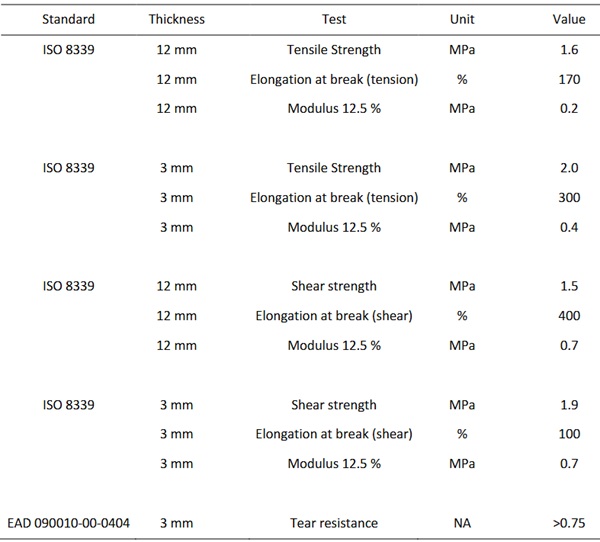
For the sake of comparison, the below mechanical performance results provided for 12 mm thickness - the standard thickness used to characterize wet-applied bonded glazing characterization - and the intended TSSS application thickness of 3 mm both in tension and in shear. The TSSS was pre-applied on anodized aluminum and bonded to glass following the above procedure into H-piece samples to determine performance following ETAG002 procedures. Results are based on average of 10 test pieces of lab produced TSSS.
In comparison to a state-of-art bonded glazing silicone in 12 mm thickness, the TSSS has a lower modulus and a higher elongation at failure. At 3 mm thickness, the TSSS is at par with a wet-applied bonded glazing silicone in terms of 12.5 % modulus. The tensile strength is higher as well as the elongation at break. These properties allow achieving with the lower thickness the same deformation capability in shear due, for example, to thermal dilatation between substrates, as will be demonstrated in this paper. Besides HP strength testing, the TSSS achieved 25 % movement capability following ISO 11600 (ISO 2002). Test pieces hold 100 % elongation for 24 hours without breaking and after removing the elongation, the recovery exceeds 90 %. The TSSS is a structural sealant but can act as a weather sealant too.
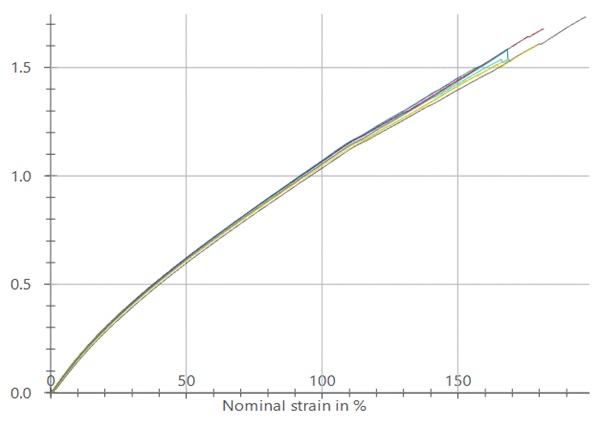
All mandatory tests of the ETAG002, including ageing due to climatic conditions or mechanical fatigue were passed successfully with the lab produced prototypes, following the criteria of ETAG (<25 % loss versus the unaged performance). Figure 3 shows the typical stress-strain curve in tension for TSSS at 12 mm thickness.
Additionally, TSSS samples which were 12 months old (stored in interior conditions) were bonded successfully and reached similar performance in tension as fresh TSSS samples. To verify the possibility to insert the TSSS in a profile before the powder coating of the aluminum, the TSSS was bonded after having been exposed 15 min at 200 °C. The same performance of adhesion and strength as freshly applied TSSS was reached.
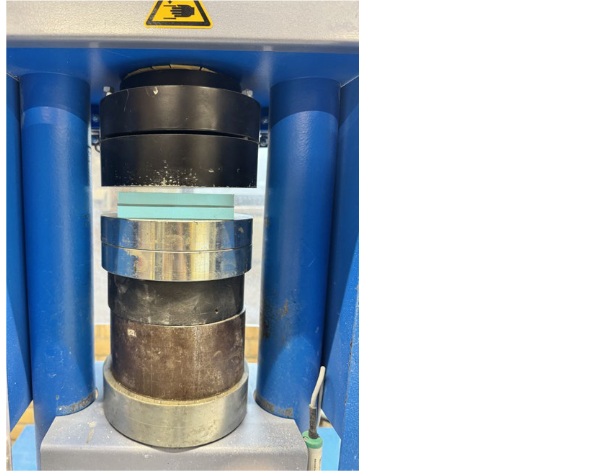
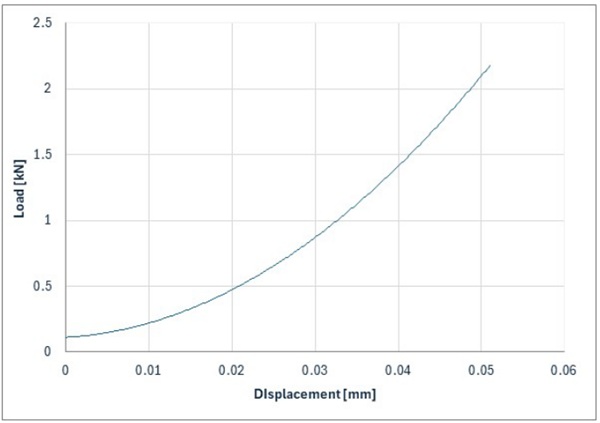
Besides tension and shear testing, the TSSS was also tested in compression (Fig 4 and Fig 5). A TSSS sheet of 2 mm thickness and 100 mm edge was placed as an interlayer between two sheets of 10 mm thick float glass. The TSSS was not bonded to the glass substrates. The sandwich was first compressed at 0.1 kN/sec to 20 kN resulting in 2 MPa stress. The sample showed a first change in behaviour around 8 kN. There was noticeable squeezing out of the film along 3 of the glass edges, of a maximum of 3 mm. There was no noticeable change in aesthetic (whitening or bubbles) and a change in the thickness of the film was not measurable.
Table 1: Overview of mechanical properties for DOWSIL™ TSSS on glass-aluminum HP applied as tape in 3 mm or 12 mm thickness (based on lab produced TSSS).
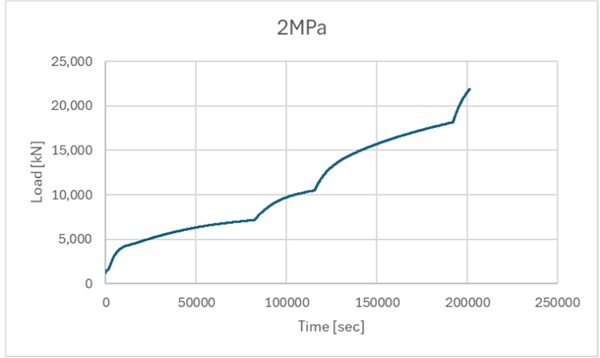
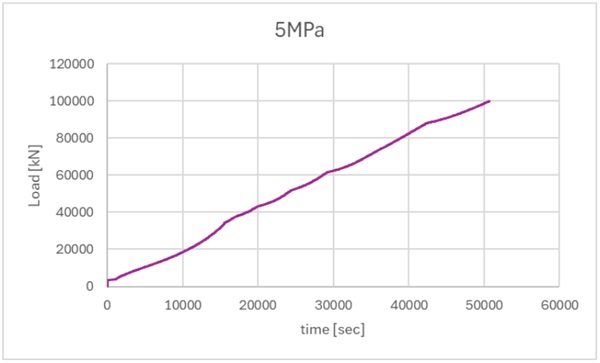
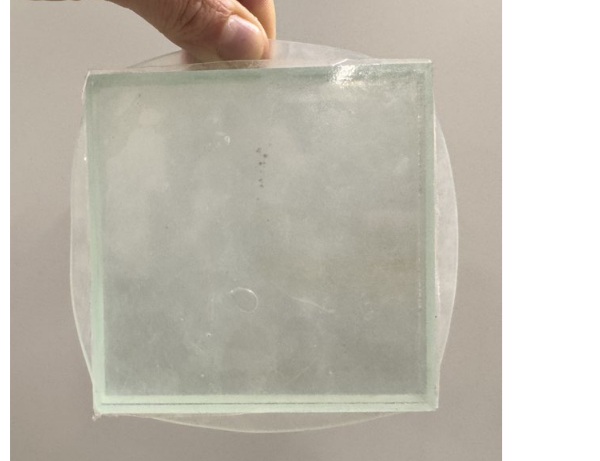
The same sample (with the deformed film) was subjected to a compression test until 5 MPa. The load-time diagram is more linear (Fig 6). The film squeezed out at all sides, at a maximum of 11 mm without changes to its translucence (Fig 7).
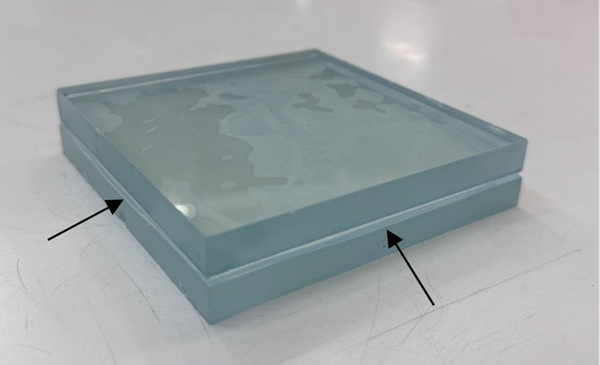
To investigate the compressive stress level below which no visible deformation is observed in the TSSS film, a new assembly of two 100 x 100 mm float glass pieces with a 2 mm TSSS film interface (no primer) was tested, using the same loading rate. The specimen was tested at 0.22 MPa (Fig. 8), 0.5 MPa, 0.8 MPa and 1 MPa. Below a compressive stress of 0.5 MPa, no deformation was observed. At 0.8 MPa (Fig. 9) and 1 MPa, the TSSS film squeezed out by 1 mm and 2 mm respectively. Areas of non-contact between the film and the glass were observed in both pre- and post-tested specimens. The compression test should be repeated in bonded specimens (with primer), to investigate whether the adhesion between glass and TSSS reduces the extent of squeezing out.
3.2. Design stress values
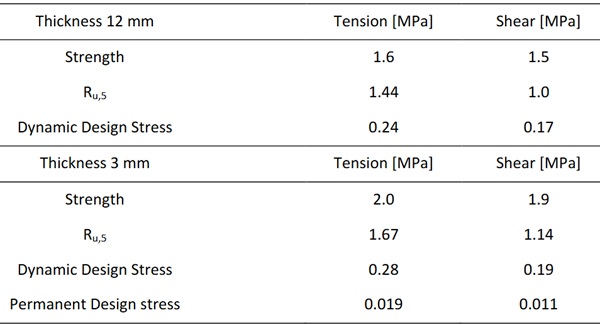
Based on the 12 mm results and the ETAG002 approach and a safety factor of 6, it is anticipated that TSSS can reach a dynamic tensile design stress value of 0.24 MPa and a dynamic design stress value in shear of 0.17 MPa. The same exercise was performed for 3mm thickness, leading to the design stresses indicated in Table 2. For 3mm thickness, a permanent design stress value in shear of 0.011 MPa is verified experimentally following the testing procedure for shear creep under climatic ageing from EAD 250005-00-0606 Adhesive for wall cladding (EOTA 2018). The lap shear samples were permanently loaded to 4x 0.011 MPa = 0.044 MPa and left for 3 months in a climatic chamber at 60 °C and 85 % RH to simulate accelerated ageing. In the absence of a test procedure for the permanent design stress value in tension, the EAD250005-00-0606 procedure was adapted and HP were loaded in permanent tension up to 4 x 0.019 MPa, for 3 months at 60 °C and 85 % RH. For both permanent shear and permanent tension, the creep was less than 1 % for TSSS. These design values are based on lab produced samples and intended as a guideline only, it is intended to refine the data as the product is scaled up for commercialization.
Table 2: Indicative design stress values for DOWSIL™ TSSS in 12mm and 3mm thickness.
3.3. Material model for Finite Element Analysis
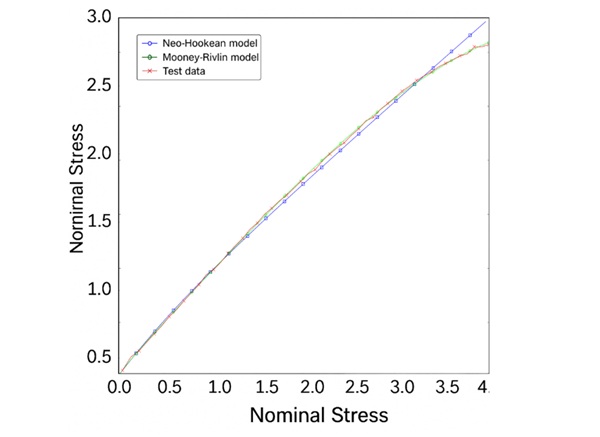
To evaluate the potential use of TSSS in other applications, more advanced calculation methodologies such as Finite Element analysis (FEA) may be required. The material model of TSSS was characterized based on a uniaxial test according to ISO 527. A first order polynomial model (Hooke) was used but a Mooney-Rivlin model provided the best fit with C10= 0.370206928 MPa and C01 = -0.190340911MPa (Fig. 10). Combination of both parameters provides the shear modulus G = 2 (C10+C01) = 0.36 MPa and from there the Young modulus E = 1.08 MPa. Additional characterization through biaxial tension and pure shear was not performed at this stage. As opposed to a state-of-the-art silicone, the TSSS shows a linear behaviour almost until failure.
3.4. Thermal dilatation - movement capability
A bonded glazing sealant needs to accommodate differences in movement between assembled substrates with different coefficient of thermal dilatation. With a minimum thickness of 6 mm, wet applied sealants mostly can accommodate this. The fixed 3 mm thickness of TSSS may be perceived as too low. To illustrate how the TSSS works, let’s take the example of a challenging application for bonded glazing today, the closed cavity façade (CCF). In this type of façade, a single ply of glass (as opposed to an insulating glass unit, the single glass typically is laminated) is structurally glazed on a frame. Following this first “skin”, there is a wide(r) cavity, followed by an insulating glass unit. This system is like a double skin façade, except that there is no ventilation of the cavity which avoids the pollution of its inside surfaces. Due to the low thickness of the exterior glass, the direct exposure and the closed unventilated cavity behind, the bonded silicone reaches higher temperatures and consequently requires higher thickness to accommodate the thermal shear movement. A higher thickness may be needed both in hot and moderate climates/temperatures especially when the façade uses large glass pane dimensions. As an example, the frame and glazing of a South oriented external bonded pane of 1.5 m by 2.9 m, may both reach a maximum temperature of 60 °C.
The thickness e of the bonding sealant is related to the shear modulus G (0.36 MPa) and the design shear stress τdes of TSSS by equation (1):

Whereby the maximum thermal movement Δ, as a combination of the elongation in directions a and b, is provided by equation (2):

With:
Tf = temperature of frame
Tg = temperature of glass
T0 = reference temperature
αf = coefficient for aluminum frame = 23E-6 /K
αg = coefficient for glass = 9E-6 /K
a, b = respectively pane width (1.5 m) and pane length (2.9 m), with b>a, supported in dead load
Applying the equations to the above example and the values of TSSS, we obtain

The required thickness is close to the intended TSSS thickness of 3 mm. As a comparison, using a conventional 2p bonding sealant with shear modulus G= 0.47 MPa and design shear stress τdes = 0.11 MPa, the required minimum thickness is 7.2 mm.
This exercise demonstrates the excellent capability of the TSSS to accommodate shear movements due to thermal dilatation. Good performance can be expected in other applications where movement and deformation are dominating the failure mode, such as seismic applications or bomb blast resistance.
4. Benefits
4.1. Material efficiency
Using a pre-dispensed bonding silicone results in numerous benefits related to productivity and cost, as explained above. These benefits also translate into material efficiency.
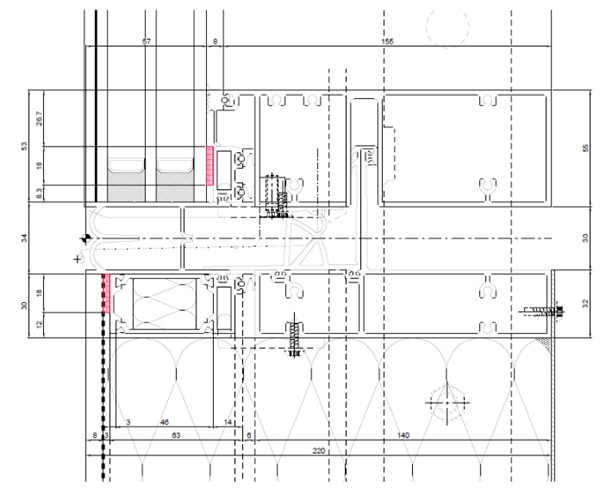
A wet applied bonded glazing requires a minimum of 6 mm-by-6 mm silicone and 6 mm by 6 mm spacer tape. This imposes a minimum profile width of 12 mm for the aluminum frame. The TSSS technology eliminates the need for a spacer tape which enables working with up to 50 % slimmer profiles. Furthermore, the TSSS uses 50 % less silicone thanks to the 3 mm thickness, and eliminates production waste during mixing and tooling, which adds up to the material efficiency. Material efficient systems further contribute to lighter transport and easier installation in the buildings.
As an example, a unitized curtain wall system (KGC 2025) optimized for the use of TSSS could result for a bonded element of 1.5 m x 2.9 m with the same structural and thermal performance as a conventional wet glazed system into 15 mm sightline reduction, up to 2 liter silicone gain (excluding the production gain), 8.8 linear meter of spacer tape saving and 1 kg of aluminum saving (Fig. 11).
This technology can also bring significant benefits for the backbedding of windows and doors. The TSSS not only develops good adhesion on aluminum, but also on PVC or pine wood (provided an appropriate primer is used). Bonding of the glass pane to the frame of opening elements such as windows and doors is known to contribute even more to stiffening of the assembly, reducing the need for metal reinforcement in PVC sashes.
4.2. Assembly efficiency, interface consistency and reversibility in cast glass structures
TSSS films exhibit strong potential for application as interlayers in cast glass structures. At present, architectural assemblies consisting of cast glass components depend on permanent bonding media to ensure structural cohesion and stiffness, which are generally wet-applied on site. These bonding systems can be classified into (i) flexible adhesives (e.g., bonding silicones), (ii) rigid adhesives (e.g. epoxies and UV-curing acrylates), and (iii) mortars (Oikonomopoulou and Bristogianni 2022). The on-site application of adhesives significantly increases construction time and makes the bonding quality susceptible to human error. A pre-cured adhesive film may overcome these constraints, while introducing further benefits such as improved optical consistency and the potential for reversibility.
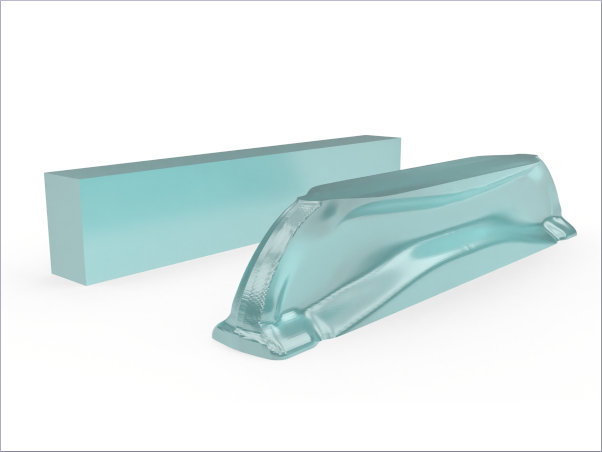
To investigate the aforementioned potential, the cast glass Qaammat Pavilion in Greenland is used as a case study, with the aim to compare a wet-applied structural silicone solution with TSSS. In the case of the Qaammat Pavilion, a DOWSIL™ Experimental Fast Adhesive developed by DOW (Oikonomopoulou et al. 2022, Hayez et al. 2021) was used to bond the upper two-thirds of the structure (Fig. 12-13). The use of such flexible adhesives in cast glass assemblies is beneficial when minor dimensional tolerances are expected in the structure due to the absence of post-processing of the cast glass components, and the required lap shear strength does not exceed 1 MPa. The two bonding solutions are evaluated and compared according to a set of criteria adapted from previously established studies by Oikonomopoulou et al. 2022 and Dimas et al. 2022, as presented in Table 3.
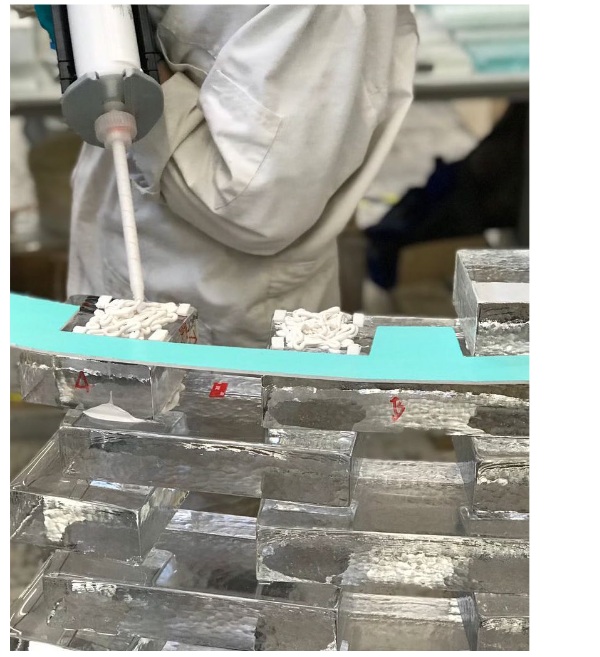
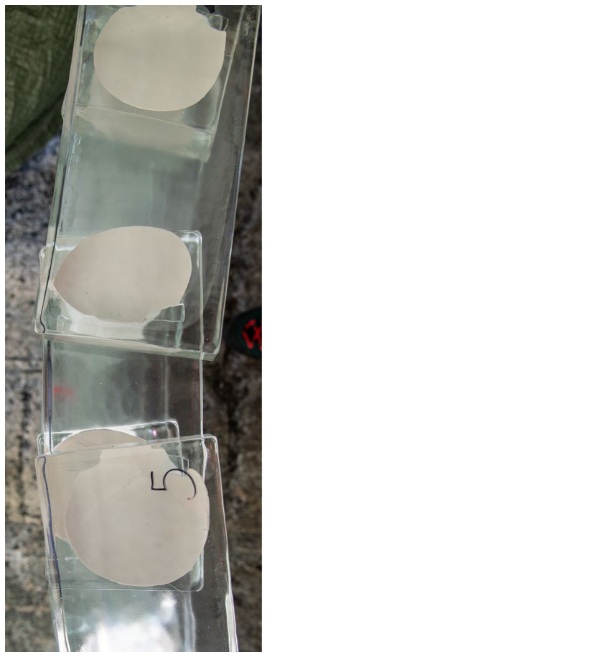
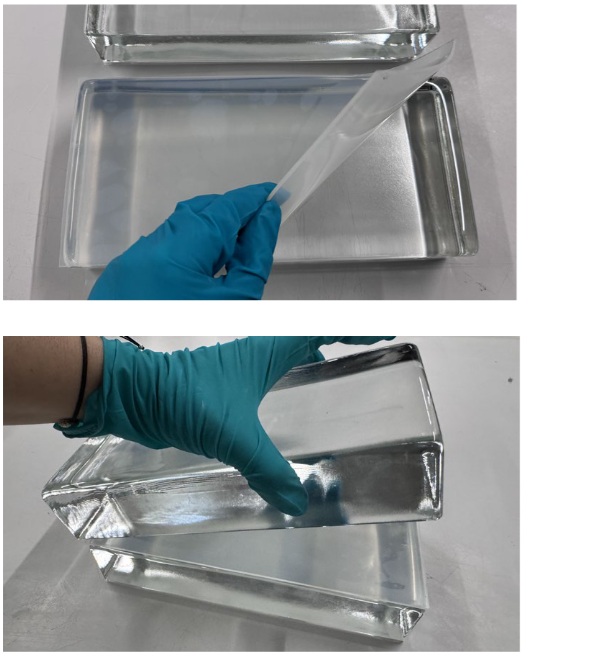
Table 3: Comparative assessment of wet-applied DOWSIL™ Experimental Fast Adhesive (real-case) and pre-cured DOWSIL™ TSSS film (hypothetic scenario), as bonding media in the cast glass structure of the of the Qaammat Pavilion.
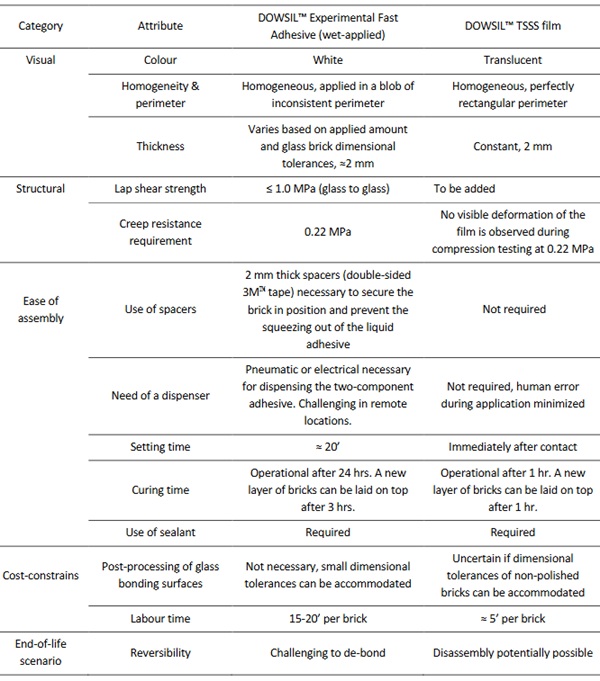
From the above comparison it can be derived that the use of a pre-cured adhesive film can have significant impact on the visual properties of the bonding interface, as the latter offers a translucent, homogeneous solution with a well-defined perimeter and constant thickness (Fig 14). A substantial benefit is further achieved in terms of assembly efficiency. A pre-cured film can reduce the setting and curing time of the adhesive on site, as well as the labour time involved and probability of human error. Further testing is required to evaluate whether dimensional tolerances accumulated towards the top layers of the construction (due to the use of non-polished cast glass bricks) can be absorbed within the thickness of the pre-cured film.
Follow-up exploration on the debonding of the glass bricks at the primer-film interface is also necessary, to explore the demountability-ease of the system. In that direction, it is particularly interesting to investigate the applicability of pre-cured TSSS films without a primer, acting as dry interlayers in interlocking cast glass assemblies, as introduced by Oikonomopoulou et al. 2018, Oikonomopoulou 2019.
5. Conclusion and perspectives
The TSSS is a promising innovation in bonded glazing. The technology has the capability to contribute significantly to the productivity improvement, material efficiency of bonded façade and windows systems, whilst achieving similar thermal and structural performance. The material efficiency may reduce embodied carbon and ensure leaner transport and easier installation. In cast glass assemblies, the use of the pre-cured TSSS may also bring interesting benefits compared to wet applied sealants and adhesives.
Disclaimers
The values reported in this article are based on a limited set of lab prepared samples. Further research is needed to understand the impact of test variability relative to a statistical relevance and scale up of production. Hence features and properties described here are typical values of the current product candidate and are not a guarantee of future and final performance. Dow is not providing architectural, engineering or other professional services for you or in any capacity related to the referenced project, and Dow assumes no responsibility for, and you are not relying on Dow for, any design, specifications, requirements, materials, samples, design elements, or testing of any design components, including the adequacy or completeness of the same, supplied or used by any warranty recipients, other parties or users of Dow products or services. Dow will only warrant products as set forth in a separate executed Dow warranty.
References
ASTM, ASTM D624, Standard Test Method for Tear Strength of Conventional Vulcanized Rubber and Thermoplastic Elastomers (2020)
Dimas M, Oikonomopoulou F, Bilow M, In Between: An Interlayer Material Study for Interlocking Cast Glass Blocks, In C. Louter, J. Belis, & F. Bos (Eds.), Challenging Glass Conference Proceedings : Conference on Architectural and Structural Applications of Glass, Vol. 8, pp. 1-26 (2022)
DOW, Structural Glazing Manual, www.dow.com (2025)
EOTA, EAD 090010-00-0404, Bonded glazing kits and bonding sealants (2018)
EOTA, EAD 250005-00-0606, Adhesive for wall cladding (2025)
Hayez V, Aksoy B.A, Bristogianni T, Oikonomopoulou F, Ikonomidis K, The Qaammat Pavilion: A story of innovation, collaboration and inclusion, Intelligent Glass Solutions (2021)
ISO, ISO 11600-Building construction — Jointing products — Classification and requirements for sealants (2002)
ISO, ISO 8339- Building construction — Sealants — Determination of tensile properties (Extension to break) (2005)
Oikonomopoulou F, and Bristogianni T, Barou L, Veer F.A, and Nijsse R, Interlocking cast glass components. Exploring a demountable, dry-assembly structural glass system, HERON, vol. 63 (1/2), pp. 103-138 (2018)
Oikonomopoulou F, "Unveiling the third dimension of glass. Solid cast glass components and assemblies for structural applications.," PhD, Architecture and the Built Environment, TU Delft, Delft, (2019).
Oikonomopoulou F, and Bristogianni T, Adhesive solutions for cast glass assemblies: ground rules emerging from built case studies on adhesive selection and experimental validation, Glass Structures & Engineering (2022)
Oikonomopoulou F, Bristogianni T, van der Velden M, Ikonomidis K, The adhesively-bonded glass brick system of the Qaammat Pavilion in Greenland: From research to realization. Journal Architecture, Structures and Construction, 2, 39–62 (2022)
Sitte S, Brasseur MJ, Carbary L. D., Wolf AT, Preliminary Evaluation of the Mechanical Properties and Durability of Transparent Structural Silicone Adhesive (TSSA) for Point Fixing in Glazing, Journal of ASTM International, Vol. 8, No. 10, Paper ID JAI104084 (2011)