

Date: 19 August 2019
Researchers at Glass Technology Services, and its sister company British Glass which represents the UK’s £1.6bn glass manufacturing sector, are leading on the glass element of a project which aims to work out ways to completely recycle – or close the loop - on all types of waste from the construction industry including glass, wood, ceramics, plastic and rubber.
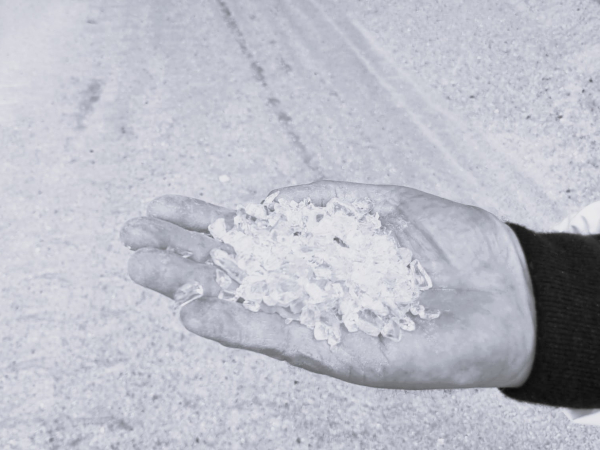
Together with the construction company Acciona and other industry and research partners in Spain (Tecnalia), Turkey (TCMA) and Sweden (RISE CBI), they have shown that glass construction waste can be transformed into valuable reusable raw materials. One application blends finely ground waste glass - which cannot be reused in a glass furnace - with other industrial waste to produce an ‘eco cement’.
Eco cement has been used to build roads and made into pre-cast concrete blocks and other shapes for building homes and roads.
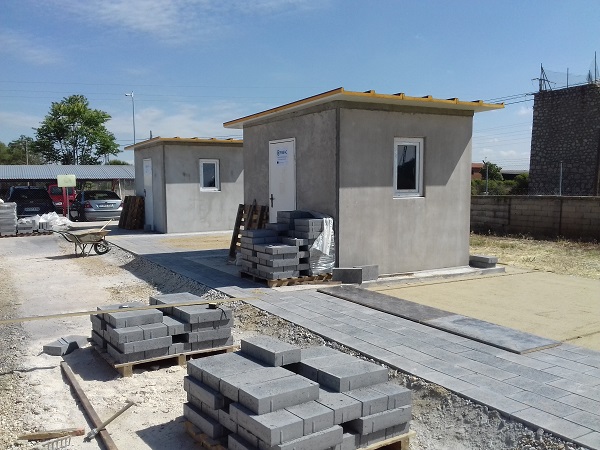
Using waste materials such as the finely ground glass has multiple benefits, improving the performance of the cement, reducing the energy requirements of cement manufacturing, and preventing waste materials from ending up in landfill. Currently the EU produces 1.5million tonnes of architectural glass waste annually. Less than a third is recycled: the rest either goes to landfill or is used as backfill on construction sites.
Chris Holcroft, senior technologist and technology development lead for Glass Technology Services, said: “This is an exciting project with a huge amount of potential for sustainable building. The more glass we can save from landfill the better it is for the environment.”
In this project Glass Technology Services specialised in early work looking at the available materials, while the partner teams then successfully demonstrated the new cement production in a laboratory, in a pilot study, and on an industrial scale. The finished products are now being tested at a number of case study sites.
This activity is part of the FISSAC project funded by the EU’s H2020 programme. FISSAC stands for ‘Fostering Industrial Symbiosis For a Sustainable Resource Intensive Industry Across the Extended Construction Value Chain’.
FISSAC, a group of stakeholders at all levels of the construction and demolition value chain, is developing a pioneering approach to bringing industries to work together to avoid waste – known as industrial symbiosis. Glass Technology Services and British Glass are key members of FISSAC.
FISSAC is currently building a software tool which shows where waste construction material is available, what type, and the environmental impact of possible ways of reusing it. The database will help cut costs for manufacturers, support them in complying with environmental regulations, encourage cross-sector resource efficiency, and help the industry with cleaner production strategies.
 600450


Add new comment