
Date: 2 September 2026
A tool for demanding glass processing
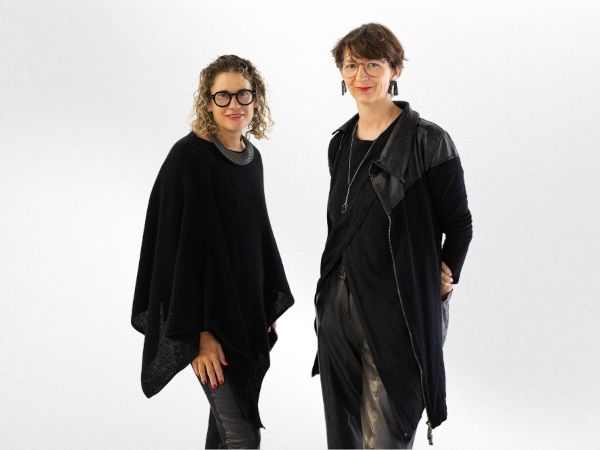
At glasstec 2022, a joint session led Dr. Lisa Rammig and Dr. Linda Hildebrand to found the CircuClarity initiative. A series of workshops followed, and in 2024 CircuClarity One became the initiative’s first full two-day conference, bringing together research and industry to shorten the route from idea to practical application. The two founders have also reviewed and documented the initiative's development in a joint academic paper.
At glasstec 2026, CircuClarity returns for a second round under the motto "From Practice to Impact." In this interview, the two founders speak about how individual pilot projects can turn into scalable standards and what forms of cooperation the glass and facade industries need now.
In a previous interview you described CircuClarity as a platform that brings research and industry knowledge together and is designed to shorten the route from initial idea to practical application. CircuClarity Two now comes under the motto “From Practice to Impact”. What is the next step you want to take with the second edition?
CircuClarity is first and foremost about bringing together people from different parts of the industry, to encourage and facilitate the exchange of knowledge and to make ideas visible. These ideas, along with the findings from the workshops and from the independent research and development our stakeholders and collaborators pursue in parallel, were presented to the public at CircuClarity One.
Today we see that many small initiatives have grown into to concrete projects. With CircuClarity Two we want to show how these approaches can scale and what it takes for individual solutions to have a broad impact. The exchange between the different players is decisive here, because innovation rarely emerges in isolation. It comes from joint learning and building on what is already been proven to work. Even though some of these projects are still in their early stages, we see that exchange in larger forums drives their applications and their commercialisation in particular.
The programme will showcase projects, materials and processes that are already in use today. In your view, which developments show that circular solutions are increasingly being put into practice in the glass and facade industry?
Within the industry, different sectors are moving at different speeds. Some topics are still at the research stage while others are already being implemented in real projects. The strongest momentum is behind solutions that combine ecological benefits with high technical performance, proving that sustainability, quality and economy are not mutually exclusive. These are the examples we want to highlight and discuss together, with a view to achieving a wider application.
One focus will be the question of how successful pilots can become scalable standards. What conditions need to come together for this?
Scalability takes more than just good products. It requires transparent information, reliable data and common standards. The European requirements for documentation and sustainability certification are pushing companies to build these capabilities or to cooperate more closely. At the same time, it takes courage to establish new processes and share not only results but also lessons learned. Only when knowledge, data and cooperation come together, can successful pilots be rolled out on a wider scale.
CircuClarity Two brings together players from production, processing, design, engineering and research. What are the points in the value chain that call for new forms of cooperation?
Transformation is too far-reaching, for any single company or entity to manage. Therefore, cooperation in the early planning stages is especially important. Many decisions about the material choice, ease of disassembly and reusability are already made during project development and tendering. When manufacturers, planners, building owners and developers start talking earlier, the groundwork for circular solutions is much stronger.
Which examples will the programme use to show how circular approaches are already being translated into real projects and processes?
We are now seeing the first built examples in which re-used glass and facade components have been deployed successfully. Alongside these we will see projects that show how take-back schemes, material reclamation and new documentation processes work in practice. Our focus is deliberately not on individual projects but on how entire processes along the value chain can be designed circularly without compromising on the other things a building has to deliver – performance, occupant comfort and design quality. The aim is to treat the topic holistically and move it out of niche thinking.
Which topic from CircuClarity Two do you think will still be on our minds at the next glasstec?
The real challenge is developing solutions give equal weight to architectural quality, technical performance and environmental impact. The glass and facade industry will make it particularly clear, that good design and circularity are not opposites but they reinforce each other.
CircuClarity Two
CircuClarity Two is accessible free of charge for trade fair visitors as part of the glasstec conference. The conference will be held on Stage 3 of the “glass technology live” area in Hall 11 on 20 and 21 October 2026. The complete programme is available as of now at the glasstec Event database.
 600450


Add new comment