Date: 8 October 2026
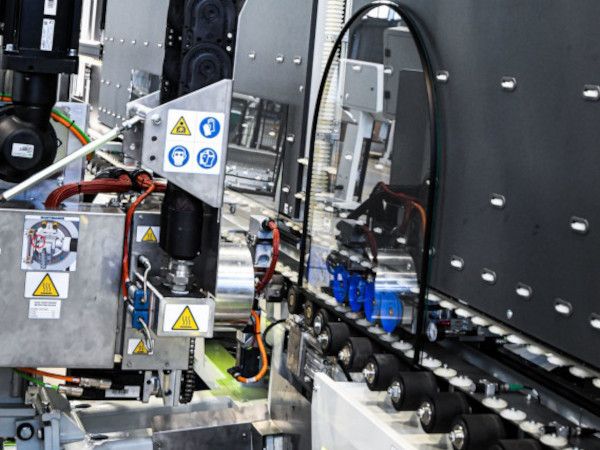
In insulating glass production, the spacer plays a key role: it separates the glass panes, defines the cavity within the unit and contributes to the correct assembly of the IGU. Alongside traditional rigid spacers, thermoplastic technology has introduced a different approach, with the material applied directly onto the glass during the production process.
Today, this technology is entering a new phase of development. The challenge is no longer simply to automate spacer application, but to integrate it into increasingly continuous and faster production flows capable of meeting the demands of high-volume manufacturing.
In this context, thermoplastic technology is playing an increasingly important role, bringing flexibility, automation and high productivity together within a single process.
What is a thermoplastic spacer?
A thermoplastic spacer is a material applied around the perimeter of the glass pane to create the required separation between the panes that make up the insulating glass unit.
Unlike a rigid spacer, which is prepared to the required dimensions and then positioned between the panes, thermoplastic material is metered and extruded directly onto the glass surface, following its perimeter.
The spacer profile therefore takes shape during the application process itself. Correct management of the material, profile geometry and subsequent assembly stages is essential to achieve precise and repeatable results.
Thermoplastic and rigid spacers: two different processes
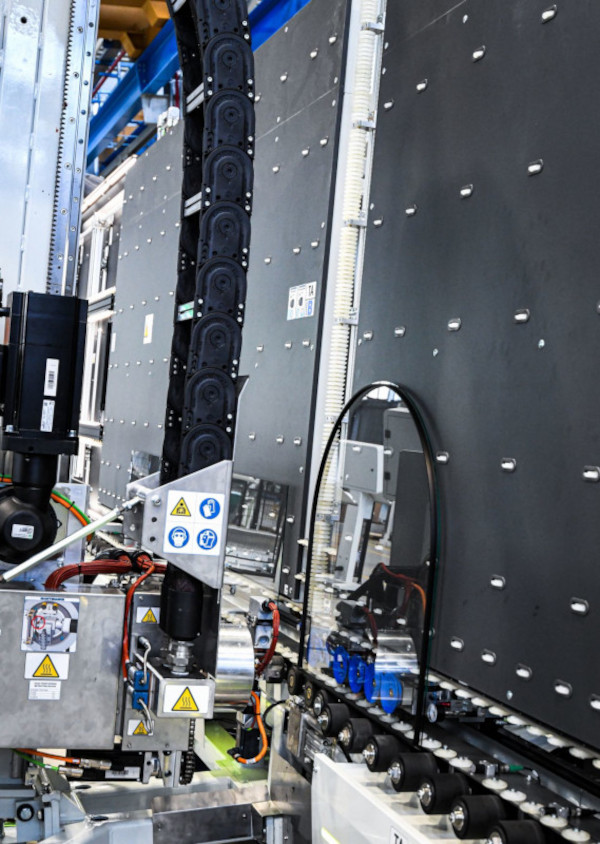
Using thermoplastic technology is not simply a matter of replacing one material with another. It changes the way the edge of the insulating glass unit is built.
With a rigid spacer, the spacer is a physical component that must first be prepared and then assembled with the glass. In the thermoplastic process, on the other hand, the profile is created directly during production by extruding the material onto the pane.
This allows spacer application to be more closely integrated into the automated production flow and enables the process to adapt to the different characteristics of the IGU being produced.
The choice between the two technologies therefore depends on the glass processor’s requirements, product types and production volumes. It is not a question of determining which solution is better overall, but of identifying the process best suited to each specific production environment.
Why thermoplastic technology is becoming increasingly important
Today’s insulating glass market, particularly for high-volume production in the residential sector and large-scale projects, requires manufacturers to combine speed, operational continuity and consistent quality.
Thermoplastic technology is therefore evolving together with the equipment used to process it. The challenge is no longer limited to automated spacer application, but extends to integrating this technology into continuous, high-output production flows, while maintaining precision and stability as production speeds increase.
This marks a new stage in its development: bringing the flexibility of thermoplastic technology to increasingly high productivity standards.
The next step: thermoplastic meets high productivity
This evolution will be one of the key themes of Forel’s participation at glasstec 2026 in Düsseldorf, where the company will present its new High Speed Thermoplastic IG Line.
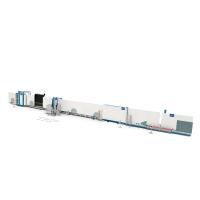
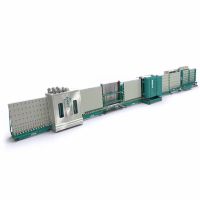
The solution integrates thermoplastic spacer technology into a fully automated system designed for high-volume production, delivering a 30% increase in processing speed compared with traditional configurations.
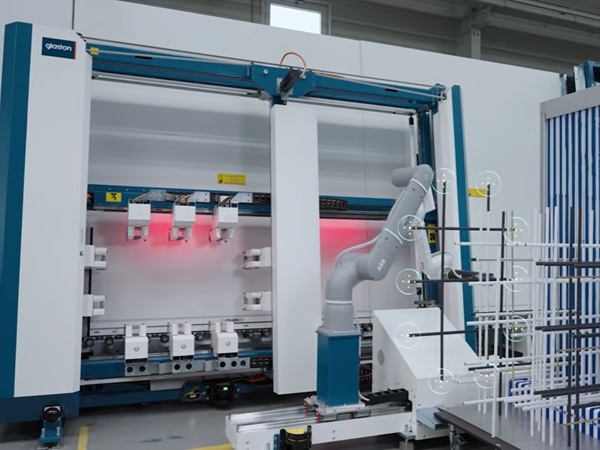
Spacer application is integrated into a continuous, optimised workflow. The subsequent assembly stage is managed by a double tandem press with gas filling, designed to support high production rates while maintaining stability and precision. The process is completed by a robotic system for the application of two-component sealant, developed to ensure uniformity and continuity even under intensive production conditions.
Double-action dynamic suction cups, combined with a dual dosing system, also help speed up the final processing stage: secondary sealing, a particularly critical step in ensuring the final quality of the insulating glass unit.
The new line therefore represents a further development of Forel’s insulating glass range, combining the flexibility of thermoplastic technology with the productivity requirements of high-output industrial lines.
Forel at glasstec 2026
📍 Düsseldorf, Germany
📍 Hall 16 – Stand C12/C14
 600450










Add new comment