
Date: 10 November 2026
Şişecam, a global player in the glass and chemicals sectors, participated as a Climate Supporter in the COP31 Climate Summit, which was held in Antalya between November 9-20. At the summit, Şişecam showcased its innovative glass solutions that contribute to energy efficiency, while also hosting a special panel with international experts to discuss the role of buildings and high-performance glass in the fight against climate change.
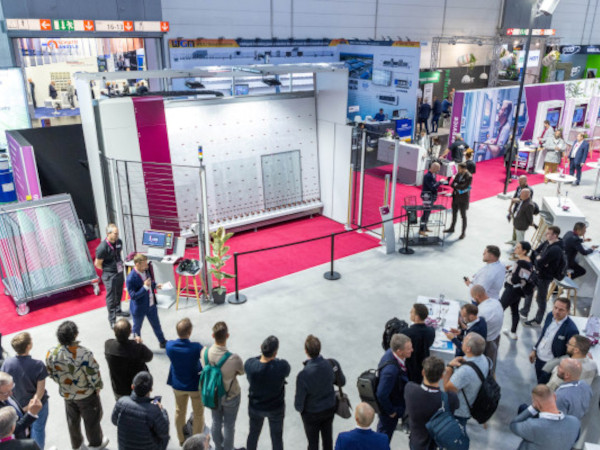
During the summit, the company both exhibited its innovative products that support energy efficiency in buildings and hosted a high-level panel addressing the strategic role of glass in cities' fight against climate change.
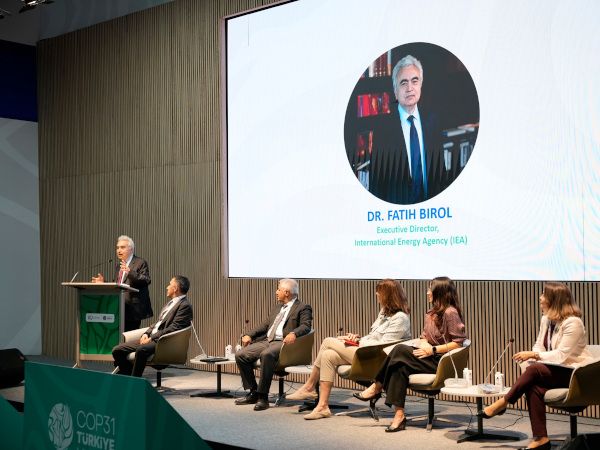
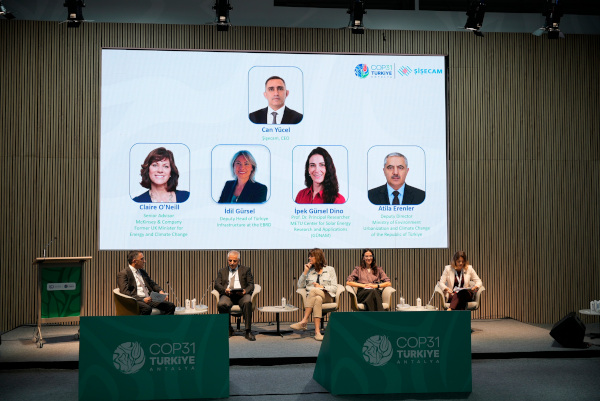
The panel, titled “The Strategic Role of Glass in Climate-Resilient Cities” and moderated by Şişecam CEO Can Yücel, evaluated how cities can be made more resilient to rising energy demands and climate risks, how energy consumption in buildings can be reduced, and the contributions that high-performance glass technologies can make to this transition. The session also addressed climate-compatible building solutions, data-driven renovation approaches, and how these solutions can be scaled up through standards, financing mechanisms, and public policies.
Dr. Fatih Birol, Executive Director of the International Energy Agency (IEA), attended the panel as the guest of honor. Other prominent speakers sharing their views included Claire O'Neill, UK Former Minister for Energy and Climate Change; Atila Erenler, Atila Erenler, Deputy Director General for Professional Services at the Ministry of Environment, Urbanization and Climate Change of Türkiye; İdil Gürsel, Deputy Head of Türkiye Infrastructure at the EBRD; and Prof. Dr. İpek Gürsel Dino, Faculty Member at the Middle East Technical University (METU) Department of Architecture.
One of the standout highlights of the panel was the presentation of the results of a joint research project conducted by Şişecam in collaboration with the Middle East Technical University Solar Energy Research and Applications Center (METU-GUNAM). The research revealed that high-performance coated glass can act as a major lever in helping cities achieve their 2050 climate targets by reducing the energy consumption of buildings. The findings of this study were shared with COP31 participants and the public for the first time.
High-Performance Glass Systems Can Prevent 13.1 million Tons of Carbon Emissions in Istanbul
Delivering the opening speech of the panel and emphasizing that the climate crisis is a shared responsibility that cannot be postponed, Şişecam CEO Can Yücel stated that reducing energy consumption is of great importance alongside the energy transition to reach net-zero targets.
Yücel expressed that Şişecam is focused on both transitioning the energy sources used in its production to more sustainable alternatives and reducing the energy demand of buildings through the high-performance glass technologies it develops. He added that the study carried out in cooperation with METU-GUNAM demonstrates the impact of correct material selection on a city scale with concrete data.
Pointing out that if high-performance glass is widely adopted in residential buildings in Istanbul, 13.1 million tons of carbon emissions could be prevented by 2050, Yücel noted that with proper prioritization, the unit cost of carbon reduction can drop to as low as 11 Euros per ton.
Emphasizing that glass is no longer just a construction material but a technology that directly affects energy performance, Yücel stated:
“This data clearly shows that glass is a strategic solution component in cities' processes of decarbonization and building resilience against climate change. Turning this potential into reality is only possible through strong cooperation among the public sector, private sector, and academia. Thanks to performance-oriented renovation programs, well-designed financing models, and targeted incentive mechanisms, we can reach our climate targets faster and at a lower cost. As Şişecam, we are ready to contribute to this collective transformation.”
The Future Energy Agenda: Cooling
Due to the effects of global warming, the cooling-related energy demand in Istanbul is expected to increase by 60% to 75% by 2050. This outlook reveals that energy efficiency in buildings is critical not only for reducing carbon emissions but also for strengthening the climate resilience of cities against rising temperatures.
The research conducted by Şişecam in cooperation with METU-GUNAM presents concrete data on the role that high-performance glass can play in this transition. According to the striking findings of the study, if high-performance coated glass is popularized in residences across Istanbul, the resulting carbon emission reduction would have an impact equivalent to:
- The carbon emissions of approximately 231 thousand households over 25 years,
- The annual carbon emissions of approximately 2.8 million passenger cars.
The research results show that correct material choices and energy-efficient building solutions can serve as a powerful lever for cities to both reach their climate targets and alleviate the energy pressure stemming from increasing cooling demands. It is particularly highlighted that energy-efficiency-oriented renovations to be carried out on the existing building stock represent one of the most important solution areas that can generate high impact at a low cost.
The Transformative Power of Glass
With its production power across 13 countries on four continents and a global network reaching more than 150 countries, Şişecam uses the transformative power of materials for a better life. It continues to contribute to the construction of a sustainable future with its high-performance glass that supports energy efficiency and solar energy glass that contributes to renewable energy solutions.
 600450









Add new comment