Date: 20 February 2026
As the UK accelerates towards its Net Zero targets, the debate around how best to decarbonise the nation’s housing stock is intensifying. For the Glass & Glazing Federation (GGF), the message is clear: meaningful, long-term energy efficiency must begin with a fabric-first approach.
Fabric first entails prioritising improvements to the building envelope –windows and doors, walls, roofs, floors, – before installing low-carbon technologies such as heat pumps or solar panels. It is a principle grounded in building physics and practical delivery.
If a home continues to lose heat through poorly insulated walls or outdated glazing, adding renewable technologies risks addressing the symptom rather than the root cause.
The GGF has consistently argued that effective decarbonisation cannot be achieved without addressing heat loss through the building fabric. Windows and doors, in particular, play a critical role in reducing energy demand, improving comfort and ensuring heating systems operate as intended.

“Energy efficiency must start with the building fabric,” Chris Beedel, Head of Government Advocacy & Stakeholder Relations at the GGF, says. “If we electrify heat in homes that are still leaking warmth through inefficient windows and doors, we are simply making low-carbon technologies work harder than they need to. That’s not cost-effective for households or for government.”
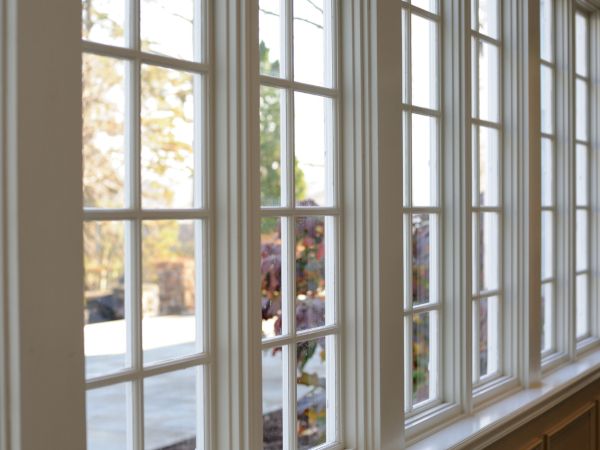
The UK’s housing stock is among the oldest in Europe, with millions of properties built before modern energy standards were introduced. In many of these homes, ageing double glazing or poorly fitted frames allow significant heat to escape.
Upgrading to modern, high-performance double or triple glazing can substantially reduce heat loss, cut draughts and lower household energy bills.
Reducing heat demand first also makes low-carbon heating technologies more viable.
Heat pumps operate most efficiently in well-insulated homes with lower heat loads, and installing them in properties that still suffer significant fabric heat loss can lead to higher running costs and consumer dissatisfaction due to systems being oversized.
“We’re certainly not saying that solutions like heat pumps aren’t an important part of the solution,” Chris continues, “but they perform best in homes that are already thermally efficient. A fabric-first retrofit ensures we create the right conditions for these technologies to succeed, rather than setting them up to struggle or fail.”
The importance of building fabric has been recognised elsewhere. In the Republic of Ireland, the government’s national home energy upgrade programme includes support for replacement windows and doors, reflecting an understanding of how fabric improvements reduce energy demand and emissions.
By contrast, in England, the GGF has sought greater clarity on how glazing upgrades will be supported under the Warm Homes Plan, where references to windows and doors have so far been limited.
For the GGF, this distinction matters:
“Windows and doors are not cosmetic upgrades,” says Chris. “They are fundamental components of a home’s thermal envelope. Recognising their role in policy frameworks is essential if we are serious about delivering whole-house retrofit at scale.”
Beyond carbon savings, fabric-first measures deliver immediate and tangible benefits for households. Improved glazing enhances thermal comfort by eliminating cold spots and draughts. It reduces condensation and associated mould risks, contributing to healthier indoor environments. It can also improve acoustic insulation, particularly important in urban settings.
There is also a system-wide benefit. As heating becomes increasingly electrified, overall electricity demand will rise. By reducing heat loss first, fabric improvements help limit peak demand pressures on the grid, making the broader transition to Net Zero more manageable and cost-effective.
The glazing sector itself has invested heavily in product development, from glass with improved solar gain, to ultra-thin triple glazing, with these solutions readily available and supported by competent, qualified installers.
For policymakers, the conclusion should be clear. A whole-house approach – starting with the building envelope and then layering in low-carbon technologies – maximises the return on investment and protects consumers from suboptimal outcomes.
“As we move towards Net Zero, we have to get the fundamentals right,” Chris concludes. “Fabric first or Fabric Now aren’t just slogans, they are practical frameworks for delivering warmer homes, lower bills and genuine carbon reductions. If we build on strong foundations, everything else works better.”
For more information about the GGF and how it can support your business’ growth, please visit www.ggf.org.uk or call 0207 939 9100.
 600450




Add new comment