
Date: 9 March 2026
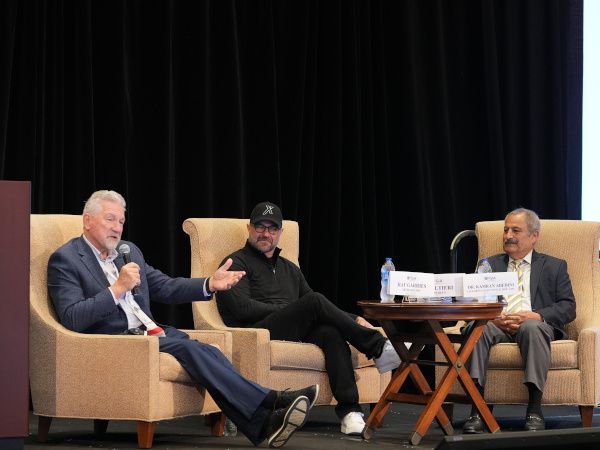
“Innovation in Factories and Offices– Enhancing our Workforce with Automation and Core Product Simplification” was moderated by Ray Garries (MITER Brands) and featured panelists Dr. Kamran Abedini (California State Polytechnic University, Pomona) and Joe Altieri (FlexScreen).
“Innovation makes us better,” said Garries in his opening remarks. “It makes the industry better. Innovation means making things happen, making ideas real.”
AI in Innovation
Garries noted that a discussion about innovation cannot take place without talking about artificial intelligence. “It’s hard to keep up with its progress, what’s available now,” he said, warning that “if you’re not using AI, you will fall behind.”
Dr. Abedini said that, in his view, AI is a tool, but not a replacement for humanity. “Don’t forget to use your human intelligence, too,” he said. “Think about form and function at the same time when designing, when innovating. Think about the end result. Engineering folks think about what they’ve done before and how to improve it.”
He encouraged participants to approach problems like they are puzzles. “A puzzle is a game that tests the ingenuity of the solver,” he said. “Start by asking the right questions.”
Scaling Up
Innovation in products doesn’t fail in design, said Abedini. “It fails at scale, cost and consistency. Design products that are easy to make, assemble, install and maintain.” When it comes to process over design, Abedini said, process always wins. “It doesn’t need to be pretty, but it does need to be functional,” he said.
Altieri spoke about the importance of timing when it comes to innovation. “There is no comfort built into the question, ‘if not now, then when?’ Cost, labor and leadership collided at the same time when I invented FlexScreen. We are good in this industry at optimizing what already exists. But that’s not the same as redesigning it.”
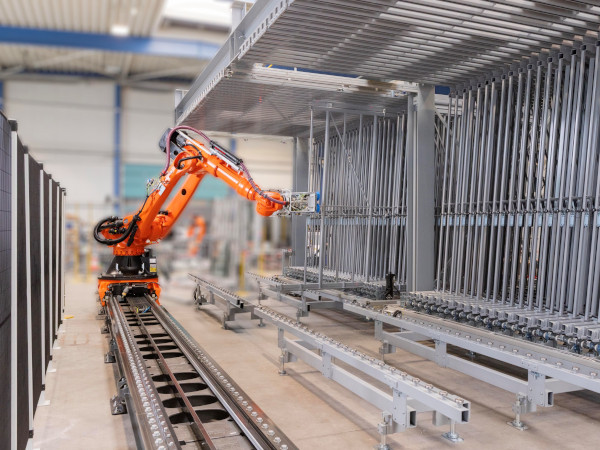
He noted that his company did not automate because they were excited about automation. “We automated because the math stopped working,” Altieri said. “We couldn’t scale without it.” Because his company seized the moment, a six million dollar investment paid off. “Now we can create a finished screen every 15 seconds, with four operators,” he said. “But it cost $2 million per machine. We needed three. Nobody pretended it was going to be an easy decision. But we bet on that chance.”
The Role of Timing in Innovation
Sometimes timing matters more than the technology itself, Altieri concluded. “Think about where you are on the adoption curve,” he said. “Early adopters move quickly when they see advantage. Laggards wait until they are out of options.”
For more information about FGIA and its activities, visit FGIAonline.org/Events.
 600450

Add new comment