
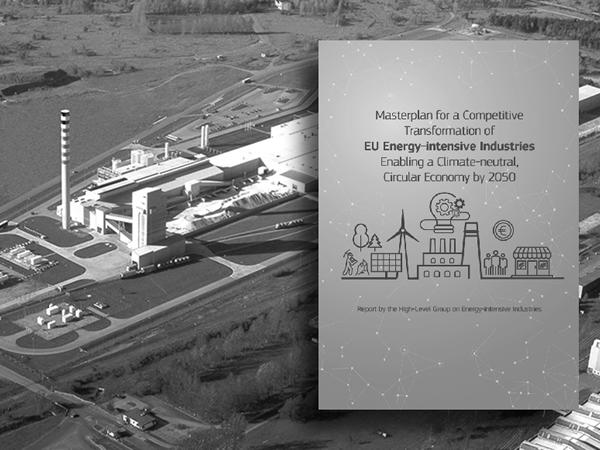
Date: 3 December 2019
During the last months, Glass for Europe has been actively engaged, on behalf of Glass Alliance Europe, in the development of the Master Plan for a competitive transformation of EU EIIs (Energy Intensive Industries) to support a transition towards climate neutrality. The Master Plan suggests actions and indicates areas of policy intervention to encourage innovation, guarantee competitiveness and ensure a successful transition of industry to deliver on the long-term climate goals of Europe.
Europe’s flat glass products are enablers of a carbon-neutral Europe. To Glass for Europe, supportive industrial and climate policies will be vital to prepare the breeding ground for further investments in research and development of net zero carbon products and manufacturing solutions.
Download The Master Plan for a competitive transition of EU Energy Intensive Industries
Press release of Energy Intensive Industries
Energy Intensive Industries: all sectors of economy will have to work together to deliver on climate-neutrality
Energy Intensive Industries (EIIs) want to contribute in a constructive manner to the development of policies enabling the transition to a climate-neutral economy by 2050. We therefore call for a dialogue with the incoming European Commission, Member States and Parliament on the integration in the European Green Deal and the forthcoming industrial strategy of the recommendations of the Master Plan for a competitive transformation of EU EIIs.
The success of an EU Strategy for long-term EU greenhouse gas emission reductions and a European Green Deal will largely depend on the pace of industry’s transformation, as shown in the Master Plan. EU EIIs are deeply rooted in our society providing technologies, solutions and materials to every possible economic sector.
At the same time, they belong to complex value chains and are heavily dependent on other sectors, notably the energy sector, to become climate-neutral. Transformation of industry will also impact consumption patterns in all sectors of the economy and can be a generator of new investments in the EU if the policy framework is right.
The task at hand is immense but a successful transformation is possible, if the EU takes action in three priority areas, while taking care of the regional and social dimension:
- Creating markets for climate-neutral, circular economy products;
- Supporting rapid demonstration of breakthrough technologies on an industrial scale through major R&D&I programmes and facilitating access to private finance;
- Securing industry’s access to alternative energy and feedstock sources at competitive prices.
The Master Plan sets out concrete policy recommendations in each of these areas. It benefited from the strong support of Commission services and is based on valuable contributions of Member States, the energy sector as well as, workers’ organizations, civil society, think tanks and academia. This makes it a unique and solid contribution to build upon an EU industrial strategy.
As 2050 is only one or two investment cycles away, the next few years will be crucial to lay the policy groundwork for the successful industrial transformation.
 600450



Add new comment