
Date: 1 February 2019
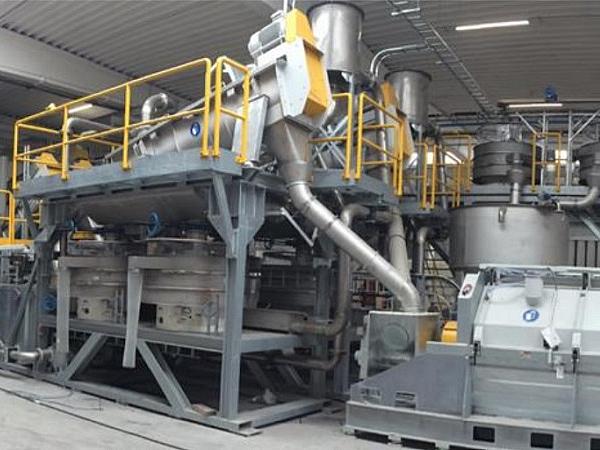
The brand new high-tech recycling line will allow Deceuninck to recycle over time up to 45.000 tonnes PVC per year. Input material will be sourced from post industrial waste collection (own scrap and customers off-cuts) as well as from the huge amount of 30 to 40 years old first generation PVC windows which are gradually being replaced.
 With this investment, Deceuninck confirms its believe in PVC as a sustainable and future-proof material for the building industry. Thanks to its low thermal conductivity, PVC window profiles have three times the heat insulation efficiency of aluminum profiles1 .
In addition, during the lifetime of the windows as well as during production and end of life recycling, the energy consumption and CO2 emission of PVC windows is less than half of its aluminum counterparts.2
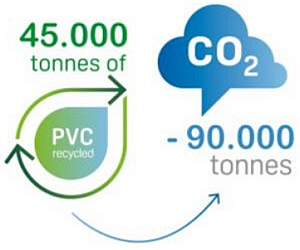
Thanks to the high recyclability of PVC, it can almost endlessly be reused without loss of quality. On top of this, according to estimations by VinylPlus (https://vinylplus.eu/), for each kg of PVC recycled, 2 kg of CO2 are saved. Finally, the Deceuninck recycling facility will save more than 2 million windows per year from landfill or incineration.
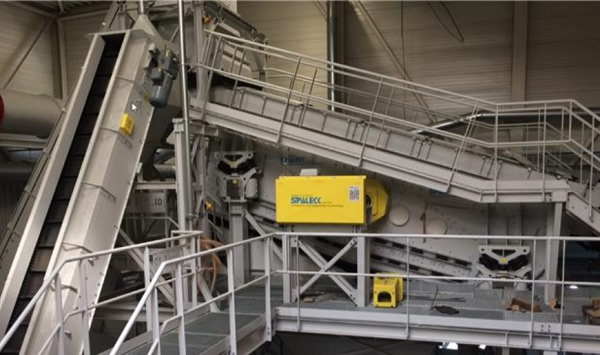
The latest technology included in the installation enables Deceuninck to recycle PVC profiles of all colors and of all different compositions, including profiles containing glass fiber. During the recycling process, all contaminations are removed, grinded and sorted by color. After granulation, the recycled material, which is a perfect alternative to virgin material, is used for the extrusion of new PVC window profiles.
Francis Van Eeckhout, CEO: This investment underlines the ecology ambition of both Deceuninck and our customers. The increasing use of recycled materials will further reduce the ecological footprint of our products and of our production processes. Also, it will reduce dependency from virgin material supply and mitigate to a certain extent the negative effect of fluctuating raw material prices.
1 Source: https://vinylplus.eu/recycling/a-smart-material/sustainable-recyclable
2 Source: Baldasano study, vinylplus.be
 600450





Add new comment