

Date: 9 October 2025
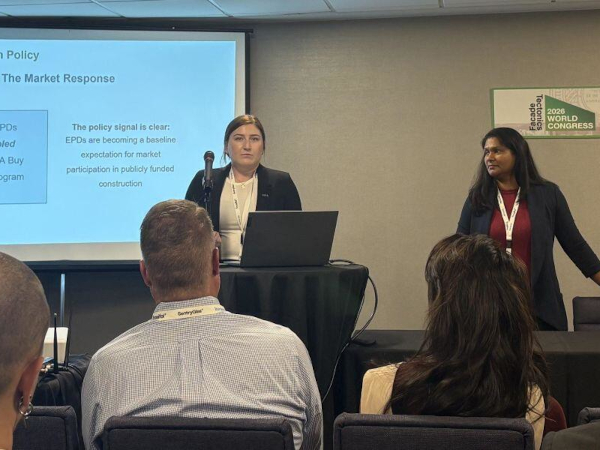
Panelists for the October 7 discussion, “Innovative Strategies to Mitigate Impacts from Supply Chain Disruptions,” included José Colón (Intertek), Chip Gentry (Quaker Window Products) and Mark Imfeld (Association for Supply Chain Management). Moderated by FGIA Executive Director, Janice Yglesias, panelists covered how companies can create better efficiency and optimization within their supply chains.
While the current supply chain is uncertain, it is not the first time this has been the case, pointed out Imfeld.“[Before COVID] supply chains were stable for a long time, but that led to shortages on everything from Chick-fil-A sauce to toilet paper. Now, instead of an efficiency mindset, we have more of a resiliency mindset.”
Factors affecting the supply chain currently are twofold: economic uncertainty and disruptions to the supply chain itself. The former encompasses matters like currency, exchange rates, the “China Plus One” strategy and an uncertain tariff strategy. “That also drives rapid decision making and short-term actions,” said Imfeld. The supply chain disruptions themselves force companies to choose between preparedness or efficiency. Companies may need to ask themselves what they can bring in-house to mitigate risk and exposure to disruptions. “Consider having multiple sources,” said Imfeld.
Colón agreed but added that having multiple sources comes with some challenges from a compliance standpoint. “The landscape is changing hourly,” he said. “Maybe you are used to getting materials and components from one company, but now you need to find different people. Create a test plan that covers what types of certifications or accreditation you need. Find someone who can help you get over all those hurdles.”
From a legal perspective, Gentry suggested seeking out an outside team of experts if one does not currently have an inside team. “You don’t know what you don’t know,” he said. “Supply chain disruptions are a matter of when, and it will probably be at the most inopportune time. Nine months ago, I would tell you I didn’t know much about tariffs.”
Gentry recommending asking several questions. Who is paying for logistics costs? Who is responsible for loss of product, loss of supplier or an ICE raid that disrupts your supply chain? To address this, take a look at contract language. “You can contractually mitigate exposure,” he said, adding that it is always good to know who one is working with. “Will they stand up with you as a partner?” Gentry said. “[If not,] you have to be willing to walk away.”
Contract language should address delivery and delay clauses, indemnification clauses for when tragedy strikes and the terms of working with third-party carriers. “Be proactive with your contracts,” he said.
Colón advised both big and small companies to consider consultancy services to understand the full scope of supply chain disruptions. “Start the process as early as you can,” he said. “The next couple of weeks and months, who knows what will happen.”
Imfeld agreed. “Look at your supply chain professionals as a strategic investment,” he said. “Today, it can make or break you.”
For more information about FGIA events, visit FGIAonline.org/events.
 600450






Add new comment