

Date: 10 September 2026
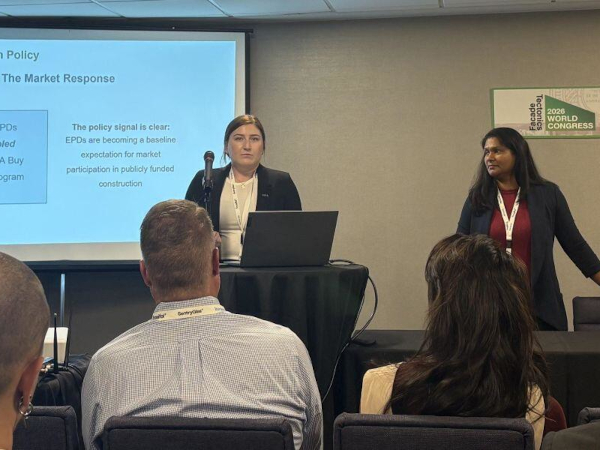
Moderated by Amy Roberts, FGIA’s Director of Canadian Codes and Advocacy, the session featured leaders including Jeff Baker (WESTLab Canada), Lisa Bergeron (JELD-WEN) and Paul Bush (Vitro Architectural Glass), who mapped out the critical new compliance path options manufacturers and builders must adopt to meet these strict energy mandates.
Panelists also shared insight into key performance metrics, including the relationship between solar heat gain coefficient (SHGC), U-factor and Energy Rating (ER) and how these factors influence glass package selection and overall product functionality. The discussion examined the practical implications for manufacturers, including considerations for frame design, product testing, certification and regional market requirements.
Changes to the National Building Code (NBC) of Canada
“The NBC introduced some new changes in 2025,” said Baker. “There are now three paths to compliance in the code.” He described the three as:
- A performance path in which builders work with an energy advisor and are free to use any fenestration product, provided the whole building meets its performance target
- A prescriptive path in which you can score points to achieve NBC tiers 1-5 by using components that are above minimum code in each climate zone
- A new prescriptive path in which there is a set of prescriptive components that comply by climate zone. In both prescriptive paths, SHGC limits will apply
“We will see how these changes go in terms of SHGC and U-factor,” Baker said. “The code was asked to address this in highly efficient building envelopes to address overheating.”
Factors That Impact Glass Package Selection
Bush noted that these changes reduced the number of products that can comply with the code. However, he had advice for those who want to influence their SHGC and/or U-factor. “If you are trying to increase SHCG, you want to put your coating farthest from the sun,” he suggested. “That will increase your ER. To reduce the U-factor, use an extra glass lite – for example, a triple IG [insulating glass unit].”
New 2025 NBC Solar Heat Gain Cap for Windows
“Improving U-factors is often a tradeoff between better glass and a better frame,” said Bergeron. “The most efficient way to achieve a better U-factor is to lower the frame profile, therefore with more glass. It’s a bit of a balancing act.” Bergeron said that windows have a large impact on mechanical systems. “A better U-value helps with less heat loss and more occupant comfort,” she said.
For more information about FGIA and its events, visit FGIAonline.org/events.
 600450





Add new comment