
Date: 27 March 2025
On 18 March, members from the Industry, Research and Energy committee of the European Parliament approved (53 in favour, 21 against, 8 abstentions), the motion for resolution prepared by MEP Giogio Gori (S&D, IT) on Energy-Intensive Industries. In parallel, they voted in favour of a question to be addressed to the European Commission.
As part of their demands, MEPs call for:
- An impact assessment in the upcoming review of ETS to analyse the relationship between the gas market and CO2 prices and the role of the Market Stability Reserve and its parameters
- Exploring additional ways to decouple fossil fuel prices from electricity prices
- Developing recommendations on reducing the exposure of consumers, especially EIIs to rising costs of energy, such as through reducing taxes and levies and harmonising network charges
- Building up on NZIA’s in the upcoming Decarbonisation Accelerator Act, to streamline permit granting processes and grant strategic project status,
- Ensuring that the upcoming Circular Economy Act should improve resource efficiency, including through better waste management of products containing CRMs as well as fostering the demand and availability of secondary raw materials,
- To make full and efficient use of trade defence instruments and requires permanent solutions to address unfair competition and overcapacity,
- To address the risks of resource shuffling and circumvention of CBAM, asks to implement an effective solution for EU exporters and analyse the possible extension to further sectors and downstream products, preceded by an impact assessment,
- Supports non-price criteria in EU public procurement.
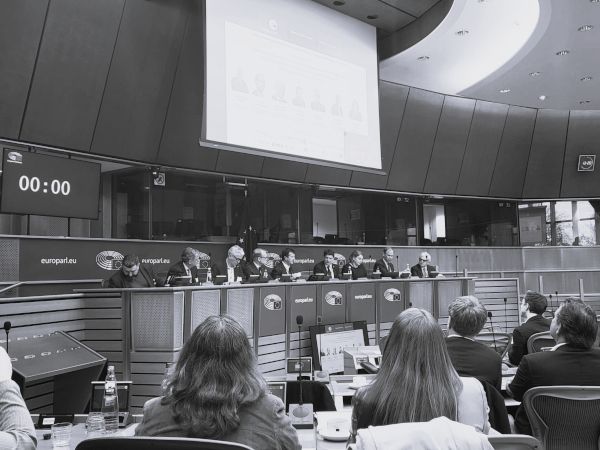
Many of these demands were echoed by associations in the Alliance of Energy Intensive Industries, which organised an event at the European Parliament on 26 March. The discussion, hosted by MEP Gori, was an opportunity to further highlight the pressing challenges of energy costs and decarbonisation. Representing Glass Alliance Europe, Mr Martin Petersson, CEO of Ardagh Glass Packaging made additional proposals to bring some immediate relief to the glass sector by:
- Maintaining the tax exemption for mineralogical processes in the Energy Taxation Directive. Removing this exemption would increase the cost burden on several energy-intensive sectors and further discourage investment in the development of low-carbon manufacturing technologies
- Allowing all energy-intensive industries to be eligible for indirect cost compensation under the EU ETS.
The resolution will be voted on in the plenary session of the European Parliament next week.
 600450





Add new comment