
Date: 19 October 2026
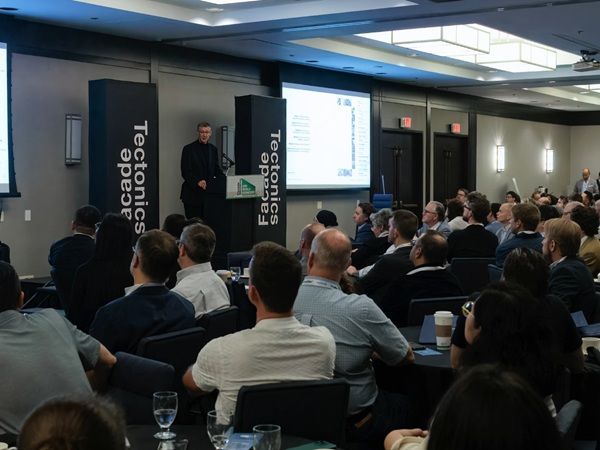
The 2026 Facade Tectonics Institute (FTI) World Congress brought the global facade community together in Pittsburgh, Pennsylvania, September 28–October 2, for an inspiring week of research, innovation, knowledge sharing, and meaningful connections.
Hosted in collaboration with Carnegie Mellon University School of Architecture, this year's Congress welcomed more than 300 attendees, including architects, engineers, researchers, manufacturers, contractors, educators, students, and industry leaders from around the world.
Under the theme "Where Facade Innovation Meets Performance," the Congress explored some of the most pressing challenges and exciting opportunities facing the building envelope industry, from climate resilience and sustainable materials to emerging technologies, adaptive systems, and new approaches to design and construction.
With more than 100 contributing authors and over two dozen technical sessions, the Congress offered an extraordinary exchange of research, ideas, projects, and perspectives.
Dozens of Carnegie Mellon University students also participated, bringing fresh energy and new perspectives to the discussions.
Beyond the technical program, the week was filled with workshops, building and factory tours, networking receptions, and opportunities to strengthen the relationships that continue to move our industry forward.
Rethinking the Future: Low-Tech, High-Tech, and Appropriate Technology
One of the central conversations of the 2026 World Congress challenged participants to reconsider the relationship between low-tech and high-tech solutions in facade design.
Keynote speakers James Timberlake, FAIA, of KieranTimberlake, and Erik Olsen of Transsolar KlimaEngineering, together with Carnegie Mellon University Professor Vivian Loftness and FTI Founder Mic Patterson, explored the concept of appropriate technology and its role in shaping a more sustainable and resilient built environment.
Their presentations encouraged attendees to look beyond technological complexity and consider how thoughtful design, environmental intelligence, material innovation, and engineering can work together to improve building performance.
The discussions raised important questions about how the facade industry can respond to climate challenges, reduce environmental impacts, and develop solutions that balance innovation with practicality.
These ideas continued throughout the Congress, connecting academic research with real-world applications and inspiring conversations across disciplines.
Sharing Research, Advancing Knowledge
At the heart of the World Congress was a two-day technical program featuring peer-reviewed research papers, invited presentations, and curated discussions.
More than 100 authors contributed research and project insights covering a broad range of topics, including high-performance building envelopes, facade materials and systems, adaptive technologies, computational design, robotic construction, fabrication, circularity, and resilience.
Curated sessions brought together leading voices from academia and industry to examine the challenges and opportunities shaping the future of facade design and delivery.
Discussions explored low-tech versus high-tech approaches, circularity and resilience, facade education, shading and daylighting, complex engineering, and emerging construction technologies.
The program highlighted the importance of collaboration between researchers, designers, engineers, manufacturers, and contractors in translating innovative ideas into practical solutions.
It also provided an opportunity for students and emerging professionals to present their work, engage with established industry leaders, and contribute to the ongoing exchange of knowledge.
Learning Beyond the Conference Rooms
The World Congress experience extended beyond traditional presentations, offering participants opportunities to explore innovative technologies, manufacturing processes, and building projects firsthand.
At TAKTL's manufacturing facility, attendees gained insight into the production of ultra-high-performance concrete (UHPC) architectural panels and the relationship between material innovation, fabrication, and sustainability.
A construction tour of Carnegie Mellon University's Richard King Mellon Hall of Sciences offered a behind-the-scenes look at a major institutional project, highlighting the coordination of design, engineering, and construction.
At Phipps Conservatory and Botanical Gardens, participants explored sustainable building strategies and high-performance systems that demonstrate how architecture can respond to environmental challenges.
Two specialized workshops introduced attendees to emerging areas of research and technology.
Robots, Vision & Construction, hosted by Carnegie Mellon University School of Architecture, explored robotic construction, computer vision, digital reconstruction, and the potential of advanced technologies to transform construction processes.
Cultivated Skins: Multistrain Engineered Living Materials for Adaptive Facades, curated by Blaine Brownell and hosted by UNC Charlotte, examined the possibilities of integrating engineered living materials into future building envelopes.
These experiences encouraged participants to connect research with practice, exchange ideas directly with experts, and explore technologies that may influence the next generation of facade systems.
Building Connections Across the Global Facade Community
While the technical program provided the foundation for the Congress, the connections made throughout the week were equally important.
From informal conversations between sessions to organized networking events, attendees had opportunities to reconnect with colleagues, meet new collaborators, and exchange perspectives with professionals from different disciplines and regions.
One of the week's highlights was the World Congress Reception at Carnegie Mellon University's College of Fine Arts, sponsored by Technoform.
Set within CMU's historic campus, the evening brought attendees together for networking, refreshments, and live jazz by Tony Campbell and Jazzsurgery. It was an opportunity to continue conversations beyond the conference rooms and celebrate the relationships that make the FTI community so special.
The Congress also strengthened connections with Pittsburgh's local architecture and design community through collaboration with AIA Pittsburgh, including a presentation exploring the Pittsburgh International Airport Terminal Modernization Program.
These gatherings reinforced an essential part of FTI's mission: creating opportunities for professionals to share knowledge, build relationships, and work together to advance the building facade industry.
Recognizing Excellence: FTI College of Fellows
The Congress concluded with the FTI College of Fellows Induction Ceremony and Closing Reception, sponsored by Walter P Moore.
The ceremony celebrated individuals whose leadership, professional achievements, and contributions have helped advance facade design, engineering, research, and the broader industry.
The College of Fellows represents one of FTI's highest honors, recognizing individuals who have demonstrated exceptional commitment to advancing the organization's mission and the profession.
The evening provided an opportunity to acknowledge these contributions, celebrate the accomplishments of the FTI community, and reflect on the importance of mentorship, leadership, and continued knowledge sharing.
Pittsburgh and Carnegie Mellon University: An Inspiring Setting
Pittsburgh proved to be a fitting host city for the 2026 World Congress.
Known for its industrial heritage, architectural character, and growing reputation for research and technological innovation, the city offered an inspiring backdrop for discussions about the future of the built environment.
FTI extends special thanks to Omar Khan, Head of Carnegie Mellon University's School of Architecture, and the entire CMU team for their generous hospitality, collaboration, and support.
Their commitment to research, education, and interdisciplinary exchange helped create an environment where academic inquiry and professional practice could come together.
The participation of CMU faculty, researchers, and students further enriched the program and strengthened connections between the next generation of designers and established industry professionals.
A Community Effort: Thank You to Everyone Who Made It Possible
The success of the 2026 World Congress was made possible by the dedication, generosity, and collaboration of many individuals and organizations.
FTI extends its sincere appreciation to World Congress Chair Valerie Block, Peer Review Committee Co-Chairs Omar Khan and Sophie Pennetier, and the many peer reviewers who contributed their time and expertise to developing the technical program.
We also thank our keynote speakers, authors, session curators, moderators, workshop leaders, tour hosts, volunteers, and staff for their commitment to creating an engaging and meaningful experience.
A special thank-you goes to our sponsors, exhibitors, and industry partners, whose support makes it possible for FTI to bring together professionals from across the industry and create opportunities for education, research, and collaboration.
Most importantly, thank you to the more than 300 attendees who joined us in Pittsburgh.
Your curiosity, enthusiasm, willingness to share knowledge, and commitment to advancing our industry are what make the FTI community so special.
Whether you presented research, participated in a workshop, joined a tour, connected with colleagues, or attended your first World Congress, you helped make this year's event a memorable experience.
Looking Ahead to 2028
The 2026 World Congress may have concluded, but the conversations, ideas, and relationships developed in Pittsburgh will continue.
Through FTI's regional Hubs, educational programs, research initiatives, and year-round events, we look forward to building on the momentum of this year's Congress and continuing to connect our global facade community.
Planning for the 2028 FTI World Congress is already on the horizon, with the host location to be announced soon.
We hope everyone returned home with new ideas, valuable connections, and renewed enthusiasm for the work ahead.
Thank you for being part of Facades Week 2026. We look forward to continuing the conversation!
Stay Connected with the FTI Community
The World Congress is just one of the many ways FTI brings together professionals dedicated to advancing the future of building facades.
Become an FTI member to connect with industry leaders, access research and educational resources, participate in regional Hub activities, and contribute to the conversations shaping our industry.
 600450


Add new comment