
Date: 9 March 2022
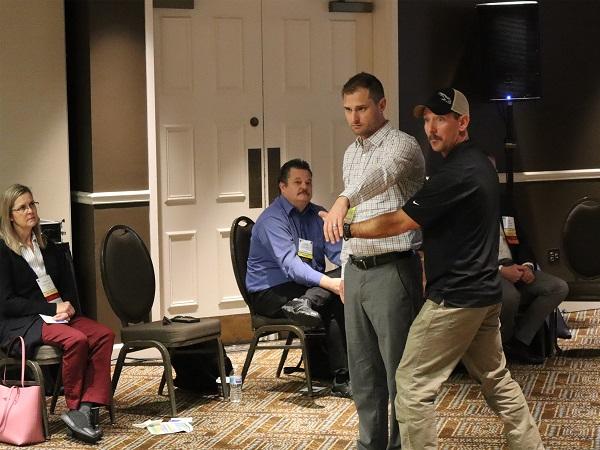
Independence Training leaders, Glen and Drew Stilson, shared tips for stopping bleeding, assessing patients and creating an emergency response plan that works under stress at the conference during multiple hands-on sessions at the event.
“We teach field medicine used in battlefields or in remote rural areas,” said Glen Stilson. “Our goal is saving lives, and that might happen in less clinical settings.” Stilson said people are generally safer when they realize what can go wrong, and they follow safety guidelines and wear PPE [personal protective equipment] better.
A large part of trauma response training is mental preparedness on top of education, according to Stilson. “Most people have an unrealistic idea of what happens in a medical emergency,” he said. “Stress inoculation is needed.”
Aside from potentially saving a life, trauma response training benefits individuals in many areas. “Off-the-job use of training benefits friends and family, communities, themselves,” said Drew Stilson. “The training can help build teams and confidence. It gives team members opportunities to build up confidence in each other, too.”
Drew Stilson shared the acronym MARCH, which lists what steps to take in a specific order to assess a patient’s risk of death:
M- Massive hemorrhage: Ensure the patient is not bleeding to death
A- Airway: Ensure the patient has a clear airway
R- Respirations: Ensure the patient is breathing regularly
C- Circulation: Ensure the patient has pulse
H- Hypothermia: Treat the patient for shock and maintain their body temperature
The last step, checking and regulating body temperature, is critical because, according to Glen Stilson, the human body only allows for two degrees of variation from 98.6 degrees before organs begin shutting down.
Glen Stilson encouraged participants to invest in safety. “You don't need a medical degree to save someone's life,” he said. “These are things you can and should know. As Ben Franklin once said, ‘By failing to prepare, you are preparing to fail.’”
The hands-on sessions led by Independence Training helped participants learn how to quickly apply a tourniquet, pack wounds and assess patients in the field by using the “MARCH” system.
For more information about FGIA and its activities, visit FGIAonline.org.
 600450







Add new comment