Date: 28 December 2006
Conceived and designed by architects David Marks and Julia Barfield, the London Eye stands at 132m high – one of the tallest structures in London. The design brief for its 32 spacious passenger capsules ( 8 x 4 m with a floor area of about 25 m2) was that they should be safe, comfortable enclosures for up to 25 people, giving them the widest possible unobstructed views of London. Optically-clear glass was needed as well as an aerodynamic shape to shed wind load.
"LAMINATED GLASS WAS THE ANSWER"
David Marks told LGN: "As the project progressed, we were constantly refining the geometry of the capsules to balance our desire for large, unobstructed pieces of glass with optical clarity. From the beginning, we were predisposed towards using glass, rather than plastic. Single layer toughened glass was ruled out because failure would mean a shower of glass fragments falling from the capsule, leaving a gaping and unprotected hole. Toughening can also cause distortion in the glass that would be exacerbated by the curvature."
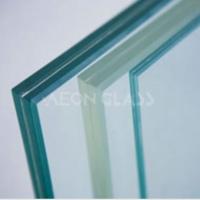
"Laminated glass was the answer. In the case of failure of the laminated glass we knew that the pane would stay in tact and bonded to its frame in spite of being cracked or crazed. Furthermore, it would support the weight of the people standing on it in the almost unthinkable case of a capsule failing to revolve correctly within its bearings."
DOUBLE-CURVED GLAZING
The innovative double-curved capsule glazing, never before used as far as the designers know, consists of two layers of 6mm float glass laminated together with a 1.5mm PVB interlayer and designed to withstand a loading of six people (3 kilos Newtons) per square meter. The laminated glass panels are directly fixed to the frames using a structural sealant. All the glass is double-curved (spherical and toroidal bending) yet maintains excellent optics and strength in spite of the production challenges.
Read the entire news on the source link below.


















Add new comment