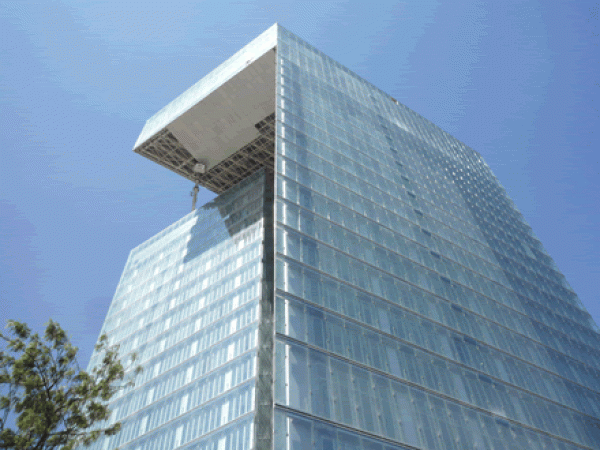
The exterior of the skin is composed of vertical shoulders mounted on a stainless-steel structure, for wind mitigation, bearing a curtain-wall made of laminated glass panels, each measuring 1,480 x 3,503 mm, which comprise 10 mm Ipasol bright temperedHST, 1.52 mm DuPont SentryGlas and 10 mm float tempered HST.
By deploying laminate panels incorporating DuPont™ SentryGlas®, architects were able to successfully address a number of important structural and functional demands on Morocco Telecom's new headquarters in Rabat.The façade covering Morocco Telecom's new headquarters in Rabat is another stunning demonstration of the comprehensive capabilities of DuPont™ SentryGlas®.
.jpg)
Photo: Jean-Paul Viguier et Associés
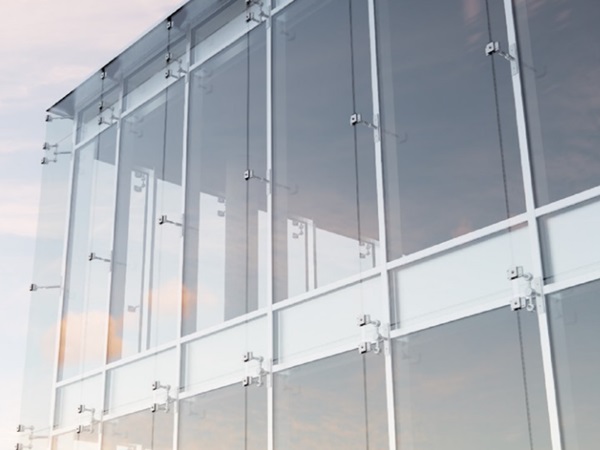
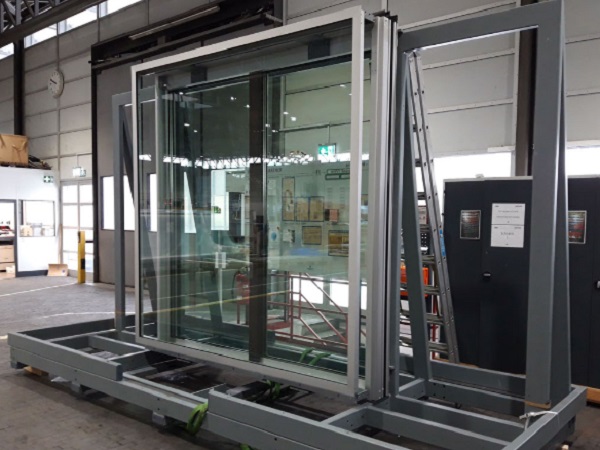
The facade on Morocco Telecom's new headquarters in Rabat comprises a double skin covering a total surface area of 11,500m2. The exterior of the skin is composed of vertical shoulders mounted on a stainless-steel structure, for wind mitigation, bearing a curtain-wall made of laminated glass panels, each measuring 1,480 x 3,503mm, which comprise 10mm Ipasol bright tempered HST, 1.52mm SentryGlas® and 10mm float tempered HST.
.jpg)
Photo: Jean-Paul Viguier et Associés
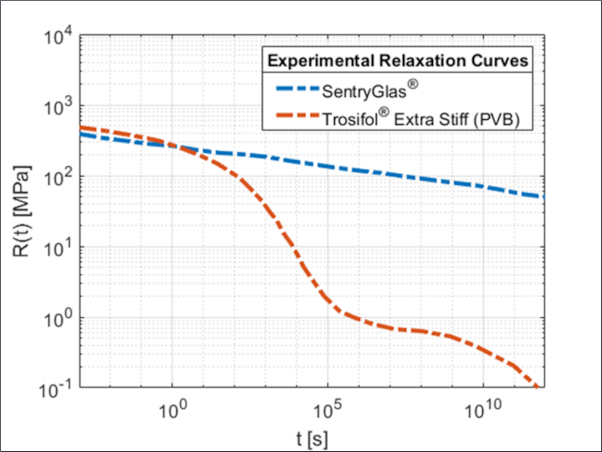
GLS-EU-2012-02b – The frontage of the building can see temperatures up to 70°C; something which immediately precludes the use of PVB-based laminates. In addition, thanks to SentryGlas® being 100 times stiffer and five times stronger than PVB, the architects were also able to design and specify laminate panels some 30% thinner and, as a result, significantly lighter, than PVB-based alternatives.
The façade covering Morocco Telecom's new headquarters in Rabat is another stunning demonstration of the comprehensive capabilities of DuPont™ SentryGlas®.
The facade construction used on the new building, designed by architects Jean Paul Viguier et Associés, Paris, comprises a double skin covering a total surface area of 11,500m2. The exterior of the skin is composed of vertical shoulders mounted on a stainless-steel structure, for wind mitigation, bearing a curtain-wall made of laminated glass panels. The laminate panels, each measuring 1,480 x 3,503 mm, comprise 10mm Ipasol bright tempered HST, 1.52mm SentryGlas® and 10mm float tempered HST.
By deploying laminate panels incorporating SentryGlas®, the architects were able to address a number of important structural and functional demands; one of which was the high daytime temperatures and the large night-time temperature differential. During the day, the frontage of the building can quite easily see temperatures up to 70 °C; something which immediately precludes the use of PVB-based laminates, as they are only certified up to 64 °C by French building regulations. The superior thermal performance offered by SentryGlas® therefore made it an ideal candidate for this installation and, indeed, for others that face even higher temperatures, as SentryGlas® is up to 82 °C.
Thanks to SentryGlas® being 100 times stiffer and five times stronger than PVB, the architects were also able to design and specify laminate panels some 30% thinner and, as a result, significantly lighter, than PVB-based alternatives.
With SentryGlas® there is an efficient transmission of load between two laminated sheets of glass over a wide range of temperature leading to excellent flexural behaviour under load. As a result, laminates constructed with SentryGlas® show less than half the deflection when compared to laminates incorporating PVB under the same load. Indeed, the deflection figure is very close to that exhibited by monolithic glass of the same thickness.
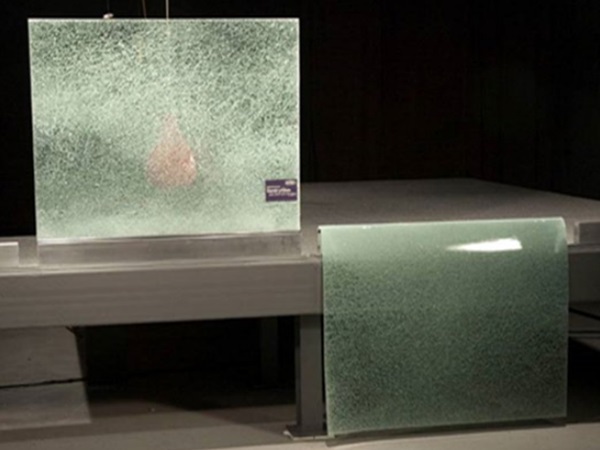
In this application, the deflection characteristics were also of particular importance due to the seismic activity experienced in the region. Should the worst happen, SentryGlas® laminates show excellent post-glass-breakage performance due to the strength of the interlayer. Upon impact, the glass may break, but dangerous fragments tend o remain adhered to the SentryGlas® interlayer, reducing the risk of injury to people in the vicinity.
"The impressive thermal performance of SentryGlas® was a vital consideration in this installation, especially its ability to function in temperatures up to 82 °C. In addition, the ability to provide this level of functional and structural performance, especially with regards to angular wind resistance, using a thinner laminate construction gives us the scope to create less intrusive and more subtle support structures," explains Tomaso Mani, from Jean Paul Viguier et Associés. "This, in turn, gives us greater design freedom coupled with the ability to create more innovative building concepts that are not fettered by extensive external support frameworks."
Constructed by Italian laminator Zadra Vetri S.r.L., the laminate panels using SentryGlas® were also successfully tested to a number of important building test standards, including: Cahier 3574 (VEA) wind test with security load (wind equal to ±6000 Pa), Cahier 3533 Stabilité en zone sismiques – seismic test; EN 12543-4 – irradiation test (4,000h); and NF P 08 302 – body impact test M50. The use of SentryGlas® in this application was also the subject of an 'Avis Technique' certificate from CSTB, further adding to its credentials.
As well as its numerous functional advantages, SentryGlas® interlayers provide multiple aesthetic benefits, including high, crystal-clear transparency, virtually universal resistance to yellowing and excellent edge stability; all of which are important to the longterm aesthetic appeal of the building and the quality associated with Moroccan Telecom's brand.
DuPont Glass Laminating Solutions provides materials, services and innovations to makers and specifiers of laminated glass. It helps create a better world by improving home protection and automotive safety, and enabling design of stronger, more energy-efficient buildings that let in more natural light.
DuPont is a science-based products and services company. Founded in 1802, DuPont puts science to work by creating sustainable solutions essential to a better, safer, healthier life for people everywhere. Operating in more than 70 countries, DuPont offers a wide range of innovative products and services for markets including agriculture and food; building and construction; communications; and transportation.
The DuPont Oval Logo, DuPont™, The miracles of science™ and all products denoted with ® or ™ are registered trademarks or trademarks of DuPont or its affiliates.